



By Steve Saah.
Imagine you’re hiring a tax associate, and you identify a candidate whose resume checks every box. Your applicant tracking system (ATS) software confirmed they have all the required certifications and technical skills, and an impressive list of work experience to boot. You move fast to snap up this professional just in time for busy season. But within a matter of weeks, you discover your new hire is floundering. They can’t handle the workload and are clearly out of their depth.
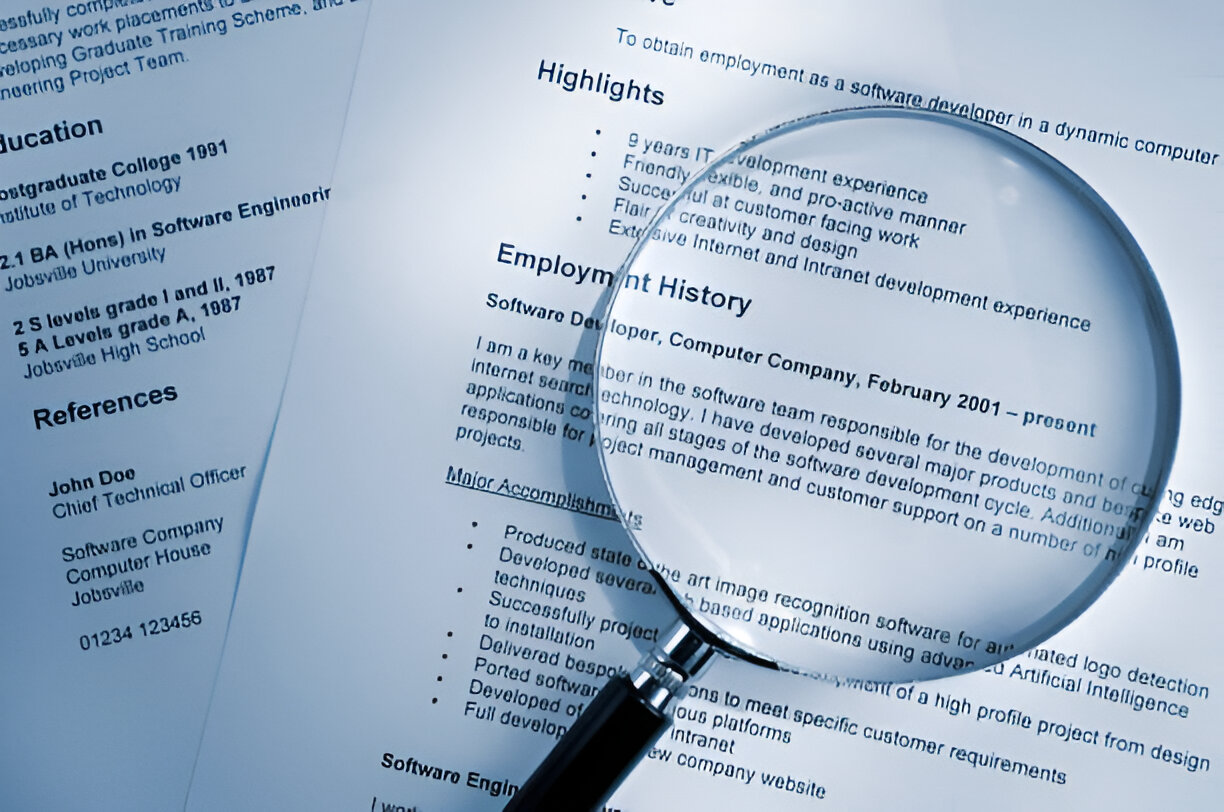
Where did your hiring process go off track? The answer may lie in an AI-generated resume—padded with buzzwords and propped up with tricks like “white texting”—that sailed through the ATS screening and fast-tracked an unqualified candidate to a job offer. The result: A poor hiring decision that could potentially expose your CPA firm to financial, reputational and operational risks.
Recommended Articles

Payroll September 28, 2026
What Are the Most Overused Phrases on Resumes?
Staffing September 17, 2026
1 in 5 Workers Say Their Current Job Is Not What They Were Hired to Do

Staffing August 13, 2026
AI-Written Applications Are Now the #2 Red Flag in Hiring
But how does this happen? When a resume is embedded with hidden keywords, the software ranks that candidate as a strong match, moving them quickly to the next stage. By the time a hiring manager reviews the resume, it already looks like a top prospect. Add in the pressure to hire quickly before busy season or secure skilled talent amid the accountant shortage, and an applicant who interviews well enough on the surface could easily land a job. The AI-generated resume created a false baseline, and the gaps don’t become obvious until the real work begins.
AI tools are now a common part of the job search, helping candidates draft or polish their resumes—and that’s not inherently a bad thing. After all, modern CPA firms want to attract professionals who are tech-savvy and comfortable with AI. The concern arises when these tools are used to exaggerate—or even fabricate—credentials and experience. Here’s what firms should know about the risks of AI-generated resumes, and how to recognize them before hiring candidates.
What is white texting—and why is it effective?
White texting—also called white fonting—is the practice of hiding extra keywords in a resume or other job application materials by changing the font color to white. The tactic is meant to trick ATS software into ranking the resume higher by embedding skills, certifications or job titles that don’t actually appear in the visible text.
For example, a resume might include dozens of hidden mentions of “CPA,” “audit” or “tax” in the margins or between lines. To a human reviewer, the document looks perfectly normal. But to keyword-scanning software, it appears the candidate has all the right experience—even if that’s not the case.
White texting is just one way an “enterprising” candidate who lacks the requisite skills for a job might attempt to prop up their resume so it can slip through an ATS screening. Hiring managers should also be on the lookout for:
- Keyword stuffing: Repeating certain skills or software names, sometimes in unnatural ways, to match ATS search terms.
- Fake job titles or promotions: Inflating past roles to give the impression of greater responsibility or authority.
- Borrowed credentials: Listing certifications or licenses without actually earning them, hoping they won’t be checked until much later—or at all.
Separating fact from fiction: How to verify a candidate’s claims
Spotting red flags is only the first step to rooting out inflated or fake candidate resumes. Verification is what can protect your firm from actually hiring a candidate who has used an AI-generated resume to help them gain an unfair advantage in their job search process. Some effective ways to confirm a candidate’s qualifications include:
- Checking references thoroughly: Don’t stop at confirming dates of employment. Ask for specifics about projects, responsibilities and overall performance.
- Validating credentials: Confirm CPA licenses, certifications or degrees directly with the issuing organization.
- Using skills assessments: Test technical knowledge in areas such as audit, tax or accounting software to verify that the candidate’s abilities align with their claims.
- Conduct behavioral interviews: Situational questions can often reveal gaps in experience that a polished resume might conceal.
Building these steps into your process for hiring candidates helps confirm that the person behind the resume has the skills and experience needed to succeed in the role.
How staffing firms can help employers avoid AI-generated resume risks
Partnering with a reputable staffing firm is a safeguard against candidates who exaggerate their credentials or use AI-generated tricks to get past ATS screenings. Unlike automated tools that rely on keywords, staffing professionals bring human insight to the hiring process—conducting in-person and virtual interviews, administering skills testing, and performing thorough reference checks to validate qualifications and detect fraudulent profiles. Many of the candidates we work with are familiar to us: we’ve placed them in prior assignments or permanent roles, and we understand their strengths. With deep knowledge of the accounting market and a specialized focus in the field, we’re able to match talent with precision and confidence
Staffing firms also provide flexibility. Many leading CPA practices rely on contract talent during peak busy seasons or when specialized expertise is needed for a short period. This approach not only addresses immediate workload gaps—it also lets firms “audition” professionals on real projects before making a long-term commitment. If the individual proves to be a strong contender, they can transition into a permanent role. If not, the search continues—as does critical work.
Invest strategically in your talent pipeline to further reduce risk exposure
Another way to avoid the risk of being taken in by exaggerated or fake candidate resumes is by cultivating a reliable talent pipeline. A strong pipeline can help you expand your pool of qualified applicants while reducing your reliance on anonymous job boards and the risk of encountering fraudulent candidate profiles. It also increases the likelihood of hiring skilled professionals ready to meet your firm’s performance standards and likely to thrive in your workplace culture.
Ways to strengthen your talent pipeline include:
- Encouraging referrals: Satisfied employees are often the best recruiters, helping you connect with candidates who come with built-in endorsements.
- Investing in internships and apprenticeships: Partner with colleges and universities to connect early with up-and-coming finance and accounting talent.
- Rehiring boomerang employees: Returning staff members can bring new skills and experience to your firm—and require less time getting up to speed.
- Upskilling current staff: Professional development helps close skill gaps, improve retention and prepare teams for evolving client needs.
- Prioritize succession planning: Providing clear advancement pathways reduces the pressure to hire externally for every leadership role.
AI-generated resume risks are real—and growing. So, too, are deceptive practices like interview fraud, where candidates pose as someone else or bring in stand-ins to complete assessments. Gartner projects that by 2028, one in four candidate profiles worldwide will be fake. By verifying information, partnering with a reputable staffing firm and strengthening your talent pipeline, you can focus on hiring candidates who are authentic, qualified for the role they seek and ready to deliver their best work.
====
Steve Saah is the executive director of permanent placement at Robert Half, the world’s first and largest specialized financial talent solutions service. The company has more than 300 locations worldwide. He is responsible for leading U.S. operations, based in the Washington, D.C., metropolitan area. He was named executive director in 2017, previously serving as director of permanent placement services.
Saah has been with the company since 1998, where he started as a recruiting manager, following a career as an internal auditor and assistant controller. He is a noted expert, author and presenter on career, management and hiring trends, particularly those affecting the accounting and finance fields. Saah earned a finance degree from Virginia Tech.
Sign in to get access to this free resource, and all of our whitepapers and reports.

Download this content today!
Register Now Already registered? Click here to Log In