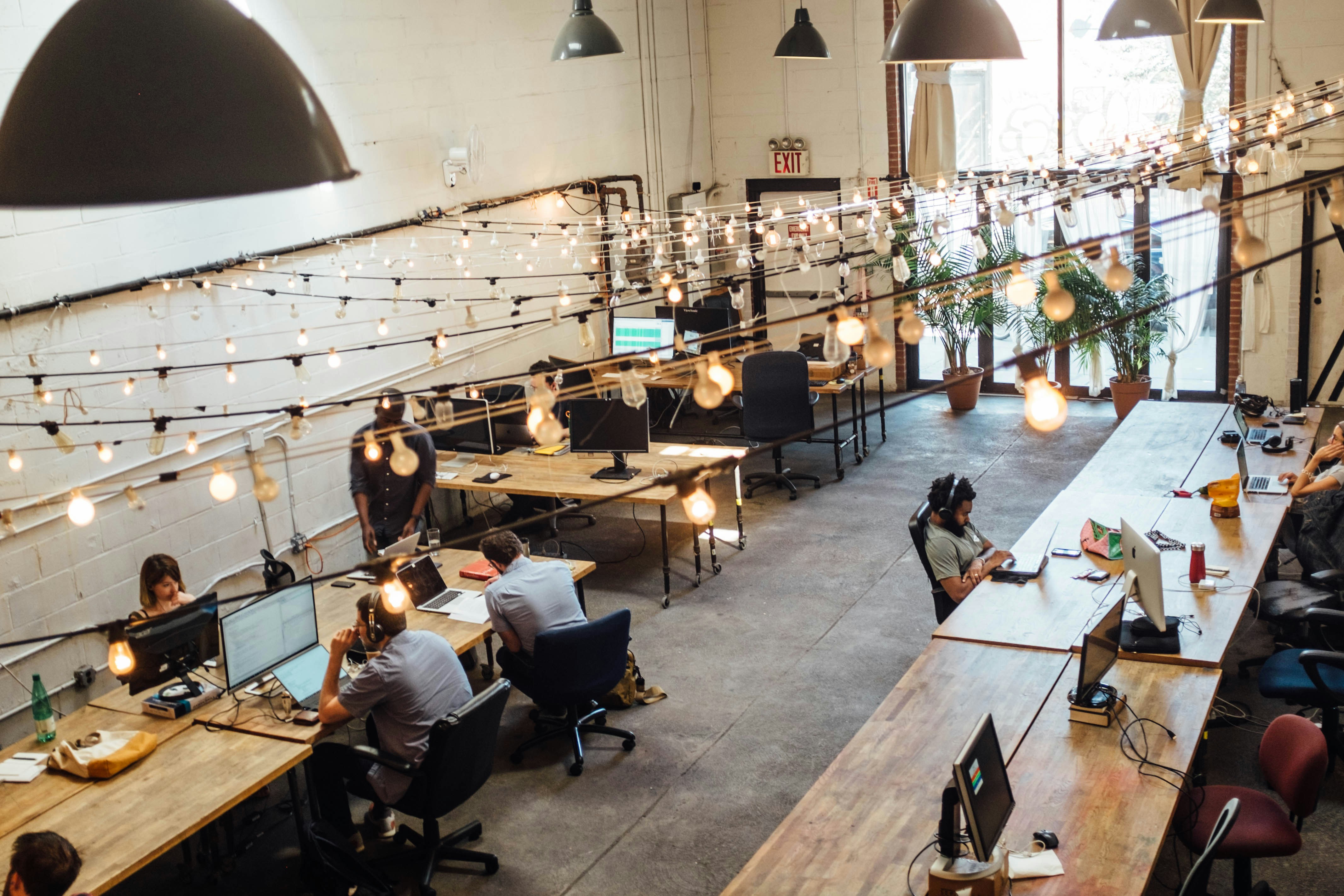




For years, the open-plan office was considered the gold standard of modern workplace design. Walls came down, partitions disappeared, and shared desks became the default layout for businesses wanting to encourage communication and project a culture of openness.
In 2026, that consensus is being revisited. A growing number of companies are questioning whether open-plan offices deliver on their original promise, and workplace designers are responding with a fundamentally different approach.
The issues driving this reassessment have built quietly over time: persistent noise, constant interruption, and the difficulty of doing focused work in spaces designed almost entirely around visibility. The rise of hybrid working has added further pressure, as offices now need to justify their existence as environments that actively support the kind of work people cannot do as effectively from home.
Bringing an expert perspective is Sam Allen, danaging Director at Noisy&Co, an exhibition agency and stand design specialist with deep experience shaping high-traffic, experience-led environments. Below, Allen explores why open-plan offices are being reconsidered and what is replacing them.
Why open-plan offices were built on good intentions
The open-plan office was a deliberate design philosophy, rooted in the belief that removing physical barriers between colleagues would naturally encourage communication, spontaneous collaboration, and a more transparent workplace culture.
“The logic made sense at the time,” says Allen. “If you can see your colleagues, you can talk to them. If there are no walls, there are no silos. Open-plan offices were designed to break down hierarchy and make workplaces feel more connected and democratic.”
For many businesses, particularly in creative and technology sectors, it worked. But as the layout became near-universal, its limitations became harder to ignore.
The noise and distraction problem
The same openness that encourages spontaneous conversation also makes it almost impossible to avoid. Background noise, nearby phone calls, and impromptu discussions all compete for the same cognitive space as the work that actually needs to get done.
Research from the University of California, Irvine, found that it takes an average of 23 minutes to regain full focus after an interruption. In a busy open-plan office, those interruptions don’t stop at one.
“There is a big cost to constant distraction that does not always show up immediately,” says Allen. “People adapt by putting on headphones, finding empty meeting rooms, or accepting that deep-focus work happens somewhere other than the office. That is a significant design failure.”
The hidden weight of constant visibility
Beyond noise, there is a subtler issue: the cognitive load of being consistently visible.
When employees are always in sight of colleagues and managers, many find themselves managing their appearance of productivity alongside their actual work. This divided attention, while rarely discussed, has a measurable effect on concentration and output.
“Designing spaces where people feel observed all the time is not a neutral decision,” Allen notes. “Visibility can be motivating in some contexts, but in a working environment, it can quickly drain focus. Good spatial design accounts for the difference between being connected and being exposed.”
How hybrid working changed the equation
The widespread adoption of hybrid working has fundamentally altered how office space is used. The purpose of that space changes when employees are in the office two or three days a week rather than five. It becomes somewhere people choose to come, often specifically for the collaboration and social interaction that remote working does not provide as easily.
That changes what a well-designed office needs to offer. An entirely open-plan space may serve spontaneous conversation well, but it does little for the employee who has come in specifically to concentrate, or who needs a private setting for a call or a sensitive discussion.
The move toward zoned, flexible environments
Workplace designers are increasingly moving away from single-mode layouts in favor of environments that offer a range of settings. Quiet zones, collaborative areas, semi-private booths, and informal meeting spaces are being planned into offices from the outset, rather than added as afterthoughts.
This approach, often referred to as activity-based working, is built around the idea that different tasks require different environments. Rather than assigning every employee a fixed desk in a uniform space, it gives people the autonomy to choose where they work based on what they are doing.
“The best spaces we design for exhibitions work because every zone has a clear purpose,” says Allen. “You draw people in, you give them moments of energy and moments of calm, and you move them through the space intentionally. Offices are starting to apply the same thinking.”
Acoustic control and purposeful layout
Underpinning all of this is a renewed focus on acoustic design. Sound management, through materials, layout, and spatial separation, is now considered a core element of workplace design rather than an optional finish.
“Acoustic control is one of the most practical things a designer can address,” says Allen. “It does not require dramatic structural changes. Thoughtful use of soft furnishings, partial screens, and zoned layouts can alter how a space feels and functions.”
Open-plan offices are not disappearing completely, but they are being rethought. For a long time, openness was treated as a virtue in itself, and the assumption was that more visibility and access automatically meant better collaboration.
“What we now understand is that people need variety in their working environment, not uniformity,” Allen says. “The future of workplace design is less about openness for its own sake, and more about creating adaptable environments that support different modes of working. From collaboration to deep focus, the best offices will offer a range of settings within a single, well-designed space. That is not a radical idea. It is good design, applied to the way people actually work.”
Photo credit: Shridhar Gupta/Unsplash
Sign in to get access to this free resource, and all of our whitepapers and reports.

Download this content today!
Register Now Already registered? Click here to Log In