By Mitchell Roland
The Spokesman-Review, Spokane, Wash.
(TNS)
(Sept. 12) OLYMPIA — Washington state’s refusal to levy personal income has made its tax code an outlier for more than 90 years.
With two months until the general election, public employee unions and some of the state’s wealthiest residents have raised millions in campaign contributions in a battle over whether that should continue.
Since the Washington Supreme Court ruled that income was property in 1933 and thus needed to be taxed uniformly for all residents, an increasing number of states have adopted personal income taxes to help balance their budgets, and Washington politicians have debated whether to join them.
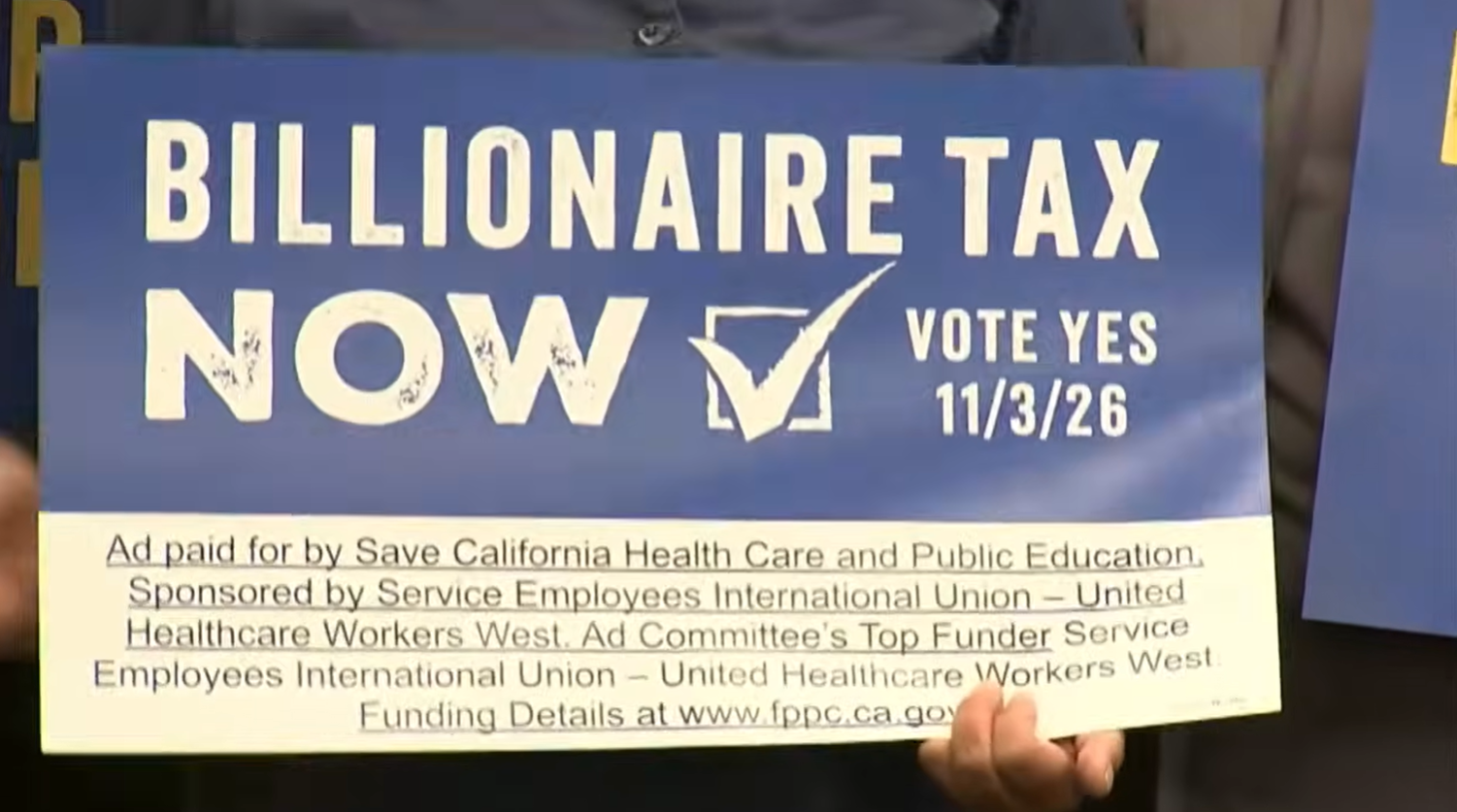
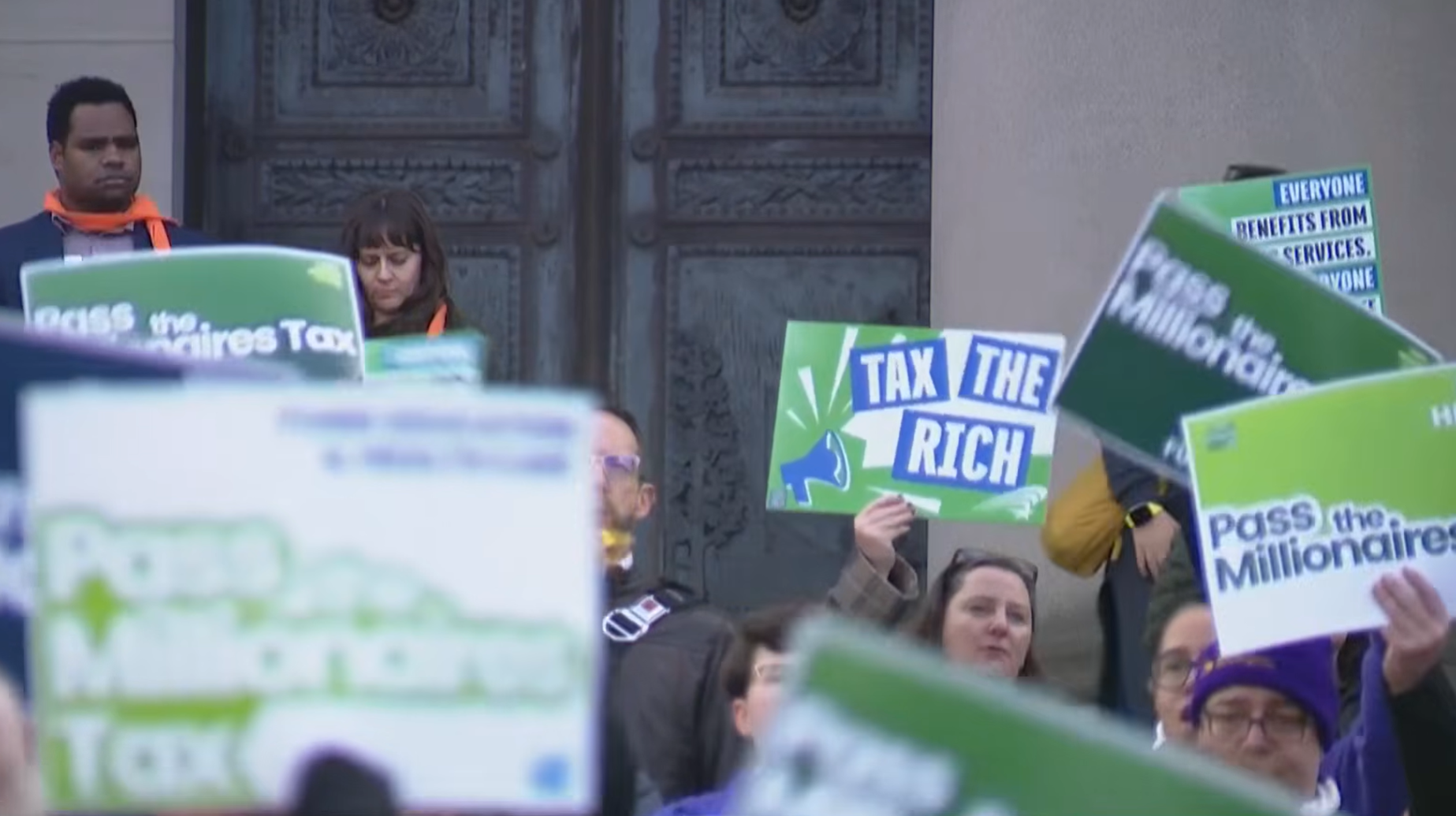
Earlier this year, Democratic lawmakers approved a new 9.9% income tax on annual earnings above $1 million for individual and joint filers. They dubbed it a “millionaires tax.”
The new law now faces a challenge on the ballot and, if necessary, in the courtroom before it takes effect in January 2028.
The lack of an income tax helped create a fertile business environment that led some of the world’s biggest businesses to put down roots in the state and grow, skeptics of the idea argue. They are also skeptical that the tax won’t be expanded in the future to apply to lower income levels.
“I think as tax sources start to hit a saturation point, that putting something like this in place creates the possibility, or the potential, the probability that as other things become problematic to increase taxes, that this will also tend to be adjusted to fit those needs,” State Sen. Jeff Holy, R-Cheney, said in an interview.
Supporters, however, say it has exacerbated the state’s regressive tax system and burdened those lower on the income spectrum. The state’s fluctuating tax system, they say, has also made it increasingly challenging to fund government programs many residents rely on.
“The scaffolding of which our tax system is built on is inherently upside down and unfair. And I would hope everybody acknowledges that,” State Sen. Marcus Riccelli, D-Spokane, said in an interview. “It just doesn’t work when the wealthiest few are paying only moderately compared to our middle-income families. That just seems inherently unfair, particularly when people are just getting pummeled at the gas tanks and supermarket and for housing costs.”
Recommended Articles
Taxes October 5, 2026
Voters to Decide Fate of State Taxes This Fall
Taxes September 22, 2026
Unions in Washington State Spend Big to Keep Millionaires Tax
According to data from the secretary of state’s office, since the state Supreme Court threw out the state’s income tax, Washingtonians have been asked 10 times whether the state should implement a new tax. Each vote has failed, and when voters were last asked in 2010, only 36% of residents supported the proposal.
“When you look at this, it’s kind of unpopular,” Holy said. “And I say that from a dozen initiatives or legislative attempts to establish this since they were successful in 1932.”
In August, the Department of Revenue estimated the tax passed this year would bring in $3.1 billion during the first fiscal year it takes effect and $8.3 billion between 2029 and 2031. According to data from the agency, 790 residents from the five legislative districts that represent Spokane County—the 3rd, 4th, 6th, 7th and 9th—would pay a total of $96.3 million.
Riccelli said Thursday he rejects the idea the tax will eventually be expanded to apply to more residents, something neither he nor Gov. Bob Ferguson say they support.
“At the end of the day, voters will always have a say,” Riccelli said. “So even if future legislators decided to try and expand it, voters would have their say.”
As part of the legislation, lawmakers expanded the Working Families Tax Credit, a rebate for sales taxes paid for lower-income residents, universal free school meals for K-12 students, sales tax exemptions on diapers and over-the-counter medicine, and cuts to small business taxes. The Working Families Tax Credit is a rebate for low-income families of $50 to $1,330 a year meant to reimburse them for sales taxes.
“I just see it as something that is establishing an availability that is almost unavoidable that is so attractive that it’s going to be brought down,” Holy said.
“And if that happens, what’s the difference between coming down into and taxing people at a much less income than it was initially applied, and just allowing for those deductions now?”
While the litigation continues to work through the state’s legal system, and any decision by the state Supreme Court is likely months or years away, residents will decide this fall whether the tax should remain in place.
“Washingtonians are going to be facing an important choice in November regarding the future of the millionaire’s tax,” Ferguson said during a “NO on I-645” event in July. “It’s essentially a choice between moving our state forward, by making life more affordable for Washingtonians and giving 138,000 business owners tax break, or going backwards, rolling back tax breaks for small businesses, and seeing costs go up for Washingtonians.”
Technically, the initiative would only repeal the tax itself, not the tax breaks and rebates in the legislation, meaning lawmakers would have to decide if and how they could fund the new and expanded state programs with billions less in revenue.
“For the district I represent, you just have a bunch of people who are struggling with affordability issues with gas prices, with groceries; they really want their kids to get the best education in a public school setting, many of them, so looking at how we fund schools. And then the big one right now is healthcare, looking at the potential cuts at the federal level,” Riccelli said, noting about 200 people in his district would pay the tax. “I weighed the tax breaks for families and small businesses. Those are all of the things that I took with me to session.”
The “no” campaign, which argues the tax should remain in place, has so far raised more than $5 million, according to the Public Disclosure Commission, with the largest donations coming from unions representing public employees.
The Washington Federation of State Employees and Washington Education Association have donated $1 million each to the campaign, and the Service Employees International Union has given $1.5 million through three separate contributions. The National Education Association donated more than $436,000 in an effort to keep the tax.
Erik Houser, a spokesperson for the “no” campaign, said in a statement the initiative would be “bad for Eastern Washington because it will dramatically cut funding for education, health care, and child care, and put tax breaks for working families and small businesses at risk.”
“Hedge fund mogul Brian Heywood wants to cut taxes for the top 1% while raising costs for everyone else in the Spokane area,” Houser said. “Consistent polling data across multiple months continues to show that voters across the state see I-645 for what it is, a giveaway to the very wealthy.”
The “yes” campaign, meanwhile has raised a little more than $1.2 million, with Seattle-based venture capital firm Madrona Venture Group contributing $250,000 and Lawrence Hughes, a retired IT-security executive, contributing $250,000.
Let’s Go Washington, a Political Action Committee sponsoring all three initiatives on the November ballot, has raised an additional $3.65 million, with Hughes again contributing $250,000 and PAC founder Brian Heywood contributing $605,000.
Steve Gordon, principal of Gordon Truck Centers, said in an interview that he’s concerned about what the tax could do for the state’s business climate, and the potential for businesses to leave.
“A lot of folks have already moved to Idaho and a lot more are looking to move to Idaho and, I mean, that’s not good for anybody, and at least of which, it’s not good for the employees that work at those businesses,” Gordon said.
According to PDC records, Gordon contributed $25,000 to the “yes” campaign and $100,000 to Let’s Go Washington. Gordon Truck Centers also donated $100,000 to the “Yes” campaign.
Former Republican Congresswomen Jaime Herrera Beutler, who previously served in the state Legislature, said she remembered the “friction and tension” when lawmakers previously attempted to pass an income tax.
“I just remember how motivating it was to people,” Herrera Beutler, who is being paid for her role with the NO campaign, said in an interview Thursday. “Like, nobody trusts Olympia to put in place an income tax. Nobody trusts what they’re going to do with it.”
The legislation, she said, does not have a firm commitment not to lower the income threshold in the future. She also worries about the impact on the state’s business climate.
“There were people who really, really wanted it then,” said Herrera Beutler, who added she would not be subject to the new tax.
“But they weren’t in positions, I think, to make it happen.”
_______
© 2026 The Spokesman-Review (Spokane, Wash.). Visit www.spokesman.com. Distributed by Tribune Content Agency LLC.
Sign in to get access to this free resource, and all of our whitepapers and reports.

Download this content today!
Register Now Already registered? Click here to Log In