



By Shauna Sowers
The Seattle Times
(TNS)
Aug. 8 — A Thurston County Superior Court judge said Friday that it is constitutional for Washington ballots to include information about how a repeal of the high-income earners’ tax would impact the state budget, giving the green light to allow the disclosure to appear on ballots in November.
Open-government advocate Arthur West broadly challenged the constitutionality of public investment impact disclosures—the sentences that appear with a ballot measure saying where funding would be added or taken from if the measure passes. He also argued that the statement included with Initiative 645 violates the state’s neutrality laws. The lawsuit sought to prevent the impact statement regarding the so-called “millionaires tax” from appearing on the November ballot and could have prevented similar disclosures from appearing on ballots in the future.
Judge Chris Lanese denied West’s request to keep the statement off the ballot, saying he found no constitutional violations and deemed the language included in the statement neutral under the law.
“If we’re looking at the issues of what’s the biggest expenditures or most likely to be impacted, that’s still a neutral way of presenting that,” Lanese said.
Under Washington law, the state attorney general must prepare impact statements for initiatives that would repeal or change taxes and fees in ways that could affect state revenue. The statements appear on the ballot between the initiative description and the question presented to voters.
Recommended Articles

The statement for the repeal of the income tax initiative, I-645, says: “This measure would decrease funding for public K-12 education, higher education (including universities and community colleges), and human services (primarily healthcare).”
West’s lawsuit questioned whether the state can add government-written language to a citizen initiative after signatures are collected, verified and it’s been approved by the secretary of state for a vote of the people. West argued that doing so interferes with the constitutional rights of those trying to pass laws through the initiative process.
West argued in court that under the Washington Constitution “the right to petition shall never be abridged, and this is exactly what’s happening here.”
“The state altered what the completed petition says to the very voters it was gathered to reach, and includes false and deceptive representations that are not true and are not factual,” he added.
West also argued that the statement violates the law’s own requirement that impact statements remain neutral to not prejudice the outcome of the election.
Karl Smith, the deputy solicitor general at the attorney general’s office, argued on behalf of the state, saying that “hiding information about the fiscal consequences of an initiative that people are entitled to see on the ballot is not equitable.”
Smith noted that the disclosure statement on the ballot lists the top three categories from the general fund that would be most impacted by a decrease in revenue if voters chose to overturn the income tax on millionaires. The tax does not take effect until 2028, and won’t produce revenue until 2029.
Smith also challenged West’s constitutional claims, saying the state Supreme Court has already adopted a test to determine whether laws that regulate the initiative process are constitutional, “and that test is whether they’re reasonably and substantially related to a legitimate government interest.”
Lanese’s order to allow the impact statement to still appear on the ballot cannot be appealed, but West said he plans to file an appeal on Monday regarding his constitutional arguments in the lawsuit, adding he still thinks those have merit.
A separate case challenging the impact disclosure was supposed to be heard in Thurston County before Judge John Skinder later Friday, but was canceled due to Lanese’s decision in West’s case. The second lawsuit was filed by Let’s Go Washington, the conservative group behind I-645, and asked a judge to rewrite the impact statement, which the group also argued was misleading.
In a statement Friday, Let’s Go Washington condemned the dismissal, saying the group’s argument was separate from West’s. Additionally, it challenged whether the top three general fund categories are accurately identified on the disclosure.
“This was a disgraceful way to handle a case involving the information millions of Washington voters will see on their ballots,” said Brian Heywood, the group’s founder.
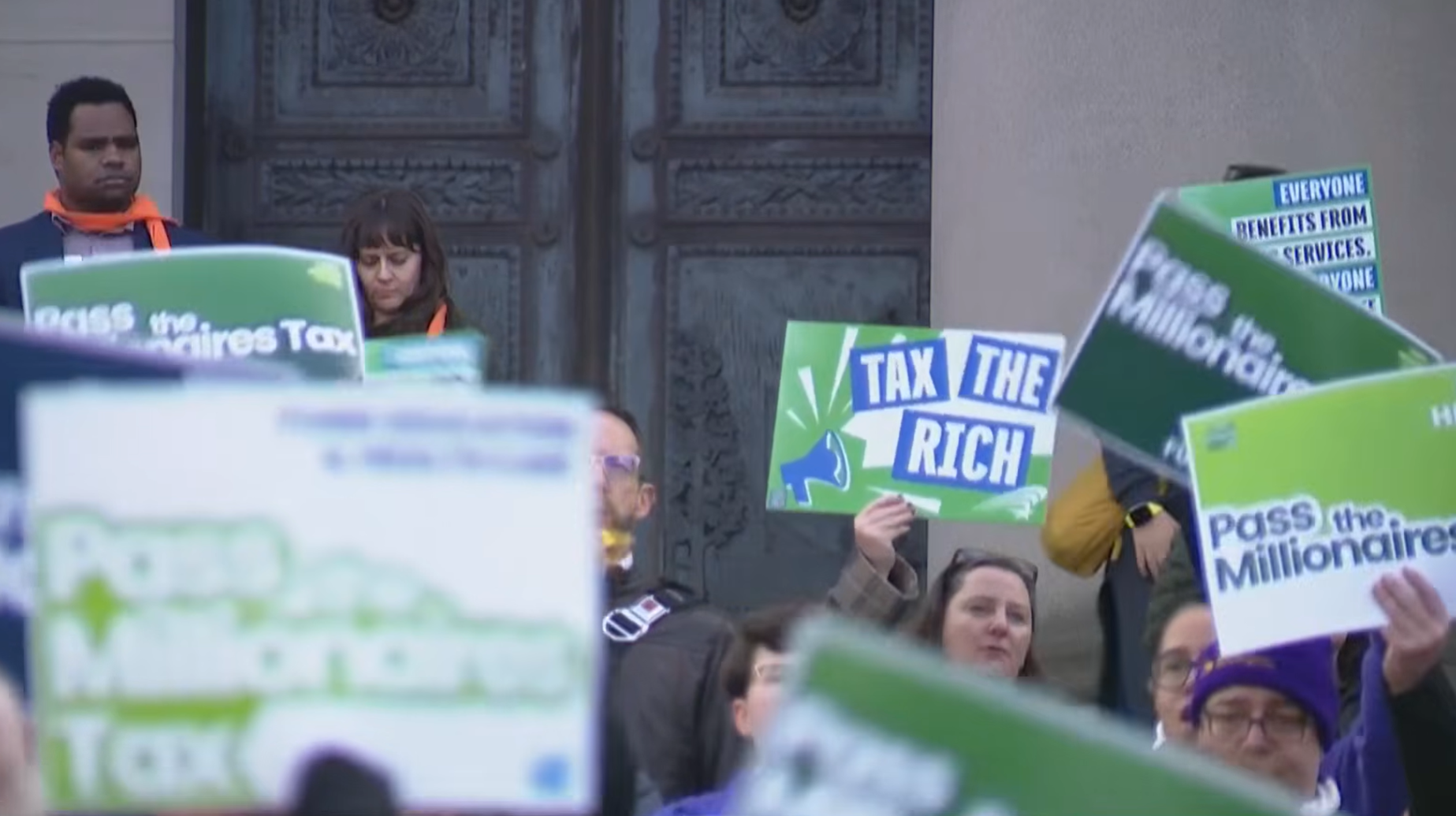
Photo caption: Supporters of Washington’s “millionaires tax” held a rally in Olympia in February 2026.
_______
© 2026 The Seattle Times. Visit www.seattletimes.com. Distributed by Tribune Content Agency LLC.
Sign in to get access to this free resource, and all of our whitepapers and reports.

Download this content today!
Register Now Already registered? Click here to Log In