



The workplace may be entering its “situationship” era. A new report show that due to factors like financial pressures (60%) and labor market uncertainty (29%), many employees are choosing job stability over long-term commitment. At the same time, employers are offering less clarity around career growth, job security, and expectations. The latest Workplace Situationships Report, was commissioned by Zety, a resume templates service.
These dynamics are driving “work situationships”: employer-employee relationships defined by mixed signals, uncertainty about the future, and staying together despite signs it may no longer be the right fit.
Key Findings
- Keeping things casual: Over half (59%) of workers don’t see a clear, long-term path with their current employer.
- Mixed signals from employers: 63% don’t believe their employer is committed to keeping them long-term.
- Like any situationship, clarity and progress are lacking: 32% of workers report limited growth opportunities, while 23% feel unfulfilled or frustrated.
- Too risky to leave: The top reasons workers stay in work situationships are financial stability (60%) and comfort or familiarity (47%).
Job Status: It’s Complicated
Like any situationship, many workplace relationships lack a shared vision for the future.
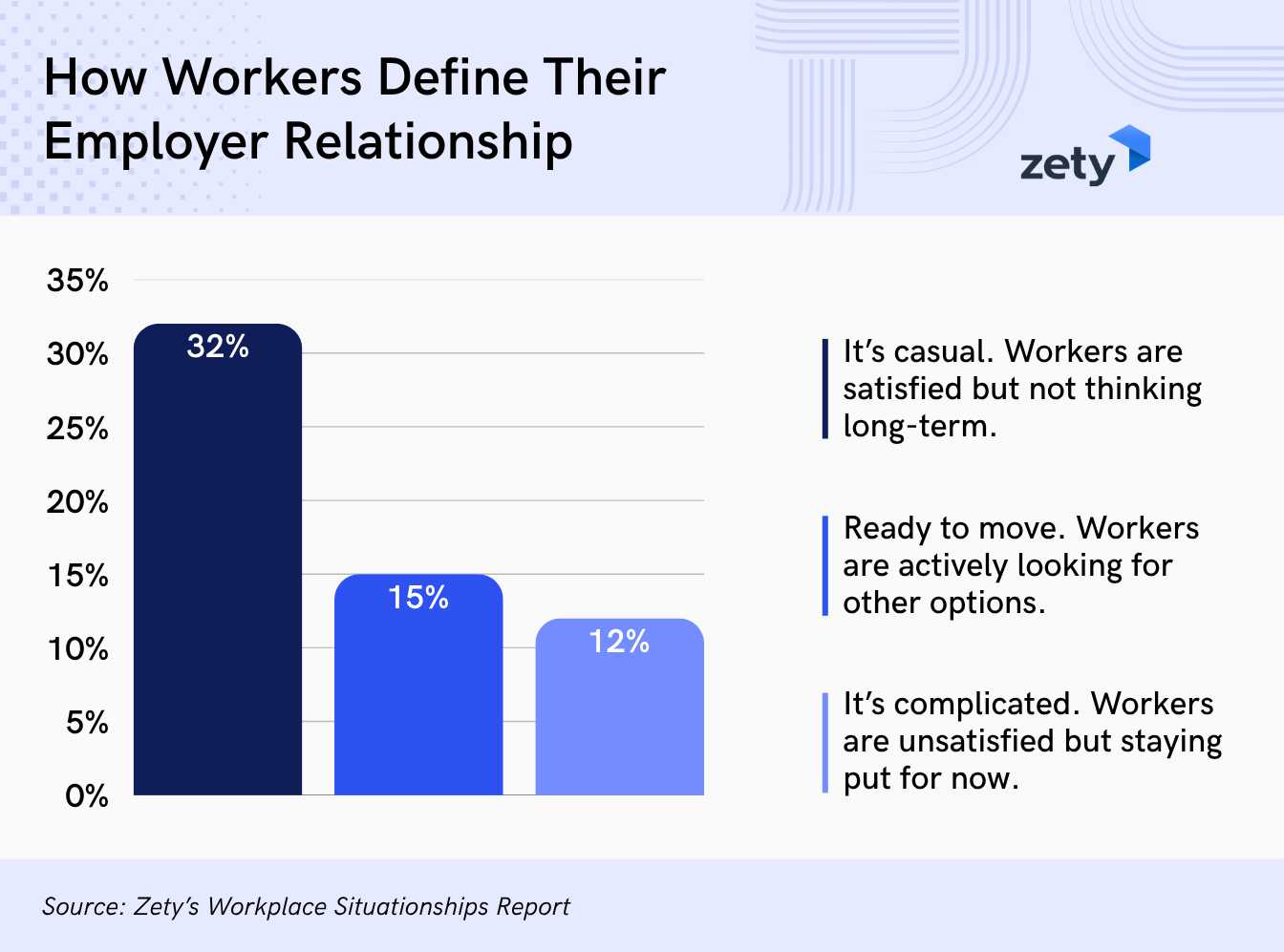
Nearly 6 in 10 (59%) of respondents do not see a clear, long-term path with their current employer. When asked to define that relationship, workers reported the following:
- 32% say the relationship is casual—they’re satisfied but not thinking long-term
- 15% are on the way out, actively exploring other options
- 12% say it’s complicated, meaning they are unsatisfied but staying put for now
The Feeling is Mutual
Questions about commitment run both ways. The majority (63%) of workers don’t feel their employer is loyal and committed to them long-term:
- 31% believe their employer is somewhat invested in keeping them at the company, but believe they could be replaced if needed.
- 16% feel more interchangeable than valued.
- 16% do not feel their employer is invested in keeping them at all.
How Jobs Become Situationships
The hallmarks of a work situationship look a lot like those of a personal one: a lack of progress, unclear expectations, and growing frustration.
Workers report experiencing the following:
- Limited growth opportunities (32%)
- Feeling unfulfilled or frustrated (23%)
- Poor manager relationships (19%)
- Blurred work-life boundaries (17%)
- Unclear role expectations (15%)
Why Employees Stick Around
When asked why they remain in jobs that aren’t ideal, respondents pointed overwhelmingly to practical reasons rather than passion:
- 60% stay for financial stability
- 47% remain because their role feels comfortable or familiar
- 40% stay for benefits
- 35% cite flexibility or remote work
- 29% point to job market uncertainty
- 29% say better opportunities aren’t available
“Workplace situationships create a dangerous illusion of stability. Employees are staying, but many have already mentally checked out,” said Toni Frana, career expert at Zety. “They’re doing the work, collecting the paycheck, and quietly questioning whether their employer is committed to their professional growth long term. Over time, that uncertainty erodes trust, innovation, and performance. The longer the future remains unclear, the more likely top talent will look for one somewhere else.”
Sign in to get access to this free resource, and all of our whitepapers and reports.

Download this content today!
Register Now Already registered? Click here to Log In
Tags: econoy, job security, labor market, Payroll, resumes, situationship, workers, zety