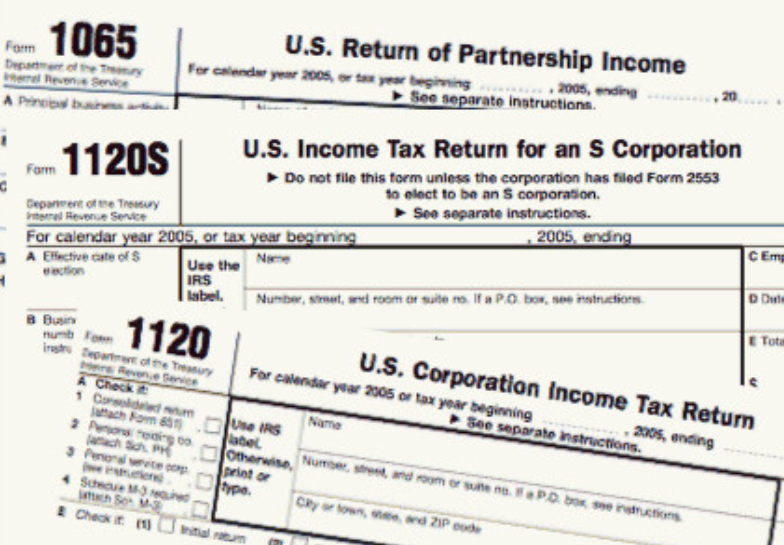
Nearly 30 million Americans file a Schedule C, according to IRS Statistics of Income data. They are the freelance designers, the rideshare drivers, the Etsy sellers, the consultants who went out on their own last year.
They are the largest segment of business in the country, and one by one, they are among the least profitable clients a firm can take on. The fee is small, the books are a mess, and the work to file them is mostly cleanup you cannot bill for.
The instinct is to treat them as a necessary loss, the cost of a full roster. That instinct is wrong. The sole proprietor is not an unprofitable client. They are a profitable client served with the wrong model.
Why the math breaks
After more than four years building tax tools for the self-employed, I came to see that the problem is almost never the return. A Schedule C is simple to prepare when the inputs are clean. The inputs are just never clean.
Most sole proprietors mix personal and business money in one account. They keep no records through the year, so the mileage log is a guess and the receipts live in a glovebox. Nothing gets recorded until April, and what lands on your desk is not a tax return but a reconstruction project. You rebuild a year of activity from a bank statement, and every hour you spend doing it is an hour the client never pays for.
The client loses too, and more than they realize. Missed deductions are expensive for the self-employed: the home office, the IRS standard mileage rate of 72.5 cents per mile for 2026, the self-employed health insurance deduction, the SEP-IRA or solo 401(k), the qualified business income deduction. A driver who never logged miles can forfeit thousands of dollars in legitimate write-offs, simply because the records do not exist.
The new pressure in 2026
Two changes this year make clean books matter more, not less. Under the One Big Beautiful Bill Act, the reporting threshold for Forms 1099-NEC and 1099-MISC rises from $600 to $2,000, and the 1099-K threshold has reverted to $20,000 and 200 transactions. Fewer information returns will reach your clients, which sounds like a break. It is the opposite. The income stays taxable; only the paper trail disappears. The client who once pieced income together from a stack of 1099s now has nothing but their own books to rely on, and most keep none.
Meanwhile the cost of getting it wrong is climbing. The IRS underpayment rate sits at about 7% for 2026, and the penalty applies once a client owes as little as $1,000. A sole proprietor who sets nothing aside through the year does not just owe in April. They owe with a penalty on top.
The model that works
Firms that serve this segment profitably do not work harder in March. They change the setup so the mess never reaches the return.
Start at onboarding. Get every sole proprietor onto a dedicated business account on day one, connected to software that captures transactions as they happen. That one step solves commingling at the source and turns a year-end reconstruction into a running record. Then let automation handle the coding, and spend your time on the judgment that pays: the deductions, the estimates, and the entity-timing question of whether an S corporation election is worth it yet.
Price it as a fixed-fee package, not by the hour. Hourly billing punishes you for messy clients; a flat year-round fee aligns the work with the value. And turn estimated taxes into four short quarterly check-ins. That cadence keeps clients out of penalty territory and quietly converts a once-a-year filer into a year-round advisory relationship.
The takeaway
Thirty million Schedule C filers are not going away, and they are not the problem. The annual-cleanup model is. Pick a handful of your most painful sole proprietors before year-end, get them on a separate account, connect their books, and put quarterly check-ins on the calendar. Do that, and next March you will be advising these clients instead of reconstructing them, and getting paid for it.
===
Alon Livshitz is the co-founder and CEO of KiwiBooks (kiwibooks.ai), an AI-native bookkeeping platform built for small businesses, sole proprietors, landlords, and the accountants and tax professionals who serve them. Before founding KiwiBooks, he spent more than four years at Intuit as a staff product manager leading QuickBooks Self-Employed and working on TurboTax. Try KiwiBooks free for CPAs at https://kiwibooks.ai.
Sign in to get access to this free resource, and all of our whitepapers and reports.

Download this content today!
Register Now Already registered? Click here to Log In