




Now that we are in the midst of summer, you may be spending more time at your vacation home at the beach or by a lake. Generally, you can claim tax deductions for this second home within generous limits if you itemize on your tax return.
But suppose you decide to rent out the place for a couple of weeks at the end of the summer. This can raise some thorny tax issues if you’re “on the fence.”
Basic ground rules: For starters, income earned from renting out a vacation home—whether it is offered online, through an agent or by yourself—is taxable, like other most other forms of income. On the other hand, a landlord can deduct the usual raft of expenses—including utilities, repairs, insurance, mortgage interest, property taxes and a depreciation allowance—to offset part of the tax liability.
Recommended Articles
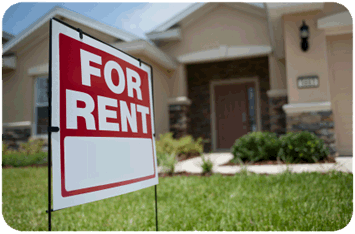

There’s a special safe-harbor rule that can provide greater flexibility for short-term rentals. If the rental lasts for two weeks or less per year—no more than 14 days—the rental income is exempt from tax, but you can’t deduct any expenses attributable to the rental either. It’s a non-tax event as far the IRS is concerned.
If you turn into a more frequent landlord, you may even qualify for a valuable tax loss if your attributable expenses exceed rental income. But there’s another tax hurdle to overcome: the personal use test.
Specifically, you can’t claim a loss if your personal use exceeds the greater of 14 days or 10% of the number of days the home is rented out. So, you must allocate time spent at the home between business and personal use days. For instance, if your family vacations at the home the last three weeks of the summer, you will exceed the personal use limits, regardless of the number of days the place is rented out.
This may require a little shuffling to maximize the tax benefits. Obviously, the number of personal-use days versus the number of rental days can be critical.
As a result, you might postpone a few family-use days at year-end or rent out the place for another week or two. Just keep an eye on the 14 day/10% limit as the year draws to a close.
Key point: If you spend time at the home prepping for a rental or closing up the place for the season, those days don’t count as personal-use days for this purpose. Neither do days spent making repairs at the home. And that remains true even if the rest of the family tags along the trip just for their personal enjoyment.
Finally, there’s yet another tax complication for vacation home rentals. Under the passive activity loss (PAL) rules, you may deduct expenses from this passive activity only up to the amount of your passive activity income. A limited exception allows you to write off up to $25,000 of loss against other income, subject to a phase-out between $100,000 of adjusted gross income (AGI) and $150,000 of AGI.
Practical advice: Meet with your clients to work out the details for their situation. Make sure they have a full understanding of all the rules.
Sign in to get access to this free resource, and all of our whitepapers and reports.

Download this content today!
Register Now Already registered? Click here to Log In
Tags: Income Taxes, second home, tax breaks, Taxes, vacation home