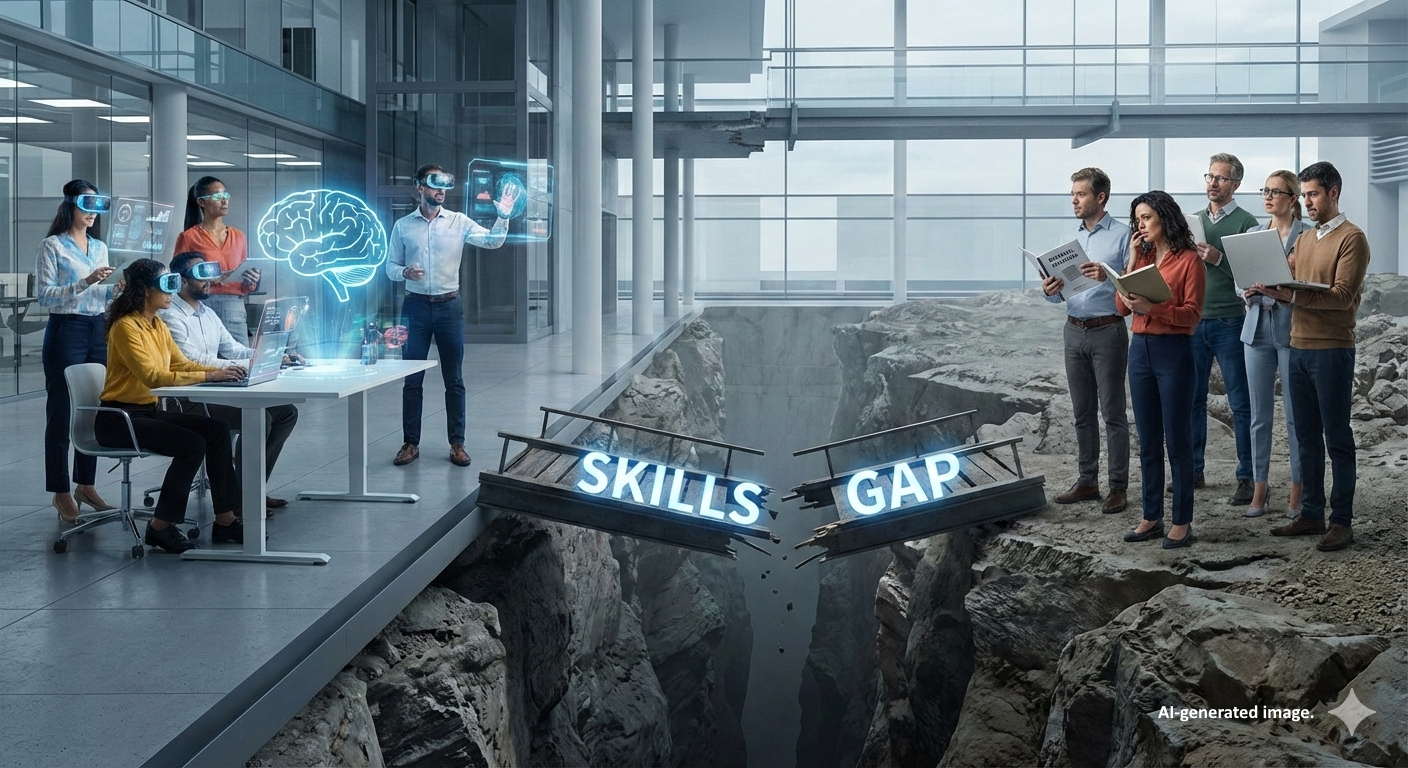




Everyone knows AI is coming for the technical work in accounting. What most firm leaders haven’t fully absorbed yet is that as AI handles more routine tasks, the skills that will actually differentiate your firm are becoming distinctly more human.
I’m talking about strategic judgment, relationship building, asking insightful questions, connecting seemingly unrelated pieces of client information into actionable insights. These capabilities can’t be automated, and they represent exactly what makes accountants valuable when AI can handle the mechanical work.
The problem? These are also the first capabilities to disappear when people are burned out.
What AI Actually Demands From Us
When I work with firms on AI adoption, most of the conversation centers on technical decisions: which tools to buy, how to train people on new platforms, which processes to automate first. These are legitimate questions that deserve thoughtful answers.
Recommended Articles
Staffing March 12, 2026
Professionals on the Move – March 2026 Part I

Firm Management December 11, 2025
Professionals on the Move – Dec. 2025
What almost no one asks is whether their people have the mental and emotional capacity to develop the skills that AI can’t replicate. That question matters more than any technology decision.
Consider what AI fundamentally cannot do. It can’t build the kind of trust that makes a client willing to share what actually keeps them awake at night. It can’t make the intuitive leap that connects a client’s casual comment during a meeting to a significant strategic opportunity. It definitely can’t read the dynamics in a room and recognize when pushing back on a decision is necessary.
These capabilities require presence, emotional bandwidth, and cognitive space to think beyond the immediate task. When people are operating in survival mode—and 82% of employees are currently at risk of burnout—they don’t have access to these higher-level capabilities. Research shows that when people operate without real recovery, their decision quality drops: pattern recognition and mental flexibility suffer, nuance is easier to miss, and complex situations get squeezed into overly simple, sometimes risky choices.
Why Advisory Training Often Fails
Most firms have incorporated some version of “become more advisory” into their strategic planning. They invest in training programs, develop new service offerings, and emphasize being proactive with clients.
Then everyone returns to their unsustainable workloads, and very little actually changes.
Advisory work requires slowing down enough to notice patterns in client data, asking thoughtful follow-up questions instead of rushing through a checklist, and thinking several steps ahead about what a client might need before they articulate it themselves. All of that demands mental space and the ability to be genuinely present in conversations.
The Human Skills That Actually Define Value
As AI becomes more capable of handling routine work, what remains for humans centers on judgment and connection.
Asking better questions becomes crucial
AI can process enormous amounts of data and provide answers to queries, but knowing which questions to ask requires understanding context, reading subtext in what clients say and don’t say, and connecting information across different domains.
Building authentic trust matters more than ever
Clients don’t simply want technically accurate information delivered efficiently. They want to feel understood, and creating that kind of relationship requires emotional bandwidth and capacity for genuine presence.
Strategic thinking separates advisory work from compliance work
This means connecting a client’s current financial situation to future opportunities they haven’t considered, recognizing risks on the horizon that haven’t shown up in their data yet, and helping them position their business for changes in their industry. This kind of forward-looking perspective requires cognitive space to think beyond immediate tasks.
None of these essential human skills can develop properly in people who are chronically exhausted. Employees experiencing high burnout consistently perform worse on tasks that require creativity, innovation, and complex problem-solving.
Creating Capacity for What AI Can’t Replace
The capabilities that make humans valuable in an AI world—judgment, strategic thinking, relationship building—require cognitive and emotional resources that burnout systematically depletes. This is where the business case for well-being becomes clear. Fulfillment ROI measures the business impact when firms prioritize sustainable workloads alongside performance. Firms with engaged teams see 23% higher profitability and 18% higher productivity.
I’ve worked with a Top 200 firm losing a quarter of their staff annually, with partners working 70-hour weeks year-round. After shifting metrics from hours to outcomes and eliminating low-value work, their revenue grew 30% over two years while turnover dropped to 25%. Busy season hours? Maximum 50-55 hours.
People started having strategic client conversations naturally because they finally had the mental space to be present instead of reactive.
Building the Right Conditions
Advisory skills aren’t purely technical competencies you can transfer through training alone. They’re ways of thinking and relating that only develop under sustainable working conditions.
Protect time for thinking
When calendars are filled back-to-back with no space to process information or reflect on client situations, strategic thinking can’t develop. Make it legitimate for your team to block time to think through client situations without producing immediate deliverables.
Create conditions for presence
People can’t be genuinely present in client interactions when they’re mentally juggling multiple urgent priorities or when their focus is constantly interrupted. Build clear priorities, protect focus time, and create systems that work reliably without demanding constant attention.
Reward the right behaviors
If you primarily measure and reward billable hours, you incentivize transactional relationships over deep client partnerships. Start recognizing people who prevent problems before they occur, who have proactive conversations with clients, and who develop genuine loyalty.
Where Real Advantage Lives
The firms that will thrive as AI becomes more sophisticated aren’t necessarily the ones that adopt the most advanced technology first. They’re the firms that create conditions where human capabilities can genuinely flourish.
The technology will continue advancing. Will you be by your people to ensure they have the capacity and training to do the work that technology can’t replace?
==
Amy Vetter, CPA, CITP, CGMA, is the CEO of The B³ Method (Business + Balance = Bliss) Institute, where she empowers accounting professionals to transform their firms through connected leadership and client advisory excellence. With over 25 years of experience, including executive roles at global technology companies, Amy blends deep industry knowledge with mindfulness principles to help practitioners create sustainable success.

Thanks for reading CPA Practice Advisor!
Subscribe Already registered? Log In
Need more information? Read the FAQs