



As the days grow shorter and temperatures drop, many of us feel it in our bones, work becomes harder, we have no motivation, and even small tasks feel more tiring. Having this in mind, Resume.ai ran a survey of over 1,000 full-time office workers in the United States and showed that this isn’t just a feeling but a real blockage for many.
Key findings:
- 42.2% of full-time employees feel increased anxiety at work during winter
- 15.5% of workers experience extreme anxiety
- Gen X (43.7%) and Millennials (43.2%) are the most affected by seasonal anxiety and motivation loss, while Gen Z (11.5%) experience a much lower impact
- Increased anxiety during winter months can be a call for a burnout recovery
How age and work setup can play a significant role in how workers feel and why the effect differs across different circumstances, can be found on the blog https://resume.ai/reports/winter-career-hibernation/.
15.5% of workers experience extreme anxiety at work during winter, survey reveals
The survey reveals a clear pattern experts call “career hibernation.” For many employees, work shifts go from being an opportunity to grow into something to deal with until the year ends. This phenomenon is particularly noticeable in larger companies, where the focus moves from hitting KPIs to simply “getting through the day.”
Recommended Articles


In the broader picture, it can be connected with a psychological disorder known as SAD (Seasonal Affective Disorder), which affects about 5% of U.S. adults precisely. However, according to the survey, anxiety is far more common, followed by motivation loss, burnout, and work-related stress.
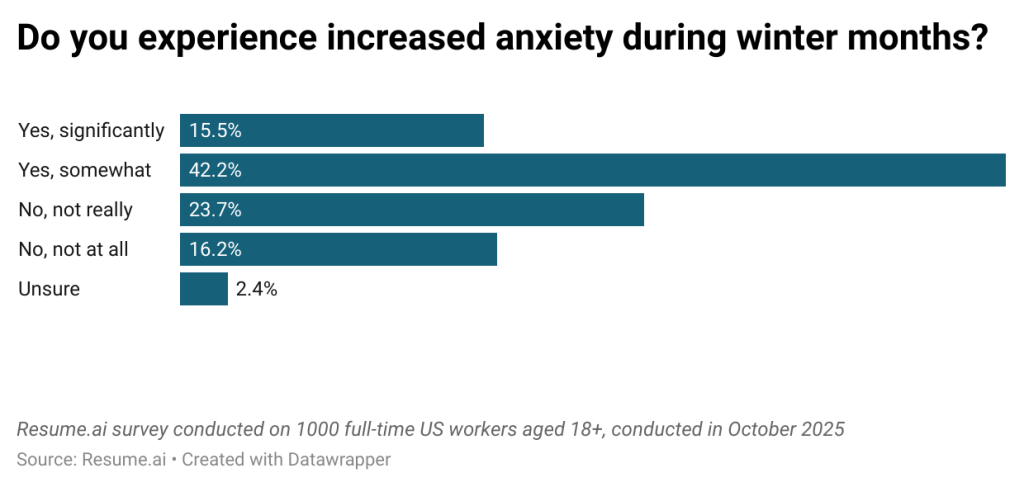
When asked how often they experience unpleasant feelings related to their job, 15.5% of respondents report feeling significantly more anxious during this period, while 42.2% notice a subtle increase in anxiety. Meanwhile, nearly a quarter of workers (23.7%) say working during winter doesn’t really affect their stress levels, and 16.2% feel no impact at all, with a small portion (2.4%) of them being unsure.
Is it just a winter dip or a call for a burnout recovery?
A seasonal slowdown can often feel like more than just the winter low, and in many ways, it imitates the signs of job burnout. Fatigue, lack of focus, and a drop in motivation can all appear the same on the surface, making it difficult to tell whether you simply need a seasonal reset or a deeper recovery.
Amanda Augustine, a Certified Professional Career Coach (CPCC) and resident career expert at Resume.ai, explained, “A seasonal dip in motivation shouldn’t be mistaken for a lack of ambition. In many cases, it’s your body’s way of signaling a need to rest and recalibrate. With a little self-awareness and a few small adjustments, professionals can turn this natural slowdown into a period of renewal, allowing them to emerge from winter more balanced, focused, and career-ready than before.”
It is crucial for workers to recognize the difference between a winter slump and burnout so they can recharge and maintain long-term career well-being.

Thanks for reading CPA Practice Advisor!
Subscribe Already registered? Log In
Need more information? Read the FAQs