



The Small Business Employment Index (SBEI) from top 15 accounting firm CBIZ reported a seasonally adjusted decrease of 0.83% in November, marking the third consecutive month of declines.
The CBIZ SBEI tracks payroll and hiring data for more than 2,800 companies with 300 or fewer employees across the U.S. The index indicated a seasonally adjusted decrease of 0.58% in October.
In November, 64% of industries tracked in the index experienced job losses, painting a picture of broad weakness, according to the accounting firm. Eighteen percent of companies in the index increased staffing, while 63% made no change to their headcounts and 19% reduced employment totals.
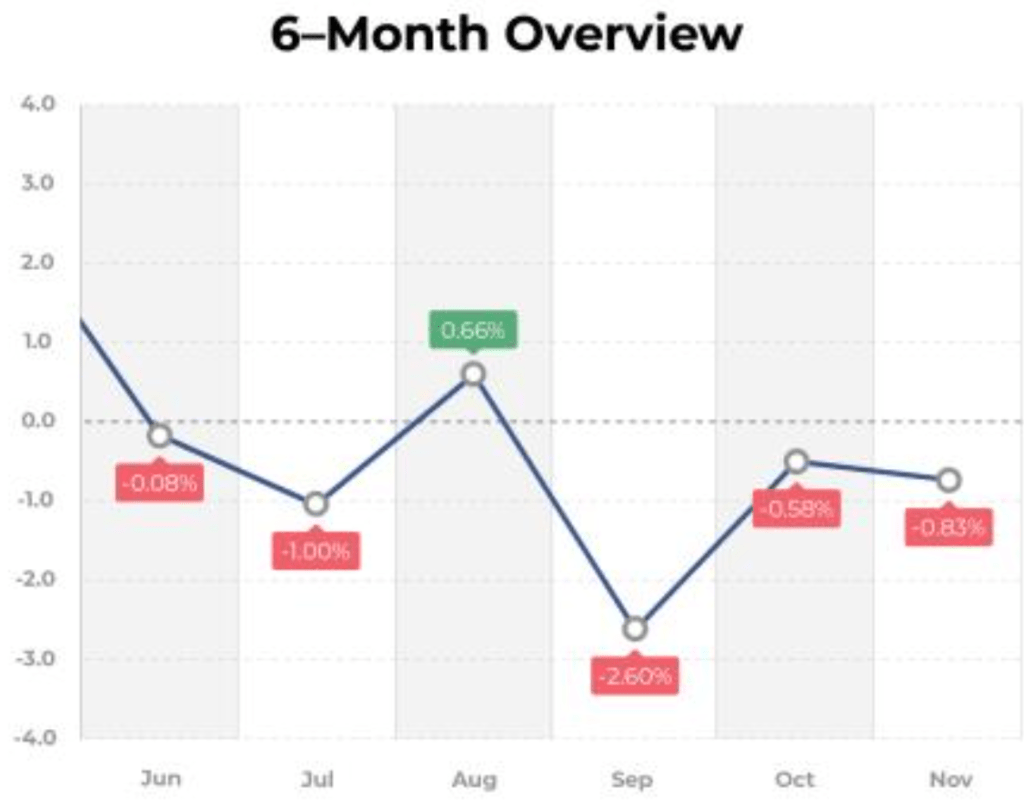

“While there is optimism about the potential growth under the new administration, the fundamentals of the U.S. economy remain sobering,” Anna Rathbun, chief investment officer of CBIZ Investment Advisory Services, said in a statement. “SBEI has been negative for five of the last six months, reflecting persistent challenges. High prices continue to weigh on consumers, business margins remain under pressure, and elevated borrowing rates are impacting interest rate-sensitive sectors despite the positive sentiment surrounding changes in Washington.”
The Bureau of Labor Statistics’ employment report for November indicated hiring growth that beat expectations, showing an overall increase of 227,000 private-sector jobs. The national unemployment rate increased slightly to 4.2%. The report is inclusive of all non-farm private employers across businesses of all sizes. The ADP employment report for November indicated hiring growth among medium and large-sized companies. There was an overall increase of 146,000 private-sector jobs for the month, according to ADP. Despite overall growth, small businesses accounted for a decrease of 17,000 jobs on a seasonally adjusted, month-over-month basis. The ADP report counts small businesses as companies with 49 or fewer employees, while the CBIZ SBEI uses data from companies with 300 employees or fewer.
“Just as October’s BLS report contained noise from two hurricanes and strikes, November’s BLS report also brings distortions resulting from the rebound in hiring. Taken together, the two-month average nonfarm gain is 132,000, while the average of survey expectations is 160,000. From a relative standpoint, we are missing the mark,” Rathbun said.
The West (1.57%) was the only region to report an increase in hiring. The Southeast (-2.06%) saw the largest decline, followed by the Central (-0.51%) and Northeast (-0.49%) regions.
From an industry standpoint, 16 out of the 25 industries represented in the CBIZ SBEI experienced job losses, led by administrative and support services, financial services, and not-for-profit. Agriculture, fishing and hunting, mining, and transportation saw increases.
“Looking at SBEI from a historical perspective, job losses in November heading into the holiday season have been associated with general economic weakness,” Rathbun said. “While retail saw the expected seasonal job gains, the broader picture shows declines across many industries, highlighting a pattern of softness. This isn’t predictive, but it’s an important association to note.”
What’s next? CBIZ said, “As we head into 2025, it remains uncertain whether the new economic policies will positively influence the job market for small and middle-market businesses.”
Sign in to get access to this free resource, and all of our whitepapers and reports.

Download this content today!
Register Now Already registered? Click here to Log In