



By Jule Pattison-Gordon
Governing
(TNS)
In brief:
- Floridians voted to give homeowners a permanent tax cut earlier this month. The measure was popular, passing with 62 percent of the vote.
- Local officials rely on property tax revenues to fund services. In some counties and cities, the cut could mean they have to pull back on things like police officer salaries and ambulances.
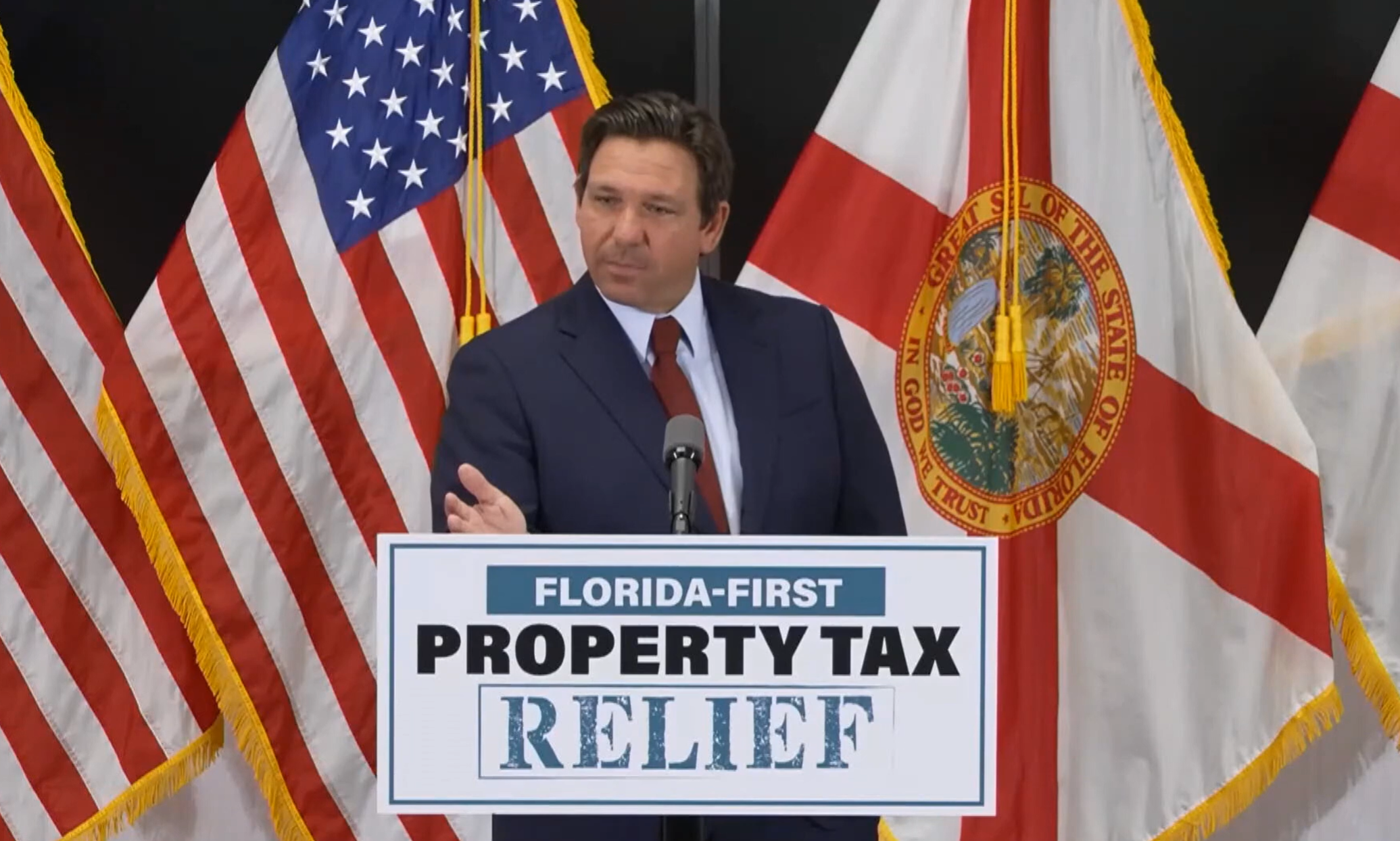
- Gov. Ron DeSantis wants to hold a special session of the Legislature to hammer out the details for implementing the tax cut—and discuss blocking local governments from raising other taxes to compensate for their losses.
Local governments in Florida are bracing for major revenue drops and a long-term reduction in their spending power. Midterm voters approved a ballot measure permanently slashing homeowners’ property taxes, significantly shrinking the funding pot for counties and municipalities. Several local officials in the state told Governing the measure jeopardizes their ability to offer crucial services or make capital improvements.
At the same time, Gov. Ron DeSantis has called a special session of the Legislature to hammer out implementation of the new law and ensure small rural governments don’t lose essential services. He has said, however, that he plans to prevent local governments from raising any new taxes to fill the gap.
“In terms of the immediate impacts on a county budget, they can’t be overstated,” says Leon County Administrator Vincent Long about the ballot measure, called Amendment 3. Under the measure, homestead property tax exemptions would triple starting in 2027 (except for school property taxes, which the measure leaves intact). In 2028, the size of the exemption would increase further, after which the exemption amount is indexed to inflation. Amendment 3 calls for the Legislature to create a schedule for local governments to ultimately eliminate all non-school property taxes on homesteads.
Property tax comprises nearly 59 percent of Leon County’s revenue, half of it from homesteads. Under the new ballot measures, about three-quarters of Leon County homes would see their county property taxes zeroed out.
That means that once the new law takes effect, Leon County will only be able to provide state-mandated services and meet legal obligations, like paying down debt. Funding for parks, libraries, animal control and veteran services “would be either significantly reduced or eliminated,” Long says. The county would also struggle to come up with matching funds to qualify for grants that support arts, affordable housing and homelessness programs, potentially ending those offerings as well. Property tax revenue funds the county’s emergency medical services, too, meaning the cut could require them to take as many as nine ambulances out of service.
DeSantis championed Amendment 3, arguing that the state was overtaxing its populace. Local property tax collections rose from $32 billion in 2019 to $60 billion in 2026 and are slated to continue rising at a pace “significantly outpacing inflationary factors and population growth,” the governor said in a proclamation he issued. Voters seemed to share his enthusiasm, with 62 percent ushering Amendment 3 into victory this November, over the 60 percent required. Leon was one of just three counties to vote down Amendment 3.
Local governments are now trying to prepare, including saving up funds, imposing hiring freezes, hitting the brakes on park and bridge improvements and other measures.
Recommended Articles
Bracing for Impact
Homestead property taxes typically comprise about 35 percent of county budgets, and about 43-47 percent of city budgets, according to Cragin Mosteller, director of external affairs at the Florida Association of Counties, and Florida League of Cities Legislative Advocate Charles Chapman, both of whom spoke to Governing in June. The impact on an individual local government depends on how much its property base skews residential and the values of the homes.
Orange County, which declined an interview pending clearer direction from the state, had warned residents about Amendment 3. On its website, the county says “a significant reduction in revenue could make it more challenging to maintain [public safety] staffing levels, expand services to meet population growth and invest in future public safety needs.” The county would consider adding new fees as well as reducing services, per its website.
Orlando Public Information Manager Ashley Papagni said in an email that the city will lose an estimated $30 million next fiscal year, money that helps fund public safety, parks, programs for kids and seniors and sidewalks and streets. To prepare, Orlando put a freeze on any new non-public safety positions and set aside a portion of this year’s fiscal savings into a “budget stabilization” fund.
In South Miami, which has a strong commercial center, the biggest immediate impacts will be delaying or derailing infrastructure improvement projects, says Mayor Javier Fernández.
The city is likely to scuttle a parks improvement plan that would’ve added features like walking and bike trails and racquet sports amenities as well as upgraded decades-old facilities. One initiative would’ve brought football facilities up to the level needed to allow residents to participate in local leagues.
Additionally, South Miami is likely to have to abandon a city hall redevelopment project that would have included creating a new library facility. Fernández also expects to drop plans to convert septic tanks to sewer systems near Biscayne Bay, to stop contaminants leeching out and polluting the water. South Miami had intended to repair 30-year-old streetscapes and replace aging culverts and bridges, but this plan required borrowing money, something the city can no longer afford. The project is likely set back five to seven years, Fernández says. In the short-term, the city may need to close lanes of traffic on structurally unsound bridges and deny entry to commercial vehicles, which tend to be heavier.
Down the line, Fernández worries that the tighter financial picture could mean difficulty paying police officers competitively enough to keep them.
Still, the mayor says he understands why a tax cut appealed to voters. He won’t try to raise taxes in other ways, should the Legislature end up allowing it, because the majority of his residents did vote for Amendment 3.
“I can understand, in this market, why people thought putting $4,000 in their pocket on average made a whole lot of sense for their households, and we’ve got to respect that,” Fernández says. “I don’t think it’s even a conversation about creating revenue sources or trying to identify new ways to tax residents. Clearly, they’ve spoken.”
Weakening Local Control?
Some local officials see Amendment 3 as being about more than providing tax relief—they believe it’s reshaping the role of local government. The law so reduces funding in some places that it strips local officials of any real choice about which services to offer.
“Is this an effort to centralize government at the state, to ensure that local governments have only those dollars available to them to fund state mandates?” Long says. Local governments that want to provide anything else would likely have to ask the state legislature to fund it, “which again just really flies in the face of home rule in Florida.”
Democratic State Rep. Gallop Franklin II told Fox49 he has doubts about a proposal from DeSantis to create grant funds for rural governments that could help make up for some losses. Forcing dependence on state grants creates the risk of political retaliation, Franklin said. Franklin also questioned whether the state even has the money to provide the grant funding long-term.
Amendment 3 isn’t the final word on property tax, and more changes could be coming down the pipeline. Incoming Gov. Byron Donalds is required to appoint a Taxation and Budget Reform Commission, which will evaluate the state’s tax structure and which can propose constitutional amendments. Donalds has said he hopes the commission will support the goal of ultimately repealing homestead property taxes in Florida.
Photo credit: Governor Ron DeSantis/YouTube
_______
© 2026 Governing. Visit www.governing.com. Distributed by Tribune Content Agency LLC.
Sign in to get access to this free resource, and all of our whitepapers and reports.

Download this content today!
Register Now Already registered? Click here to Log In