



By Jule Pattison-Gordon
Governing
(TNS)
In brief:
- Proposition 40 aimed to raise money for healthcare, food assistance programs and public education.
- Rather than tax high incomes, the ballot measure proposed to tax people with more than a billion dollars worth of “accumulated wealth”—a potential first for the U.S.
- Democratic leaders were split over whether to support the measure, and residents ultimately rejected it by a vote of 53 percent.
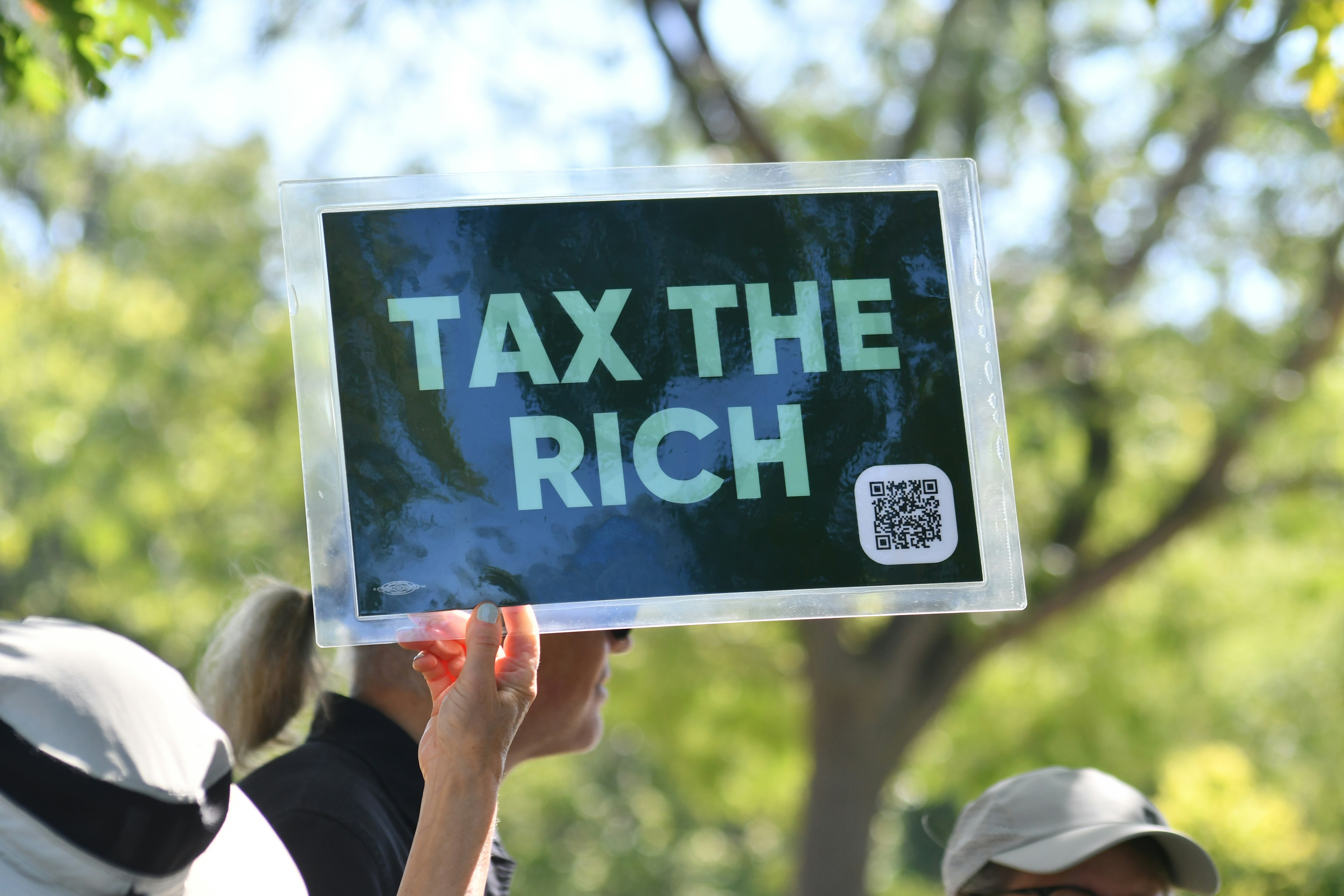
Voters turned out to the polls with economic worries top-of-mind, and, in states like Colorado and Washington, threw their support behind higher taxes on top earners. But even in this climate a bold billionaire tax proposal fell flat in liberal California. It was a measure that Sen. Bernie Sanders had called “the most important ballot item in the country.”
Experts are still analyzing Proposition 40’s defeat. If passed, the measure would’ve imposed a one-time, 5 percent tax, not on affluent residents’ income, but on their accumulated wealth. The tax targeted those whose net worth topped $1 billion. With federal funding cuts looming, the revenue would’ve gone primarily to fund healthcare, with some money also supporting food assistance programs and public education.
The Service Employees International Union-United Healthcare Workers West, which brought the ballot measure, argued hospitals would close and millions of residents would lose health insurance unless Proposition 40 passed.
But Proposition 40 divided Democratic leadership, muddying the waters for liberal voters. Critics of the proposal say Californians wisely rejected a measure that was poorly structured and which could’ve backfired by sending billionaires, and their taxes, fleeing for other states. Supporters, meanwhile, point out that the Yes on 40 campaign was vastly outspent by billionaire-funded opposition, and that many new ideas stumble on their first introduction. Proposition 40 may also have struggled because it was so unusual.
“We’ve never done a wealth tax in the United States,” saysJoe Bishop-Henchman, executive vice president of the National Taxpayers Union Foundation, which opposed the tax.
In November, a slim 53 percent majority of Californians rejected the measure.
Too Many Unknowns?
The creators of Proposition 40 aimed to tax wealth because income is often a smaller share of wealthy people’s economic power. Billionaires tend to hold much of their wealth in stock and other business equity, says Carl Davis, research director at the Institute on Taxation and Economic Policy, which supported Proposition 40.
“There are limits to how effective the income tax is at taxing the very top of the economic scale,” Davis says. California has the most billionaires of any state; by some accounts they paid 0.2 percent of their collective net worth in state income taxes in 2025, even as their wealth increased 30 percent that year.
Recommended Articles

Taxes November 10, 2026
Billionaire Tax Rejected by California Voters

Taxes November 5, 2026
Why California’s Billionaire Tax Was a Harder Sell Than Expected
But a wealth tax is more complicated than an income tax. It requires the state to determine not just the worth of stock investments and business interests but also art, collectibles, intellectual property and other items. (The tax would not have applied to real estate, pensions or retirement accounts.) The novel approach could’ve deterred some voters.
“I think people saw an issue with it being the only one [wealth tax] of its kind. So, it’s not like other places have done this this way,” Bishop-Henchman. “People are uncomfortable being experimented on.”
Other countries’ wealth taxes are narrower than Proposition 40’s proposal, because they only tax items with easily measurable values, like property, stocks and bonds, Bishop-Henchman says.
The proposed tax’s one-time nature was also controversial. Some, like Davis, saw this as a benefit, saying it would allow voters to test out the idea before deciding whether to institute it long-term. But others viewed the one-time nature as a detriment. Critics argued that a big one-off tax haul wasn’t worth the risk of some billionaires leaving to evade the tax and thus reducing tax collections long-term.
Any proposal to tax the rich prompts speculation about whether the wealthy will flee, taking their economic power with them to a state with friendlier policies—and Proposition 40 was no exception. It’s hard to predict exactly how well-heeled taxpayers will respond. When Massachusetts raised taxes on millionaires, affluent residents did not appear to flee. But given how much wealth is concentrated in a small group of people, just a few decamping can have an outsized effect. A handful of billionaires left California last year, including Google co-founder Sergey Brin, who then spent more than $100 million opposing Proposition 40.
California’s Legislative Analyst’s Office said Proposition 40 would “probably” deliver the state “tens of billions of dollars” overall, with some of the revenue going to cover tens of millions of dollars in annual tax administration costs. (Although the proposed tax would’ve been a one-off, billionaires could’ve spread out payments over five years.)
The Legislative Analyst’s Office also anticipated some billionaires departing, causing state income tax revenue to drop by “hundreds of millions of dollars or more per year” going forward. There were also plenty of unknowns. “It is hard to know what actions billionaires would take to reduce the amount of tax they pay,” the office noted, and “much of the wealth is based on stock prices, which are always changing.”
These uncertainties may have left voters confused—and when voters are confused, they tend to stick with the familiar and vote down new proposals, says Dr. Gabriel Lenz, political science professor at the University of California, Berkeley.
Deep Pockets and Deep Divisions
Divisions within the Democratic party may have added to voters’ ambivalence about the measure. The California Democratic Party supported it, while outgoing-Gov. Gavin Newsom and incoming-Gov. Xavier Becerra both opposed it. The politicians said a one-time tax haul wasn’t worth potentially scaring off billionaires—and their tax revenue—long-term. Unions were split too. The California Teachers Association opposed Proposition 40, while SEIU-United Healthcare Workers West supported it. Proposition 40 would’ve directed more funding to healthcare than to schools.
Prominent leaders’ opposition “probably mattered quite a bit” to voters, Lenz says. And while big Silicon Valley companies are unpopular, they’re also a major employer and major driver of California’s economy. Plenty of residents oppose measures that have the potential to jeopardize the state’s economic outlook.
Billionaires also spent heavily to oppose the wealth tax, ultimately donating $378.4 million to the fight, while the Yes on Proposition 40 campaign raised just $33.5 million, 10 times less. The opposition team funded TV ads, while supporters relied on less spendy methods, like social media campaigns.
Billionaire Backlash
Still, Californians don’t seem to be completely souring on taxing the rich. An October poll found 45 percent of residents would prioritize taxing California billionaires to help fund public services over trying to keep the wealthy around. Just 35 percent deemed it more important to “keep billionaires in the state because of the tax revenue, jobs and investments they provide.”
And in the same election that defeated Proposition 40, 61 percent of voters approved a different measure that made permanent a temporary income tax hike on the top 2 percent of income earners.
Proposition 40’s rejection likely has more to do with concerns over its specifics and billionaires’ ability to evade it by leaving, rather than a pushback on taxing the wealthy, Lenz says, noting Americans consistently report support for taxing higher incomes and worry about inequality.
However, some view Proposition 40’s fate as a stark rejection of taxing net wealth.
“In a blue wave, here, in one of the bluest states in the country, in a state where wealth inequality is a top-of-mind subject for voters, and in a year where multiple other tax increases pass, this was resoundingly defeated,” Bishop-Henchman says. “If you can’t pass it in California, can you pass it anywhere?”
Photo credit: Meg/Unsplash
_______
© 2026 Governing. Visit www.governing.com. Distributed by Tribune Content Agency LLC.
Sign in to get access to this free resource, and all of our whitepapers and reports.

Download this content today!
Register Now Already registered? Click here to Log In