


By Ben Paviour
The Sacramento Bee
(TNS)
The Proposition 40 billionaire tax suffered a defeat earlier this month by a roughly four-point margin. But on the heels of a midterm tsunami where Democratic politicians across the country pilloried the “billionaire class,” Prop. 40’s supporters and critics alike are coming up with new taxation plans targeting the ultra-wealthy.
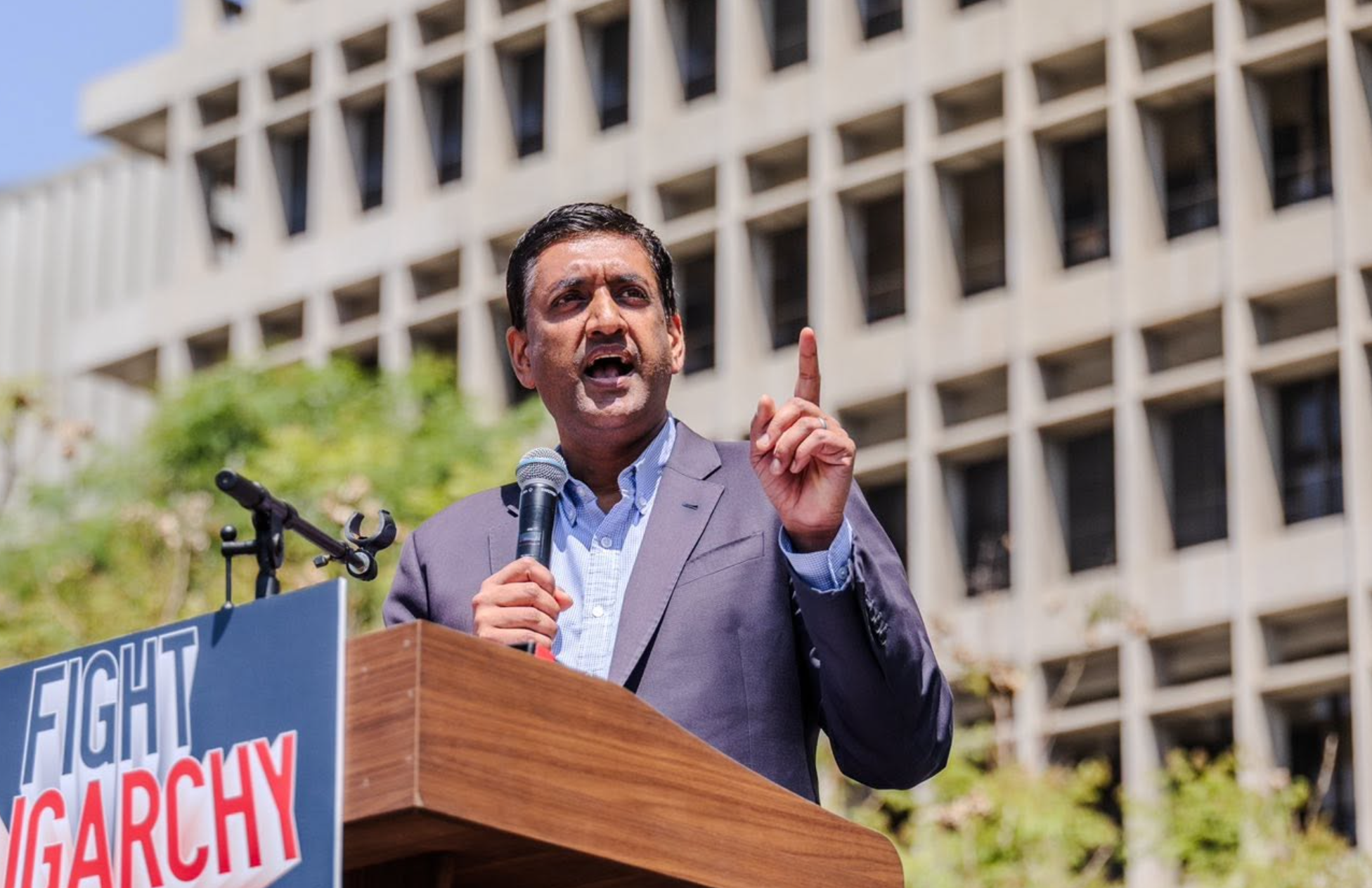
The topic is likely to feature prominently in the looming Democratic presidential primary. Possible contender Rep. Ro Khanna, D-Fremont has already taken shots at Gov. Gavin Newsom’s plan for a national billionaire tax as insufficiently bold.
And at the state level, some key Prop. 40 backers have signaled they’re likely to put forward new proposals that they hope can win over a broader constituency of Democratic politicians and groups that opposed this year’s measure.
“This came very close, and with some minor adjustments, we would have won,” said California Federation of Labor President Lorena Gonzalez.
Recommended Articles

Taxes November 10, 2026
Billionaire Tax Rejected by California Voters

Taxes November 5, 2026
Why California’s Billionaire Tax Was a Harder Sell Than Expected
Dave Regan, the president of SEIU-United Healthcare Workers West and a driving force behind, vowed on election night to return with a ballot measure in 2028 if lawmakers failed to address federal healthcare funding cuts with taxes on the ultra-wealthy.
“That’s not a hypothetical,” Regan said. “That is our plan.”
Billionaire tax: the sequel
Both Gonzalez and Emmanuel Saez, a UC Berkeley economist who helped draft Prop. 40, said the lack of support from top elected Democrats and some left-leaning interest groups likely made the difference in the face of more than $380 million in spending from billionaires and other Prop. 40 critics.
Recommended Articles

Saez said he’d been in discussions with SEIU-UHW staff about a future tax. He said it was too soon to definitively say how it might be structured. But he guessed that a future proposal might contain a permanent annual wealth tax at a rate of something like 1% per year rather than Prop. 40’s one-time, 5% wealth tax. And the French academic said the proceeds would need to go to a range of public services rather than the billionaire tax’s overwhelming focus on healthcare.
“You need a broader coalition and that requires more preparation in developing it,” Saez said, alluding to SEIU-UHW’s quick rollout of the measure last year to address Medicaid funding cuts. “You also need to be able to get more elected officials on your side.”
Saez noted that by the time the billionaire tax was announced in late October 2025, unions were already coordinating on Proposition 3. That measure, which passed easily this month with more than 60% support, was also a tax on high earners, albeit a permanent extension of an income tax rather than the more novel wealth tax.
Some of the groups backing Prop. 3, such as the California Teachers Association, ended up rejecting Prop. 40 and were featured in ads against the measure.
Separately, California Medical Association CEO Dustin Corcoran has suggested possible changes to California’s income tax, floating the idea of creating new tax brackets for the ultra-wealthy in a meeting with reporters in September.
Corcoran emphasized the state needed to prioritize “sustainable and predictable” funding.
CMA spokesperson Erin Mellon said in an email that adjusting tax brackets was just one idea under consideration as the group meets with other organizations to “gauge interest and get feedback.”
“We are having exploratory conversations with a broad range of organizations, but no formal coalition has been established,” Mellon said. “Any revenue-generation plan should support the state’s most critical needs, including healthcare, education and workforce development.”
Both Saez and Gonzalez argued that income taxes alone would likely be insufficient to force California’s ultra-wealthy to pay their “fair share.”
“The more you have, the more you’re able to avoid income tax and get your wealth in other ways,” Gonzalez said.
While the Legislature could raise income taxes with a two-thirds vote in both chambers, any wealth tax would have to be done through a ballot-box constitutional amendment. It would need to include language unwinding Proposition 42, a ban on wealth taxes voters narrowly approved this month.
‘Billionaires are the boogeymen’
Any future tax effort would likely run into some of the same criticism that dogged Prop. 40. Some skeptics argued the tax would chase away billionaires to other states, endangering California’s economy and tax revenues—concerns that could also apply to future efforts.
Still, Prop. 40’s failure buys some relief for billionaires, who’d begun making plans to relocate or restructure their assets, according to Jonathan Forster, a partner at Weinstock Manion who develops estate plans for high-net-worth individuals. Forster said it wasn’t just billionaires who feared the tax, but also his clients worth hundreds of millions of dollars.
“There’s no certainty that this won’t be on the ballot again,” Forster said. “So I would say that people are still nervous.”
It’s not clear what role Building a Better California might play in a future tax fight. The political committee funded almost all the efforts to thwart Prop. 40, drawing funding from a range of tech titans such as Google co-founder Sergey Brin and Doordash CEO Tony Xu.
The group’s spokesperson, Abby Lunardini, declined to comment directly on the group’s plans beyond advancing its goals: to “improve affordability, quality of life and state governance in California.”
Other critics of Prop. 40 lamented Sacramento’s perennial fixation on taxation. David Crane, a Silicon Valley political fixer and co-founder of the group Govern for California, said Prop. 40 was just the latest iteration of special interests trying to channel populist progressive messaging to draw new revenue streams that help their bottom line.
“It’s all marketing for them, because billionaires are the boogeymen,” Crane said. “None of this is translating into better services for Californians.”
________
©2026 The Sacramento Bee. Visit sacbee.com. Distributed by Tribune Content Agency LLC.
Sign in to get access to this free resource, and all of our whitepapers and reports.

Download this content today!
Register Now Already registered? Click here to Log In