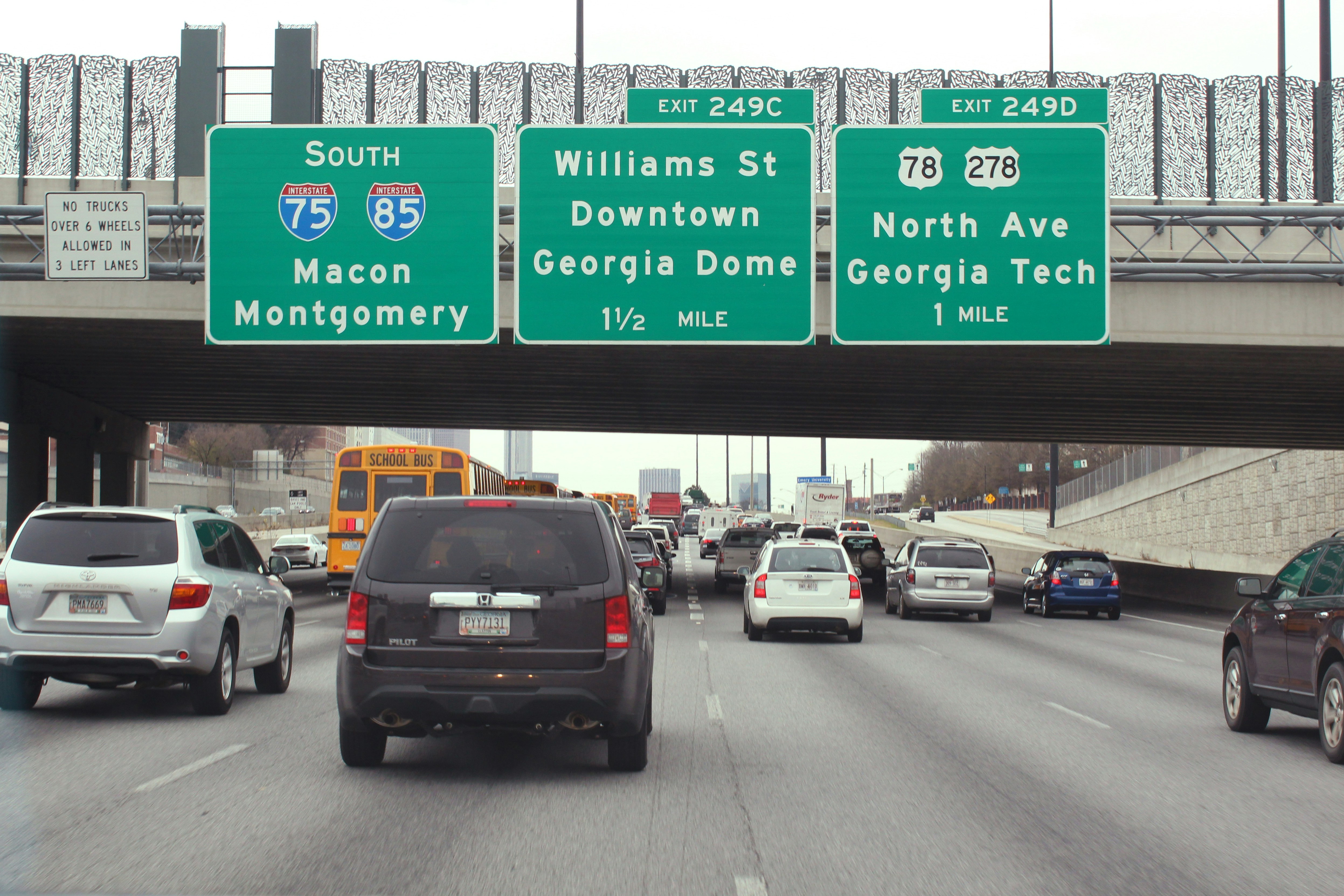




When it comes to the cost of going to work, the most expensive cities aren’t always the ones you’d expect.
To find out what returning to the office really costs, resume-building platform resume.io analyzed federal wage, commuting, fuel, and price data across the 36 largest U.S. metropolitan areas and surveyed 1,000 full-time office workers about what they actually spend each week getting to work, parking, eating and covering childcare.
Office workers lose 23 working days a year to their commute
The study revealed that the average office worker spends 184 hours a year commuting, the equivalent of 23 full working days. In New York, that number jumps to a staggering 236 hours or nearly 30 working days.
Workers also reported spending an average of 43.4 minutes longer getting ready on an office day than on a day working from home, including showering, dressing, and preparing food to take with them. Over a year, that’s another 137 hours, or 17 working days.
Combined, that’s more than 40 working days a year spent travelling to work and getting ready for it.
The commute is the biggest cost, but work lunches are a close second
Across the 36 largest U.S. metros, the average full-time worker spends $6,736 annually on the direct, out-of-pocket costs of going into the office. Working out at $34.73 for every day spent in the office.
Getting to and from work, unsurprisingly, comes out at the highest expense coming in at $2,751 a year, 40.8% of the share. Taking into account a number of costs including public transit and gas.
Food and coffee bought out when in the office comes to a staggering $2,598 a year, nearly as much as the commute itself. It’s also the costs that are overlooked by many workers due to it coming out in small increments rather than calculated as a whole payment.
More than half of workers (53.2%) say their office costs have risen over the past 12 months, with 19.1% saying they’ve increased “a lot.”
Orlando revealed as the city where the office costs the biggest share of your salary
Orlando tops the list of U.S. cities with the highest “commuting tax” relative to salary, with the cost of going to work consuming 11.9% of the average local salary. Riverside, CA, follows at 11.4%, then San Antonio at 11.1%, Tampa and Nashville tied at 10.8%.
All eight of the cities with the highest commuting costs relative to salary are in the Sun Belt. These metros grew fast during the remote-work years when professionals sought more affordable housing. Thanks to the growing return-to-office mandates, many workers now face a long commute back in.
At the other end of the scale sits San Jose, CA, home to Apple, Nvidia and Alphabet, where office workers spend just 6% of the local average salary getting to work—the lowest of all 36 cities studied. Boston follows at 7%, with New York, Washington, D.C., San Fransico, and Seattle all at 7.3%.
Austin is the most expensive city in dollar terms, at $7,424 a year
In dollar terms, the top of the table is dominated by distance rather than expensive cities. Austin, TX, leads at $7,424 a year, followed by Riverside ($7,403), Orlando ($7,351), Sacramento ($7,322), and San Francisco ($7,294).
Orlando and Austin may be most surprising additions to the top 10, ranking first and third, respectively. Both also have notably long commute distances. Austin has the longest average commute among the 36 metropolitan areas studied at 33.4 road miles each way, with more than a quarter of Austin jobs held by people living over 50 miles from work.
California still takes three of the top five places, partially driven by having the highest fuel prices in the country at $5.47 a gallon in Los Angeles and San Francisco against a national average of $4.01, combined with long distances and heavy car dependence.
Of the cities studied, Las Vegas is the cheapest place to be an office worker at $5,588 a year, helped by the shortest commute distance of any city studied at 15.6 miles.
Whether you’re in Orlando, San Jose, or somewhere in between, the numbers make one thing clear: the office has a price, and it isn’t printed on anyone’s pay slip.

“What stands out to me is how easy it is to underestimate the true cost of going into the office,” Amanda Augustine, resident career expert at resume.io and a Certified Professional Career Coach, said in a statement. “Most people account for obvious expenses like gas, train fare, or parking, but those costs can add up quickly when you factor in everything else that comes with a day at the office. When you look at the total cost over the course of a year, it can represent a meaningful portion of someone’s paycheck.
“That’s why I encourage job seekers to consider in-office expectations when evaluating an offer. Two jobs with the same salary on paper may look very different financially if one requires you to be on-site five days a week and the other only requires two. Before accepting an offer or negotiating your compensation, estimate what the commute will actually cost you in both money and time. That gives you a much clearer picture of what the opportunity is worth to you.
“It’s also worth taking a closer look at the benefits an employer offers. Commuter benefits, transit subsidies, parking assistance, or greater flexibility around when and how often you’re expected in the office can all affect the overall value of your compensation package. If you’re considering a new role, these are fair questions to ask before you decide to accept the job, negotiate, or walk away. Your salary matters … but so does what it costs you to earn it.”
Photo credit: Melvin Chavez/Unsplash
Sign in to get access to this free resource, and all of our whitepapers and reports.

Download this content today!
Register Now Already registered? Click here to Log In
Tags: commute, employees, Payroll, return to office, workers