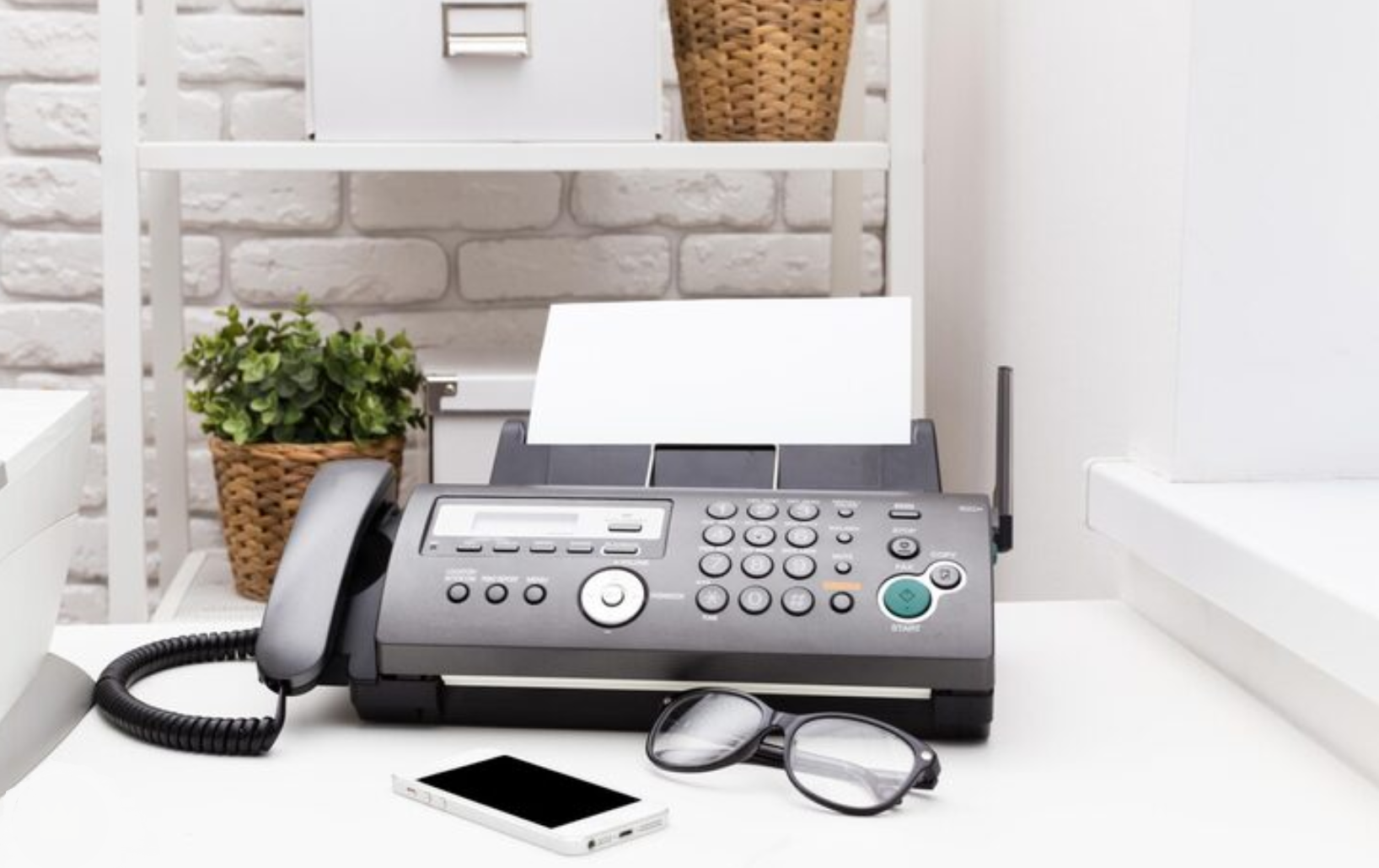




Tax documents, signed engagement letters, and IRS correspondence still move by fax more often than most accounting and tax firms would like. But the machine sitting in the back office isn’t doing any firm favors. Between the leased phone line, paper, toner, and the staff time spent monitoring incoming pages during peak filing weeks, traditional fax is an expense that adds up fast and delivers very little in return. A digital fax service handles the same document flow through email, without the hardware or the wasted staff time.
What changes when a firm switches
A digital, or cloud-based, fax service replaces a physical machine and analog phone line with an internet-based system. Instead of documents printing at a machine, incoming faxes arrive as PDFs directly to a secure inbox. Outgoing faxes work the same way in reverse, sent as easily as an email attachment. Critically, the firm’s existing fax number carries over, so nothing changes from the perspective of clients, banks, or the IRS on the other end of the transmission.
Why this matters for accounting firms specifically
Fax remains one of the few document transmission methods still trusted across financial institutions, government agencies, and legacy client systems, largely because it has historically been treated as more secure and more legally defensible than email. That reputation hasn’t disappeared, but the technology underneath it has changed. Firms that keep an analog machine running purely out of habit are paying ongoing costs for a method that can be replicated, and often improved upon, digitally.
The timing matters too. Firms that wait until the middle of busy season to address recurring operational costs miss the best window to make a change. The slower months between filing seasons are the ideal time to evaluate and transition core infrastructure like this.
Action steps for the firm and IT team
- Tally current fax costs: Include the phone line, any leased equipment, and consumables such as paper and toner. Most firms are surprised how much a rarely used machine actually costs on an annual basis.
- Confirm number portability: Existing fax numbers typically transfer to a cloud-based service without disruption, preserving continuity for clients and institutions who already have the number on file.
- Establish shared inbox routing: Rather than one person monitoring a machine, incoming faxes can route to a shared group email address so partners, administrative staff, and preparers all see incoming documents without a single point of failure during high-volume weeks.
- Automate document filing: Many digital fax platforms can be configured to save incoming documents directly into existing client folders in cloud storage systems, reducing manual scanning and the risk of misfiled paperwork.
- Pilot the transition outside of peak season: Running the new system in parallel with the old one for a short window, well before the next filing deadline, allows any issues to surface and be resolved without disrupting client service.
- Review data handling and security terms: Given the sensitivity of tax and financial documents, firms should confirm any vendor’s encryption standards, data retention policies, and access controls before committing to a switch.
Questions Firms Should Be Prepared to answer
Q: Will this slow down document delivery to institutions like the IRS or a bank?
A: No. Digital transmission is typically as fast as, or faster than, a physical machine, and it removes the risk of busy signals or paper jams disrupting a time-sensitive delivery.
Q: Is a cloud-based fax service as secure as what we have now?
A: When properly configured, a digital fax platform encrypts data in transit and restricts access to authorized users, which is often a more controlled environment than a shared machine sitting in an open office area.
Q: Do we lose our fax number in the process?
A: No. The number transfers to the new service and continues to function exactly as it did before, from the sender’s perspective.
Q: Can staff who prefer the old process still send faxes the traditional way?
A: Most digital platforms support sending from a desktop, a mobile device, or a virtual print driver, so staff can adapt at their own pace rather than being forced into an unfamiliar workflow overnight.
The broader takeaway
For accounting and tax firms, operational efficiency isn’t just about cutting a line item. Every recurring cost tied to outdated infrastructure is time and budget that could otherwise go toward client service, staff development, or growth. Fax may not be going away anytime soon given how deeply embedded it is in financial and regulatory workflows, but the hardware behind it doesn’t need to stay the same. Firms that treat this as a routine infrastructure review, rather than a disruptive overhaul, tend to find the transition is far simpler than expected.

ABOUT THE AUTHOR:
Scott Carr, owner of Farmhouse Networking in Grants Pass, Oregon, is a veteran Network & Computer Systems Architect with over 30 years of IT experience. For over a decade, he’s led his team in delivering proactive, secure, and fully managed IT services to more than 80 businesses—including accounting and finance firms that rely on data security, compliance, and efficiency. Scott’s hands-on, jargon-free approach ensures every client understands their technology and gains confidence in their systems. His firm is known for fast, responsive support—most issues are resolved within 15 minutes—and deep expertise in cybersecurity, network design, and IT compliance. Learn more about how Farmhouse Networking supports the accounting industry at https://www.farmhousenetworking.com/finance-it-support/.
Photo credit: frabrikasimf/Freepik
Sign in to get access to this free resource, and all of our whitepapers and reports.

Download this content today!
Register Now Already registered? Click here to Log In