



The 2026 tax year brings significant changes to information reporting.
The Working Families Tax Cuts or H.R. 1 created new federal income tax deductions for qualified tips and qualified overtime compensation. Those provisions received a lot of attention when the law passed. But behind those deductions is another change that tax professionals need to prepare for: new information-reporting requirements.
The IRS has updated Forms 1099-NEC, 1099-MISC, and 1099-K for 2026 to separately report information related to tips and, where applicable, qualified overtime compensation. At the same time, the reporting threshold for certain payments has increased from $600 to $2,000.
These are more than form changes. They affect the information businesses need to track, the documents taxpayers will receive, and the information preparers need to review when completing 2026 returns.
For tax practices, now is the time to understand what is changing and consider how those changes may affect client intake and return preparation.
Why Information Reporting Is Changing
The Working Families Tax Cuts created temporary deductions for qualified tips and qualified overtime compensation. The deductions generally apply for tax years 2025 through 2028, subject to eligibility requirements and limitations.
Information reporting plays an important role in administering those deductions.
For qualified tips, Internal Revenue Code section 224 ties the deduction to amounts reported on specified information statements or reported by the taxpayer on Form 4137, Social Security and Medicare Tax on Unreported Tip Income. For qualified overtime compensation, section 225 similarly connects the deduction to information furnished to the taxpayer.
Tax year 2025 was unusual because the law was enacted on July 4, 2025, after payroll and reporting systems were already operating for the year. The IRS provided transition relief and did not revise Forms W-2, 1099-NEC, 1099-MISC, or 1099-K to separately report the new information for 2025.
That changes for 2026.
The IRS has revised the applicable information returns so payors can separately identify information taxpayers may need to determine their deductions.
Forms 1099-NEC and 1099-MISC Add New Information
For 2026, Forms 1099-NEC and 1099-MISC include new fields related to tips and qualified overtime compensation.
Form 1099-NEC, Nonemployee Compensation, adds:
- Box 1b for cash tips
- Box 1c for Treasury Tipped Occupation Codes
- Box 1d for qualified overtime compensation
Form 1099-MISC, Miscellaneous Information, adds:
- Box 13a for cash tips
- Box 13b for Treasury Tipped Occupation Codes
- Box 14 for qualified overtime compensation
The distinction between total compensation and qualified amounts matters.
For example, the IRS instructions state that the overtime amount reported is not necessarily all compensation earned during overtime hours. Qualified overtime compensation generally means the portion paid above the worker’s regular rate when the overtime is required under section 7 of the Fair Labor Standards Act. With traditional time-and-a-half compensation, that generally means the additional “half” portion rather than the worker’s entire time-and-a-half payment.
That distinction creates an important review point for preparers. A taxpayer may know how much “overtime pay” appears on a pay statement, but that figure may not equal qualified overtime compensation for purposes of the federal deduction.
Form 1099-K Changes, Too
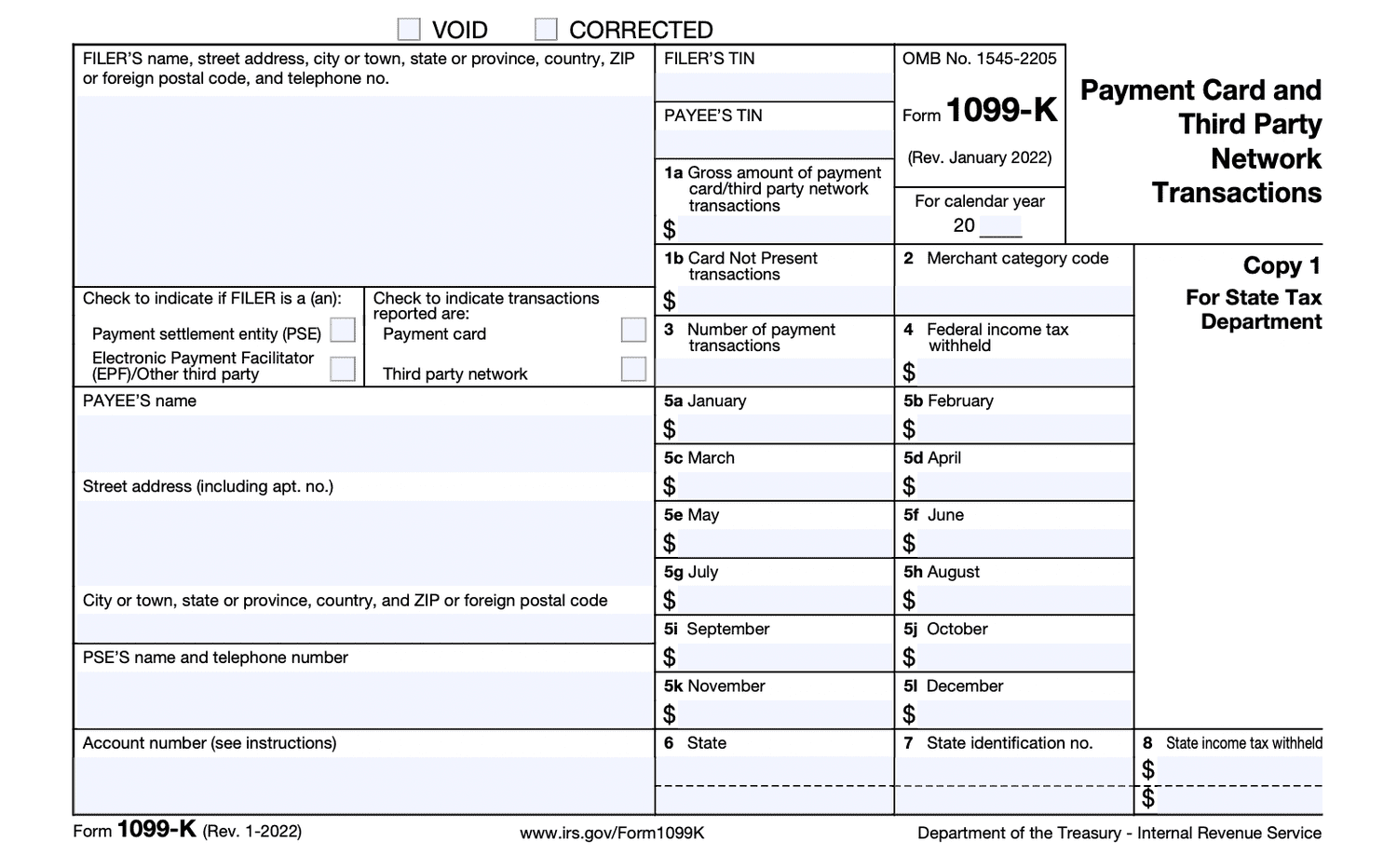
Form 1099-K, Payment Card and Third Party Network Transactions, also changes for 2026.
The revised form includes:
- Box 1c for cash tips
- Box 1d for Treasury Tipped Occupation Codes
This change is particularly relevant for taxpayers who receive tips through payment platforms and other reportable transactions.
The Treasury Tipped Occupation Code, or TTOC, identifies the occupation in which the taxpayer received the tips. Treasury and the IRS issued final regulations in April 2026 (effective June 12, 2026) identifying more than 70 occupations in which workers customarily and regularly receive tips.
That information helps determine whether the taxpayer’s tips may qualify for the new deduction.
For preparers, the occupation code provides another data point to review. The existence of an amount labeled as a tip does not, by itself, establish that the taxpayer qualifies for the deduction. Eligibility still depends on the requirements in the law and IRS guidance.
The $600 Threshold Is Changing
The new reporting fields are not the only development firms should watch.
OBBB section 70433 increased the information-reporting threshold under Internal Revenue Code section 6041 from $600 to $2,000 for payments made after December 31, 2025. The same threshold generally applies to remuneration for services covered by section 6041A.
For example, the IRS states that the Form 1099-NEC reporting threshold for qualifying payments made in 2026 is $2,000 rather than $600. The threshold is scheduled to be adjusted for inflation after 2026.
That may mean fewer Forms 1099 for some businesses and recipients.
However, preparers should be careful about what they infer from a missing form. A reporting threshold determines whether the payor generally must issue an information return. It does not necessarily determine whether the underlying payment is taxable to the recipient.
That makes client interviews and complete records as important as ever.
Form 1099-K H Follows a Different Reporting Framework
Third-party network transactions have a separate 1099-K threshold.
The OBBB restored the de minimis exception for third-party network transactions that generally existed before changes made by the American Rescue Plan Act. Under Internal Revenue Code section 6050W, a third-party settlement organization generally is not required to report a participating payee’s third-party network transactions unless the gross amount exceeds $20,000 and the number of transactions exceeds 200.
Those thresholds do not apply to every Form 1099-K situation. Payment-card transactions are subject to separate reporting rules and TPSOs may issue Forms 1099-K below the federal threshold. State reporting requirements may differ from the federal threshold. For example, Massachusetts requires TPSOs to report payments of $600 or more to payees with a Massachusetts address, regardless of the number of transactions.
This distinction is worth emphasizing with clients.
There is no single “$2,000 1099 rule” that applies uniformly to every information return. Forms 1099-NEC and 1099-MISC and Form 1099-K operate under different statutory provisions and reporting requirements.
What Tax Practices Can Do Now
For firms, the practical question is not simply, “What changed on the form?” It is, “What should we change in our process?”
Before the 2027 filing season begins, firms can review several areas.
- Update client organizers and interview questions. Consider whether existing questions adequately identify tip income, qualified overtime compensation, nonemployee compensation, and income received through third-party networks.
- Educate staff on the new fields. Preparers and reviewers should understand what the new boxes represent and, equally important, what they do not prove by themselves.
- Prepare clients who issue information returns. Business clients may need to collect or retain information differently to meet the new reporting requirements. Waiting until January to identify missing occupation codes or distinguish qualified overtime from total compensation could create avoidable problems.
- Do not rely exclusively on Forms 1099. The higher reporting threshold may result in taxpayers receiving fewer information returns even though the underlying income remains relevant to their tax return.
- Review information-return filing procedures. Firms that prepare information returns should also be aware of another operational change. The IRS says its Information Returns Intake System, or IRIS, becomes the sole electronic filing platform in the 2027 filing season for information returns previously accepted through the legacy FIRE system. Firms that still depend on FIRE should prepare for that transition.
Look Beyond the New Boxes
Changes to information reporting can appear routine. A few new boxes are easy to treat as another annual form revision.
The 2026 changes deserve a closer look.
New deductions for tips and overtime have created new reporting requirements. A higher reporting threshold changes when certain Forms 1099 are required. Form 1099-K follows a separate threshold. And the IRS is changing how information returns are electronically filed.
Together, these developments affect more than compliance. They affect how firms collect information, communicate with business clients, review taxpayer documents, and prepare returns.
Firms that address those questions before filing season can spend less time resolving them when deadlines are approaching.
For more information, sign up for Taxing Subjects, the Drake Software blog.
About the author: Taylor Rodier is the legislative affairs manager at Drake Software, where she has served since June, 2022.
Sign in to get access to this free resource, and all of our whitepapers and reports.

Download this content today!
Register Now Already registered? Click here to Log In