



By Macon Atkinson
Bloomberg News
(TNS)
WASHINGTON — The Trump administration is touting its tax-advantaged investment accounts for those under 18, but critics say the accounts may only reach those who are already set in life.
Parents can contribute up to $5,000 annually to what Republicans have dubbed Trump Accounts and children born between 2025 and 2028 receive a $1,000 federal contribution from the Treasury. Treasury Secretary Scott Bessent said during a ceremony Monday that 6 million children are already signed up, and 86% are families earning less than $200,000.
Several companies have said they’ll contribute to the accounts. One of the largest gifts in the public-private partnership comes from philanthropists Michael and Susan Dell, who initially donated $6.25 billion and announced over the weekend they’re giving $250 to each of the first 25 million children who sign up. The gift gave the Dells a tax break.
But those who would benefit most may not understand how to navigate the IRS Form 4547 on their own or manage the accounts with an app that is similar to Robinhood. Tax-prep companies like H&R Block Inc. reported 99% of clients eligible for the $1,000 enrolled only when working with an accountant, noting the importance of having a professional explain the benefit and help clients act on it.
Some warn the accounts would disproportionately benefit White, middle- to upper-class families—who are more likely to already have generational wealth—if Congress doesn’t adjust the program.
“You may not have the financial sophistication to figure out how to do a Trump Account,” said Sen. Ruben Gallego, D-Ariz., who has introduced a bill that would automatically enroll newborns into a permanent program renamed “American Dream Accounts.”
Ways and Means Committee Chair Jason Smith, R-Mo., praised the program as a way for lower-income families to build generational wealth.
“When you look at poor families, they don’t have the resources to start investment accounts because they’re just trying to put food on the table,” Smith told Bloomberg Tax. “By doing this, it at least gives that child some ownership and benefit from compounding interest.”
Facing more barriers
Groups like the Democratic-aligned Washington Center for Equitable Growth are concerned there isn’t an asset limit provision to keep Trump Accounts from rendering children or their families ineligible for public benefits like healthcare and food assistance.
Tax experts also say different portions of the accounts will be taxed differently, making it a complicated asset.
“If Congress actually wants these accounts and, in particular, the $1,000 government contribution to actually reach every eligible American child, they’re gonna have to make it a process that people don’t have to take proactive steps to sign up for,” said Gabriel Zucker, a research fellow at the nonprofit Center for Taxpayer Rights, another group that has poked holes in the program’s structure.
Enrollment also excludes the people who need it most. The Center for Taxpayer Rights wrote in a letter to Treasury Secretary Scott Bessent that requiring families to sign up for the program and seed money through the tax-filing system creates barriers for people who don’t have a lot of financial resources or those who don’t file because their incomes are too low.
A spokesperson for Smith didn’t respond to requests for comment on these criticisms.
Potential fixes
Sen. Cory Booker, D-N.J., who once pitched his own version of the idea, is planning to work with Sen. Ted Cruz, R-Texas, on how to improve the program.
“There could be significant improvement, but this is a step in the right direction,” Booker told Bloomberg Tax.
Recommended Articles

In the House, multiple Republicans have introduced bills to make the pilot seed program permanent, along with other changes. Rep. Young Kim‘s, R-Calif., bill (H.R. 7737) would expand eligible investment options, while Rep. Adrian Smith‘s, R-Nev., bill (H.R. 8313) would index the $1,000 investment to inflation beginning in 2029.
“I think it’s a down payment on a bipartisan idea that can and should be improved over time,” said Ray Boshara, a policy adviser at Washington University’s Center for Social Development and the Aspen Institute Financial Security Program, who helped design the accounts for the 2025 tax package.
Boshara said there was also congressional interest in making changes to the program if it becomes permanent.
“With no automatic deposits, no benefit protections, no progressive deposits,” Boshara said, “chances are good that the racial wealth gap will increase.”
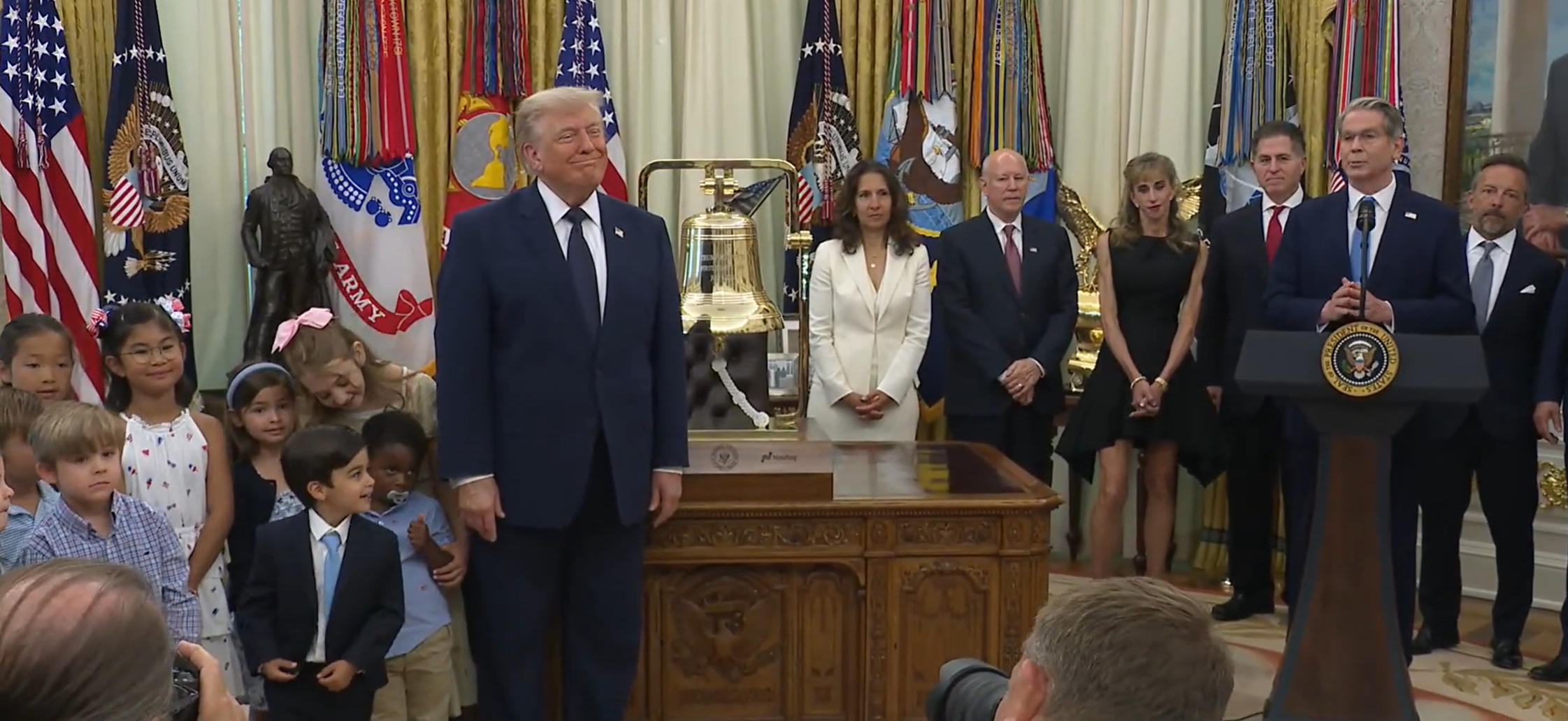
Photo caption: President Donald Trump smiles as Treasury Secretary Scott Bessent (right) speaks during a ceremony for Trump Accounts on July 6, 2026. (White House/YouTube)
_______
©2026 Bloomberg L.P. Visit bloomberg.com. Distributed by Tribune Content Agency LLC.
Sign in to get access to this free resource, and all of our whitepapers and reports.

Download this content today!
Register Now Already registered? Click here to Log In