



By Olivia Olander and Jeremy Gorner
Chicago Tribune
(TNS)
Decrying federal “headwinds” and drawing a contrast to the gridlock of past state administrations, Gov. JB Pritzker on Tuesday gave his approval to a nearly $56 billion spending plan that factored in both a windfall from the state’s gas sales tax and a number of election-year tax breaks.
“This is a budget for Illinois’ future, even as the federal government works to take us backward. We won’t go back,” Pritzker said during a signing event at the state’s Chicago headquarters in the West Loop.
Taking effect July 1, the budget covers the last six months of Pritzker’s current term as he seeks reelection to a rare third term and faces questions about a potential 2028 presidential run. It also comes as the most widely discussed issue from Springfield’s spring legislative session this year, with the effort to incentivize a new stadium for the Chicago Bears remaining unresolved.
Reflecting the haste with which the ruling Democrats muscled their budget through the General Assembly in an all-nighter ending just before dawn on June 1, Pritzker had to use his veto pen to cut more than $500 billion in approved spending—nearly 10 times the state’s entire operating budget—”due in large part to a single typographical error,” according to a message to lawmakers. The mistake, identified by the Democratic legislators who sponsored the spending plan, would have allocated that eye-popping sum for “a grant to Chicago Westside Branch NAACP for operating expenses.”
“Upon review, I concur with their assessment,” Pritzker wrote in a message explaining his line-item and reduction veto, which takes effect unless lawmakers vote to override the governor.
While more than a half dozen Democratic state lawmakers flanked Pritzker on Tuesday, the signing ceremony came shortly after another prominent statewide official of the governor’s own party took issue with funding cuts to his office.
Recommended Articles
Last week, Attorney General Kwame Raoul said at a downtown luncheon that overall funding for his office would decrease by about $10 million in the upcoming budget. Budget documents indeed show that overall funds to Raoul’s office during the current fiscal year amount to about $195 million, compared with a little less than $185 million for the coming fiscal year.
Raoul had called on Pritzker and other Democrats to set aside sufficient funds for his office as it aggressively tries to stave off actions by the Republican administration of President Donald Trump that could negatively affect Illinois.
Pritzker on Tuesday acknowledged Raoul’s work countering Trump but downplayed the potential reduction, saying the “adjustment” came in response to money from other sources, such as legal settlements. The attorney general’s office didn’t respond immediately on Tuesday to a request for further comment.
Raoul’s office has filed dozens of lawsuits against the Trump administration since January 2025—often partnering with other state attorneys general—on issues ranging from immigrant rights to federal efforts to deprive Illinoisans and residents of other Democratic-led states of much-needed funding. Raoul’s office has scored big wins in its legal fights, including helping thwart Trump’s attempt to deploy Illinois National Guard troops over Pritzker’s objections during last year’s federal immigration enforcement mission, known as Operation Midway Blitz.
But during the event hosted by the City Club of Chicago last week, Raoul said his office “can’t do this type of work without adequate investment.”
While the budget from the state’s general revenue fund increased, funding from other sources decreased, resulting in a smaller budget overall, Raoul said.
In a brief interview after the luncheon, Raoul said he wasn’t yet sure how the cut would affect his office’s work.
“I do appreciate that they have to pass a balanced budget. However, in an overall $56 billion budget, it’s hard to see how we wouldn’t have been a priority to be at least kept flat, which was all we were asking for,” he said.
Pritzker and other top Illinois Democratic leaders have blamed the Trump administration for making it more difficult than usual to craft a budget this year. The pressures from the federal level have included funding cuts to the state as well as actions such as the war in Iran, which caused gas prices to spike this spring. Democratic leaders, including some of those who spoke at the budget signing, have said the state is facing an affordability “crisis.”
Republicans, in turn, pinned the blame for affordability issues on state spending and, at times during the session, took thinly veiled shots at Pritzker’s perceived presidential ambitions.
“Governor Pritzker can’t campaign on affordability then govern through tax hikes,” House Republican leader Tony McCombie of Savanna said in a statement Tuesday. “By signing this budget, he chose to put more spending and more pressure on family budgets.”
In approving the budget, Pritzker at one point took a national perspective, knocking “failed policies coming out of Washington” and seemingly previewing selling points should he run for higher office.
“Here in Illinois, Midwestern grit, hard work and decency have guided our state to balancing our budget and living within our means, all while fighting to lower costs for Illinois families,” he said.
Pritzker and other Democrats also dropped numerous references to the two-year budget impasse under former Gov. Bruce Rauner, his Republican predecessor. “Responsible budgeting is no longer the exception in Illinois,” Pritzker said. “It is the rule.”
The $55.9 billion plan for the upcoming budget year doesn’t raise the state’s sales or income tax rates. However, it relies on a series of new taxes and tweaks to be balanced, while also reviving some temporary election-year tax breaks Democrats last deployed in 2022, when Pritzker was seeking a second term.
That includes a six-month pause on an inflation-based increase of a separate per-gallon gasoline tax that would otherwise jump by 1.3 cents to 49.6 cents per gallon on July 1. The package also includes a 10-day “sales tax holiday” from Aug. 7 to 16 for back-to-school shoppers.
Also, in an ironic move from Democrats, their budget relies in part on a windfall created by those same high gas prices. The state collects a separate 6.25% sales tax on gasoline, and Democrats are diverting $150 million of that unexpected surplus—money that otherwise would go to mass transit—into the state’s operating budget.
The budget also draws on $300 million from extending a cap on corporate deductions for operating losses on state taxes, $200 million in new revenue from a per-user tax on large social media companies and about $60 million from a new tax on cryptocurrency brokers. The plan also shifts $79 million in sales tax revenue from candy, soft drinks and grooming products—money that normally funds capital construction—into the operating budget.
What’s more, in a win for progressive Democratic lawmakers with the support of moderate colleagues in pushing for more revenue to stave off cuts, the revenue package authorizes new taxes on targeted digital advertising and online prediction markets. It also separates Illinois law from federal tax changes benefiting business owners who sell stocks. But the spending plan doesn’t rely on any immediate income from those proposals, given uncertainty over their revenue-generating potential and legality.
The spending plan includes a $350 million increase in funding for elementary and secondary education, with a total expenditure of $10.8 billion from the state’s general fund. The plan also includes a $118 million infusion for safety-net hospitals, which serve many patients on Medicaid.
Additionally, for low-income Illinois residents, the budget creates a $70 million program to direct food assistance to those kicked off the main federal food aid program due to new requirements the Trump administration says will crack down on benefits fraud. The state would automatically make one-time $400 payments to people who lost their benefits due to new federal work requirements. Trump and other Republicans in Washington last year championed expanding work requirements for those receiving benefits from the Supplemental Nutrition Assistance Program, or SNAP, to previously exempt groups, such as adults ages 55 to 64.
Separately, on Tuesday, the top Illinois Democrats still would not acknowledge the Chicago Bears could be on their way to building a stadium just over the border in Hammond, Indiana. The two chambers of the Illinois legislature were unable to agree by the end of the spring legislative session on a plan to aid the team’s move to Arlington Heights. Indiana’s GOP-controlled legislature earlier this year approved a measure authorizing a so-called stadium authority to help with public financing for a potential Bears’ move to the Hoosier State.
With talk surrounding whether Illinois lawmakers will be called back to Springfield for a special session this summer, Illinois House Speaker Emanuel “Chris” Welch said there needs to be an agreement in place between the legislature, the governor’s office and the Bears before asking legislators to convene at the state Capitol for a vote. Pritzker has also said a deal is needed before any special session.
Welch, a Hillside Democrat, expressed optimism that Illinois could still be the team’s first choice, arguing that the team’s statement about focusing on the Hammond site on June 5 was “a step backwards” from a statement earlier in the year that he believes had more specificity about a possible Indiana site.
“I think Illinois is still the place the Bears want to be,” Welch said. “I think it’s important that they tell us what they want. I think it’s important that we continue to have those conversations with them. And if we can get to an agreement, then we can ask the legislature to consider.”
Pritzker added: “We’re going to protect the taxpayers, that’s principle No. 1. Protect the taxpayers of the state of Illinois. We want the Bears to stay. I love the Chicago Bears. I want them to stay either in the city or in the state of Illinois, but I want them to be here, and we’re going to do everything we can that’s within reason to do that. But we’re not going to put that burden on working families across our state.”
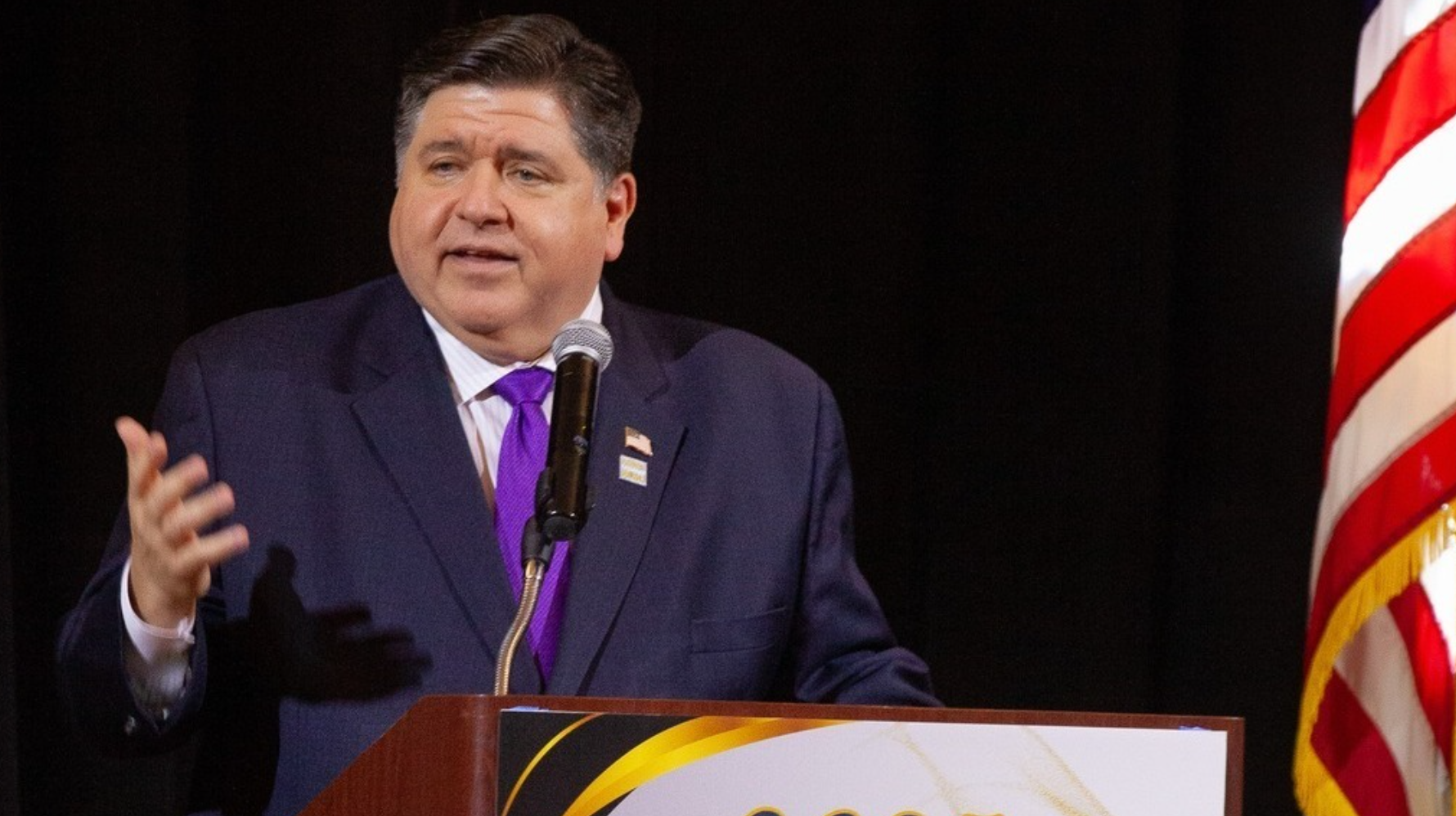
Photo caption: Illinois Gov. JB Pritzker
_______
©2026 Chicago Tribune. Visit chicagotribune.com. Distributed by Tribune Content Agency LLC.
Sign in to get access to this free resource, and all of our whitepapers and reports.

Download this content today!
Register Now Already registered? Click here to Log In