



In 2000, sitting in a college business class, I learned about a technological revolution that was going to fundamentally transform the retail industry. Mass production was going to give way to mass customization.
Advances in technology would allow consumers to design and purchase products tailored specifically to their individual preferences. From clothing and shoes to furniture and consumer electronics, the days of buying standardized products were supposedly numbered.
This is part 1 of a 5-part series on technology, and specifically, Artificial Intelligence. Many of these topics will be discussed during the live streaming Ensuring Success CPE and CE conference, Dec. 9-10, 2026. This conference lets CPAs and others earn up to 14 hours of free CPE credit or 6 hours of IRS CE credit in two days.
Coming soon, read parts 2-5 in the series.
- Part 2: The Human Limitation of Artificial Intelligence
- Part 3: Your Accounting Firm Is Not a Software Company
- Part 4: Are We Using AI to Solve the Wrong Problems in Accounting?
- Part 5: Stop Using AI Just to Do Things Faster
It was an exciting vision of the future. There was just one problem: it never materialized at the scale we anticipated.
More than 25 years later, mass production remains the dominant business model. Technology certainly transformed retail, but it did so in ways that were different from what we expected. Instead of designing our own products, most of us are perfectly happy choosing from an enormous selection of existing products and having them delivered to our door the next day.
Perhaps the mistake we made wasn’t overestimating the power of technology. Perhaps it was underestimating the difficulty of changing human behavior.
As I listen to predictions about how artificial intelligence will transform the accounting profession, I find myself thinking back to that college classroom.
Everything Is Changing, and Yet So Much Remains the Same
Let me be clear: I believe artificial intelligence will be transformative. I use AI extensively in my own accounting firm, in my professional life and as a tool to pursue my personal curiosity. Its ability to help us move from an idea to knowledge and from knowledge to practical application is remarkable.
But believing in the transformative potential of AI doesn’t mean believing that every prediction about its impact will come true.
As I have spent time preparing for this year’s Ensuring Success conference and following the broader conversation surrounding AI, I have noticed something interesting. Many of the recommendations for becoming an AI-ready accounting firm sound remarkably familiar.
Understand your processes. Document your workflows. Identify inefficiencies. Establish clear internal controls. Develop your people. Define your desired outcomes. Measure your return on investment.
These are all excellent recommendations.
They were also excellent recommendations 25 years ago.
One of the things I have often said throughout my career is that the best business consulting advice is often the most obvious thing that people just aren’t doing.
The arrival of artificial intelligence hasn’t changed that reality. If anything, it has made it more apparent.
AI Is Exposing the Problems We Already Had
Imagine an accounting firm that has spent years operating without clearly defined processes. Each employee prepares tax returns differently, communicates with clients differently and manages deadlines differently. The firm’s knowledge resides primarily in the heads of its experienced professionals, and its leadership spends much of its time responding to problems rather than preventing them.
Now introduce artificial intelligence into that environment.
What exactly are we going to automate? Which process are we going to improve? What outcome are we trying to achieve? How will we know whether the technology is making our firm better?
These aren’t fundamentally AI questions. They are business management questions.
For decades, accounting firms have struggled with inconsistent processes, ineffective communication, resistance to change and a lack of strategic direction. We have purchased new software, attended conferences and implemented new technologies, often hoping that the next solution would finally resolve these underlying challenges.
AI is an incredibly powerful tool, but we should be careful not to fall into that same pattern again.
A firm that doesn’t understand its existing processes will struggle to redesign them. A firm that hasn’t defined its value proposition will struggle to use AI to reinforce it. A firm that hasn’t established a culture of continuous learning will struggle to develop the new skills its employees need.
Artificial intelligence may help address these challenges, but leadership must still provide the direction.
Start With the Business, Not the Technology
One of the most valuable things accounting professionals can do today is temporarily set aside the question of which AI tools they should be using and instead ask themselves some fundamental business questions:
- What kind of accounting firm are we trying to build?
- Where are we creating meaningful value for our clients?
- What activities consume our time without creating corresponding value?
- Which of our processes exist simply because that’s how we’ve always done things?
- What prevents our people from performing at their highest potential?
The answers to these questions should drive our technology strategy, not the other way around.
Sometimes AI will be the answer. Sometimes the answer will be better conventional technology, clearer communication, improved processes or simply eliminating unnecessary work altogether.
The objective should never be to use more artificial intelligence. The objective should be to build a better accounting firm.
An Opportunity to Get Back to the Fundamentals
Perhaps one of the greatest benefits of the AI revolution will be its ability to force us to revisit the business fundamentals we have neglected for too long.
If the excitement surrounding AI finally encourages firms to document their processes, rethink their service offerings, invest in their people and establish a clear strategic vision, that alone would represent meaningful progress for our profession.
But we must recognize that the technology is only one part of that transformation.
In the next article in this series, we’ll explore what may be one of the greatest limitations on the widespread adoption of artificial intelligence: our own human behavior and our ability to change how we think, learn and work.
As the host of Ensuring Success 2026, I’m excited to continue these conversations with thought leaders from across the accounting profession. This year’s event will explore not only what is changing within our profession, but also what isn’t changing, what AI is actually delivering in accounting firms and how we can intentionally build stronger, more sustainable firms for the future.
Join us online December 9–10 for Ensuring Success 2026, where you can earn up to 14 hours of free CPE while exploring the issues shaping the future of our profession. Register for free at EnsuringSuccess.com.
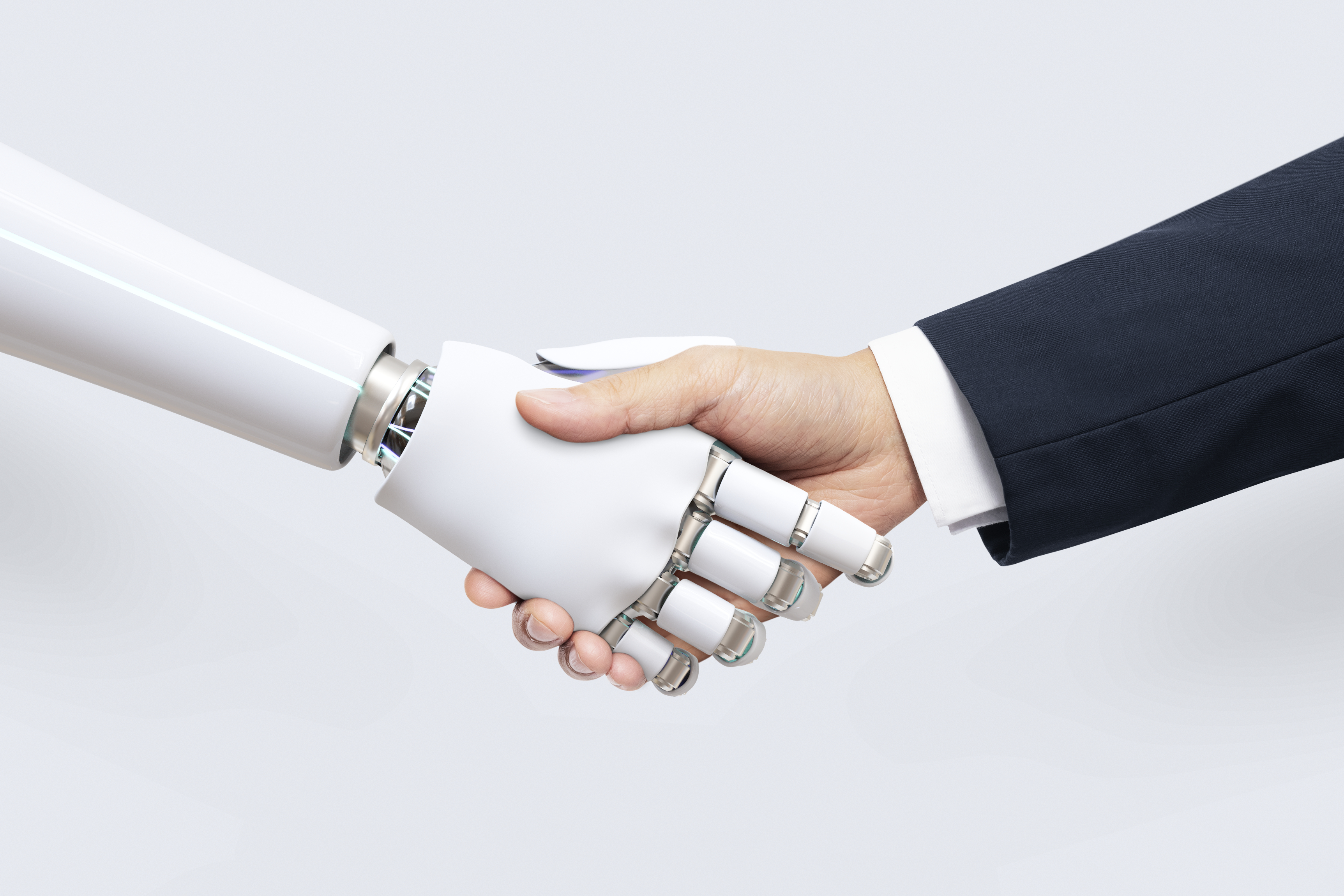
Artificial intelligence is revolutionary. The fundamentals of running a successful business are not.
Our opportunity lies in bringing the two together.
Sign in to get access to this free resource, and all of our whitepapers and reports.

Download this content today!
Register Now Already registered? Click here to Log In