

What’s it to you? This is often intended as a rhetorical question. In fact, it’s often said to be a taunt. The speaker means, “This is none of your business.”
Former Supreme Court Justice Antonin Scalia used the “What’s it to you?” phrase to describe the legal concept of standing.
People should go to court to settle legal disputes. The ones who go should also be affected by the dispute.
In the 1954 film, “The Caine Mutiny,” the ship’s captain was showing signs of mental instability.
Lt. Keefer pushed the ship’s first officer, Lt. Steve Maryk, to assume command of the ship.
Maryk ultimately did take control. This led to a court martial when the ship returned to port. Keefer escaped any responsibility.
The full responsibility for his actions fell on Maryk. It was he who had his skin in the game. The alleged mutiny was none of Keefer’s business.
Scalia developed a more formal description of standing for use by the courts. A plaintiff must show an actual injury caused by invasion of a legally protected right.
The plaintiff must show that the injury is traced to an action of the defendant. The plaintiff must show that the court’s decision can redress the injury.
Scalia was the voice on standing because he believed it was essential to protect the Constitution’s separation of powers.
If courts took up disputes based on some hypothetical harm, the court would be stepping on the legislature’s role to establish the law.
I previously wrote on something known as the “Johnson Amendment.” This limits the ability of a church to take political positions.
The church’s tax-exempt status could be placed in jeopardy. A church pastor is entitled, just like you and me, to have an opinion on candidates for office.
The problem, if there is one, arises when the pastor advocates for a particular candidate from the pulpit during a church service.
Several faith-based organizations filed a lawsuit in the Eastern District of Texas. The plaintiffs challenged the Johnson Amendment.
The District Court dismissed the case. There was no attempt to deny the plaintiff’s tax-exempt status.
Recommended Articles

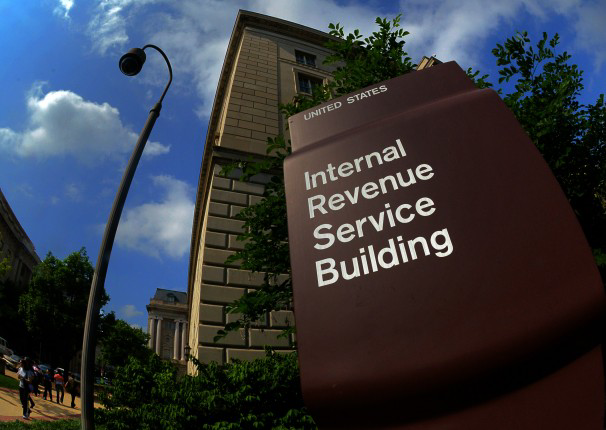
The IRS has a history of not enforcing the Johnson Amendment. The current administration’s Department of Justice agreed with the plaintiff’s claims.
The plaintiffs have appealed the case to the Fifth Circuit Court of Appeals, covering Texas, Louisiana and Mississippi.
Among other arguments, the plaintiffs appear to lack standing. The IRS is not attempting to revoke their tax-exempt status.
There is no evidence that the IRS will attempt to revoke the plaintiffs’ tax-exempt status in the near future.
Many faith-based organizations oppose the Johnson amendment. Some have deliberately flouted the amendment by openly advocating political views.
Some of these organizations have pushed for a fight. They have overtly supported candidates and causes from the pulpit, hoping for an IRS challenge.
This is because they believe that the courts will support their actions and, they hope, find that the Johnson Amendment violates the First Amendment.
But the IRS has not taken the bait. The plaintiffs before the Fifth Circuit have never been challenged for their actions.
I have previously written in support of the Johnson Amendment. Pastors and other church officials have wide latitude in expressing their political views.
It is only when the political views are expressed as an official position of the organization that the tax-exempt status could be questioned.
A church can host a candidate forum. The forum must be made available to all candidates for the office.
If one or more of the candidates choose not to attend the forum, it may go forward with, perhaps, just one candidate.
Members of the congregation can stand around and voice their political views and favored candidates. This can be done in church.
The pastor can join in these discussions. None of these actions would constitute the organization itself advancing political views.
People may challenge what I said in the last few paragraphs. There are many views that suggest the government has it in for faith-based organizations.
But the reality is that the IRS is not litigating Johnson Amendment cases. And if a church is simply worried that they might, it’s fair to say, “What’s it to you?”

ABOUT THE AUTHOR:
Jim Hamill is the director of tax practice at Reynolds, Hix & Co. in Albuquerque, NM. He can be reached at jimhamill@rhcocpa.com.
Photo credit: Freepik
_______
© 2026 the Albuquerque Journal (Albuquerque, N.M.). Visit www.abqjournal.com. Distributed by Tribune Content Agency LLC.
Sign in to get access to this free resource, and all of our whitepapers and reports.

Download this content today!
Register Now Already registered? Click here to Log In