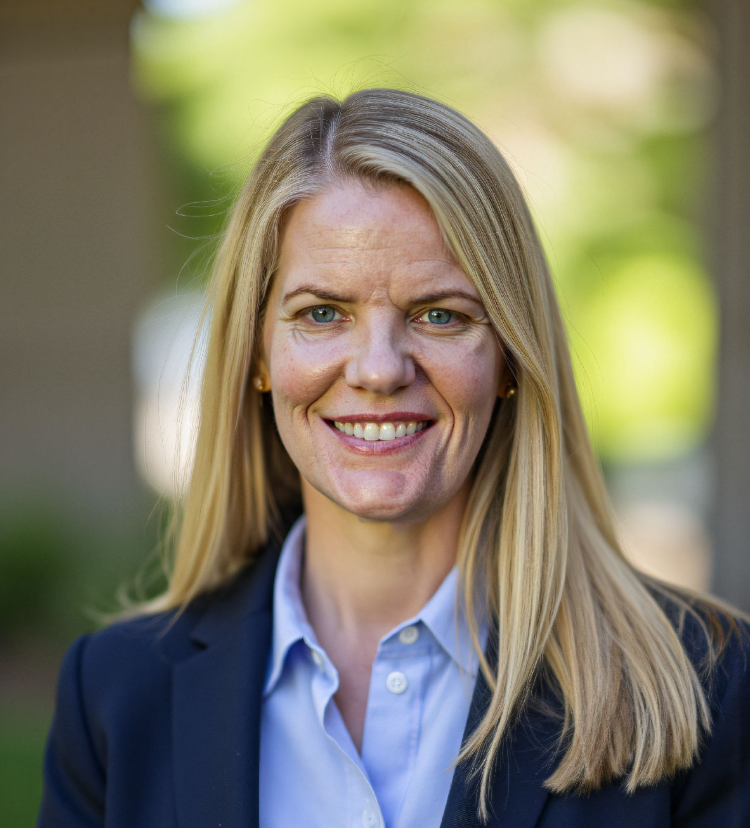




Intuit recently named Dixie McCurley as its first-ever managing partner in residence, a newly created role designed to bring the perspective of working accounting firms directly into Intuit’s strategy, product development, and go-to-market decisions for the profession. Intuit isn’t simply hiring a practitioner liaison. It’s putting a former firm builder inside the company while the definition of an accounting firm is changing.
McCurley joins Intuit from Cherry Bekaert, a top-20 accounting firm, where she served as partner in charge of Growth, Outsourcing & Resource Solutions, and built and scaled the firm’s national Client Advisory Services (CAS) practice. Her path into accounting wasn’t a straight line: Her first full-time job was as a payroll coordinator at Earthlink during the dot-com era. She later, over 10 years, built an advisory firm around cloud technology, before CAS became one of the profession’s fastest-growing service lines, then spent 4 plus years scaling Cherry Bekaert’s CAS practice, all while training more than 1,000 accounting professionals on how to assess clients and move beyond compliance work into advisory.
At Cherry Bekaert, she became the firm’s first growth partner embedded within a service line, pairing practice-building with business development and using early AI and data tools to diagnose client businesses before ever meeting with them, work that earned her the nickname “The Closer.”
McCurley is also a founding instructor and author for the CAS Client Assessment Workshop run jointly by CPA.com and the AICPA, and she’s a graduate of Auburn University.
In her new role with Intuit, she will work directly with firm leaders of all sizes, from local practices to some of the largest in the profession, to shape how Intuit builds Intuit Accountant Suite, QuickBooks, and Intuit Enterprise Suite, with a focus on how AI and agentic workflows can support the next evolution of CAS.
I sat down with Dixie to talk about her background and what she hopes to accomplish in her first year.
Scott Cytron: Dixie, first, congratulations on this new role. For people who don’t know you, how did you find your way into accounting and into CAS?
Dixie McCurley: Thanks Scott. Technology has always been my first passion. Accounting gave me the language, entrepreneurship taught me to build, and advisory taught me that none of it matters unless we use it to make our clients’ businesses better. At Cherry Bekaert, I used early AI and data tools to diagnose businesses before I ever walked into the room, which is how I ended up with the nickname “The Closer.”
I never thought of closing as selling; I thought of it as deeply listening to understand what someone was really trying to solve, then helping them see their future. Using the client’s real data to walk through how to transform it with outsourcing, allowed me to quickly establish their trust.
Scott Cytron: Managing partner in residence is a brand-new title, not just for you, but for Intuit. What does the role actually mean?
Dixie McCurley: Since I have customer experience, I am sensitive to how a firm is run and everything a firm needs to do to run efficiently, while also growing.
What I like about my role is for me to be a safe place for firms to tell Intuit the truth: What’s working, what’s not, where we’ve earned their trust, and where we’ve come up short. Then, I can carry this feedback into the product, engineering, and strategy.
I want to help firms understand where the technology is going and what it means for their staff, clients, and growth. What we need to remember is that the tools we build for AI-driven advisory work and agentic workflows are shaped by people who actually run a firm. Great technology doesn’t transform a profession by itself; people do. My job is to understand the practitioner, see what’s possible with technology, and help connect those in a way that changes behavior.
Scott Cytron: So what is the first step?
Dixie McCurley: It starts with listening. I want to engage directly with firms, profession leaders, accounting-related professional organizations, and accounting educators to understand what matters most to them.
Scott Cytron: You’ve talked about an “Advisory Operating System” as the next stage after CAS. What do you mean by that?
Dixie McCurley: Accounting firms possess extraordinary intellectual capital, but much of it still lives inside individual service lines and people’s heads. A client might work with CAS, tax, and valuation specialists, yet experience each one separately. I believe we can productize a firm’s best thinking into intelligent agents and workflows that collaborate around one client, one business, and one shared set of outcomes, with humans still accountable for judgment and relationships.
The firm of the future doesn’t just buy intelligence from software companies; it builds and owns its own intelligence. The breakthrough isn’t simply putting AI inside accounting software. It’s giving firms the ability to encode their own way of working with their methodology, judgment, and expertise, and scale that intelligence across the firm.
Scott Cytron: What do you see as the most important issue facing the profession right now?
Dixie McCurley: It’s a value problem disguised as a technology problem. We’ve spent decades getting better and faster at producing tax returns, audits, and monthly closes. AI accelerates all of that, but faster production doesn’t automatically create greater value. The opportunity is to move from periodic accounting to continuous intelligence, where accountants help clients understand not just what happened, but what’s happening now and what might happen next. Get that right, and accountants move from being historians of the business to architects of its future.
Scott Cytron: What worries you most?
Dixie McCurley: That’s like asking what keeps me up at night! My biggest worry is that we’ll use the most transformative technology of our careers simply to do yesterday’s work faster, at exactly the moment we need it to help us reinvent the profession.
I also think about the talent pipeline as an ecosystem rather than one entrance and one exit, with students entering accounting earlier, professionals from other disciplines entering from the sides, and experienced people moving in and out rather than disappearing at retirement. AI can’t recreate the accumulated judgment of the generation leaving the profession.
Scott Cytron: You recently posted on LinkedIn about sitting in the AICPA boardroom 15 years ago at a CPA.com CAS workshop, and being back there recently for an executive roundtable. What struck you about that full-circle moment?
Dixie McCurley: That workshop is where I first understood what CAS could make possible for clients, and shortly after, I signed my first CAS client and outsourced their entire accounting and finance function.
While being back in that room and listening to technology companies talk about where the profession is headed, I kept thinking about how far we’ve come, from email replacing interoffice mail, to the cloud, connected accounting, and now AI. Every one of those “eras” gave accountants back something called “valuable: time,” but the question is what we do with it. I hope it’s more listening, more curiosity, more judgment, and more courage to offer advice. Accounting was always the foundation. The advice was always the point.
Scott Cytron: What does success look like for you a year from now?
Dixie McCurley: Great question. It’s my hope that firms will feel genuinely heard, and seeing that input show up in what Intuit builds. It’s helping the profession move beyond simply using AI, to reimagining what an advisory firm can be because AI exists. If I can help connect the practitioner’s world with the technologist’s world in a way that changes behavior, that’s the year I’m hoping to have.
Scott Cytron: Last question, and I ask everyone I interview the same question. If you were stranded on an island with access to only one piece of technology, what would that be for you?
Dixie McCurley: My eyeglasses. I got my first readers at 46, and I was fascinated that someone could figure out exactly how to bend light through a little piece of glass and bring the world back into focus just for me.
I think there’s something pretty amazing about that. Technology doesn’t always have to be the newest thing to change your life. Sometimes it just helps you see more clearly. 🤓
Scott Cytron: If you want to meet, and hear more from, Dixie, as well as other voices across the profession and Intuit leaders, register for Intuit Connect.
Sign in to get access to this free resource, and all of our whitepapers and reports.

Download this content today!
Register Now Already registered? Click here to Log In