By Chris Walters
The Dallas Morning News
(TNS)
Sept. 8 — Starting this summer, the federal government is offering $1,000 to every baby born in America over the next four years. If I told you that millions of families won’t end up taking the money, would you believe me?
Under the One Big Beautiful Bill Act, families can now open Trump Accounts, tax-free investment accounts seeded with $1,000 for newborn children. Assuming a 7% annual return, these accounts will grow to more than $3,000 by age 18. Left untouched until retirement, they could be worth nearly $100,000.
Private donors, including Michael and Susan Dell and Ray and Barbara Dalio, have supplemented these accounts to the tune of over $7 billion. These programs could mean hundreds of billions to needy kids so they get ahead.
Yet fewer than 1 in 10 eligible children have been signed up so far. Some families aren’t signing up because they don’t know about the accounts. Others aren’t because they distrust the institution offering them. Either way, they are leaving a sure bet for their child’s future on the table.
Trust in our public institutions has sunk to generational lows. In 1958, 73% of Americans said they trusted the federal government to do the right thing; today, apparently only 17% do, according to Pew Research. Local governments are often seen as unresponsive and historically respected institutions like universities face growing skepticism.
When trust falters, public systems lose the ability to do their jobs well. Even the most generous programs—like those that hand out money to better the lives of poor kids—can fall short when people lose confidence in the source of the offer.
The private sector understands this all too well. Walk into just about any H-E-B or Chick-fil-A and you feel their obsession with earning your confidence. For these companies, customer experience isn’t separate from the product; it’s the essence of it.
Government too often thinks about this differently. It devotes enormous energy to designing programs while treating delivery as an afterthought. But families trying to access resources like childcare and health insurance experience government through how it delivers.
Dallas County offers a vivid example. Nearly 57,000 potentially eligible local homeowners have not claimed their homestead exemptions, leaving roughly $300 million in savings on the table, according to the Child Poverty Action Lab. Similarly, more than 100,000 Dallas County children are not insured despite qualifying for free or low-cost coverage, according to nonprofit Texas 2036. These are sound policies addressing huge problems, but people just don’t know about them or don’t trust the messenger.
At Groundwork Outreach, the nonprofit where I work, we’ve seen firsthand that trusted neighborhood outreach can close that gap. We have local residents knock on doors and guide families through enrollment in vital public programs. Time and again, we’ve found that people know far more about what government has done wrong than what it can do right.
In Dallas’s most vulnerable neighborhoods, direct outreach is producing results. But improving access at scale must also include a hard look at the incentives at the root of poor delivery.
At H-E-B, workers are rewarded and promoted for delivering excellent customer service because the company’s success depends on it. Government agencies, on the other hand, tend to be judged on how well they follow procedures and avoid controversy. When organizations are rewarded for process rather than outcomes, we end up with exactly that: a lot of process and bad outcomes.
Texas school districts are already demonstrating another path. By voluntarily adopting the Teacher Incentive Allotment, they are tying their teachers’ compensation to how well students are learning. After seven years, the results are clear: Districts that opt in keep their best teachers longer than districts without it.
Imagine if public agencies were more commonly judged on how well they worked, instead of whether they followed the rules. We would see more emphasis on the unglamorous but vital aspects of program administration. Simpler websites would become as important as press releases. Community outreach and bridge-building would become essential infrastructure. That shift could mean all the difference for Dallas County, with thousands more families receiving resources they qualify for.
Congress can authorize another thousand dollars, but it likely can’t convince a young family that it is on their side. That work happens closer to home—in our schools, our neighborhoods and our city governments. If we take this seriously, we can prove that government exists to solve problems. And the next time the federal government offers to invest in kids, we might have built enough trust to help people take full advantage.
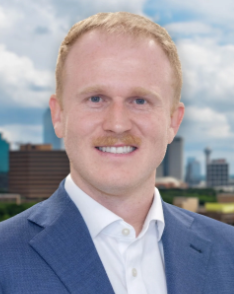
ABOUT THE AUTHOR:
Chris Walters is the chief operating officer at Groundwork Outreach.
Photo credit: The White House/X
_______
© 2026 The Dallas Morning News. Visit www.dallasnews.com. Distributed by Tribune Content Agency LLC.
Sign in to get access to this free resource, and all of our whitepapers and reports.

Download this content today!
Register Now Already registered? Click here to Log In
Tags: children, investment accounts, Payroll, Taxes, Trump Accounts