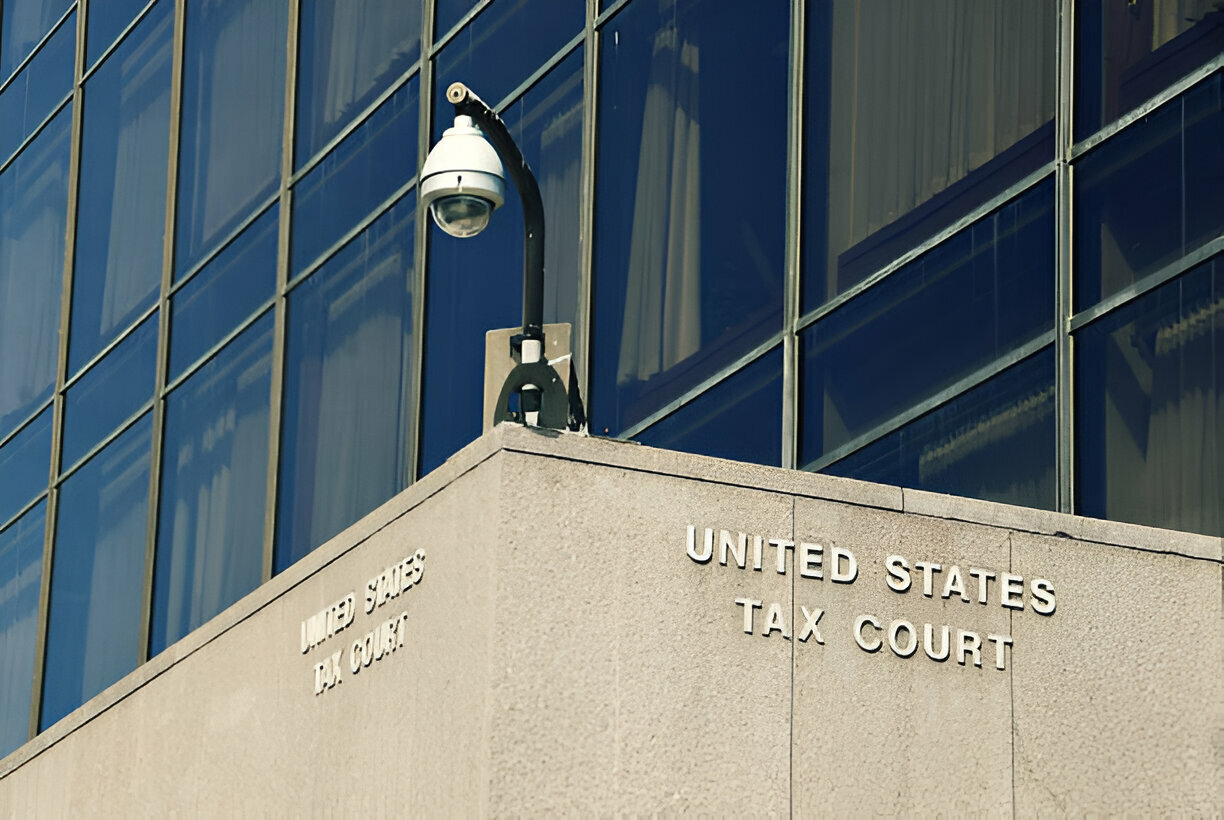
Proposed regulations issued by the Treasury Department and the IRS on Thursday could put an end to the federal tax-exempt status of as many as 18,000 private educational institutions that the Trump administration says engage in racial discrimination.
Under the proposed rules, a private, nonprofit school wouldn’t qualify for federal tax-exempt status under Section 501(c)(3) of the Internal Revenue Code if it adopts, maintains, or enforces a policy or practice that discriminates on the basis of race, color, or national or ethnic origin. The rules would apply across admissions, educational policies, scholarships and loans, athletics, and every other school-administered or school-supported program, the IRS said on Sept. 3.
The proposed regulations would apply to tax-exempt private primary and secondary schools, colleges, universities, professional schools, and trade schools.
The final regulations would go into effect for taxable years beginning on or after May 31, 2027, providing affected institutions with sufficient time to review and update their policies to bring admissions, scholarship, and other policies into compliance, the IRS said.
This comes as the Trump administration continues to scrutinize higher education institutions’ diversity, equity, and inclusion programs. The administration says colleges and universities that give preferential treatment to minority students disregard President Donald Trump’s executive orders ending discrimination and restoring merit-based opportunities.
Schools like Harvard University, Cornell University, and the Massachusetts Institute of Technology have been in the crosshairs of the administration and congressional Republicans over claims they allow antisemitism on their campuses while also taking issue with certain diversity programs.
Recommended Articles







“Under President Trump, this Administration is standing up for America’s students by ensuring racial discrimination has no place in American education,” Treasury Secretary Scott Bessent said in a statement on Sept. 3. “Schools rebranding race-based preferences as equitable, inclusive, or diversity-enhancing does not change their discriminatory nature. Today’s Treasury and IRS proposed regulations establish a clear standard, and the institutions that continue to use discriminatory practices will no longer receive the benefits of federal tax-exempt status.”
The proposed rules potentially threaten the financial stability of hundreds of institutions. Such schools benefit from tax-exempt status in a variety of ways—they don’t pay property taxes on educational buildings, they can sell bonds that pay interest exempt from federal taxes, and donors can deduct their gifts, according to Bloomberg. The breaks have helped many top schools undertake ambitious construction projects and amass multibillion-dollar endowments.
Recommended Articles
Thursday’s proposed regulations would also eliminate outdated provisions of IRS guidance that permitted schools to favor certain racial preferences in admissions, facilities, programs, scholarships, and financial assistance. The Treasury Department and the IRS have concluded that these provisions are inconsistent with a uniform nondiscrimination standard and are incompatible with the Supreme Court’s case law.
There’s some precedent for stripping a school of tax-exempt status over discriminatory practices. In 1983, the Supreme Court ruled that the IRS could revoke Bob Jones University’s tax status over allegations it discriminated based on race. The school later apologized for its past policies and regained its tax status, according to Bloomberg.
“Federal law provides tax-exempt status to organizations that operate exclusively for charitable and educational purposes. For decades, the Supreme Court has recognized that eligibility for tax-exempt status is conditioned on compliance with fundamental public policy, including the prohibition against racial discrimination,” the IRS said. “The proposed regulations update Treasury and IRS guidance to reflect that longstanding principle, as established in Brown v. Board of Education, Bob Jones University v. United States, and Students for Fair Admissions v. Harvard, and provide greater clarity for private educational institutions regarding the nondiscrimination requirements associated with federal tax-exempt status.”
The proposal wouldn’t prevent a private school from maintaining a religious mission, curriculum, or program of religious observance, according to the IRS. Religious schools can continue to select students based on genuine religious affiliation or membership to remain consistent with existing federal law.
The proposal also allows schools to continue expanding educational opportunities to assist disadvantaged students using race-neutral criteria, such as family income, geographic location, first-generation status, individual hardship, military family status, or academic achievement when awarding admission or financial assistance. However, schools can’t make decisions or confer benefits on the basis of race, color, or national or ethnic origin, the IRS said.

“Private educational institutions that promote discriminatory practices will no longer be afforded the benefits of federal tax-exempt status,” IRS CEO Frank Bisignano said in a statement. “Today’s proposed regulations put institutions on notice and schools that continue to engage in racial discrimination should expect to lose that status.”
Democrats aren’t happy
Some congressional Democrats have released statements today denouncing the proposed rules from the Trump administration. A media release from Rep. Richard Neal of Massachusetts, the ranking member of the House Ways and Means Committee, labeled the proposal the “Trump administration’s racist weaponization of the IRS.”
“Trump’s desperate strong-arming of anyone who refuses to conform to his racist agenda reeks of weakness in the worst way, with those with the least paying the price. He is once again weaponizing the government to punch down and attack minority students, their families, and the schools expanding opportunities to build more financially stable futures,” he said. “This isn’t about ‘fairness,’ it’s about the President targeting anyone who stands in the way of his campaign to roll back the clock on civil rights progress that generations of Americans have fought and bled for. To punish private institutions for seeking to diversify their campuses is an affront to true, meaningful equal opportunity. For Republicans, there’s never a problem giving those at the top every advantage money can buy. But when it comes to communities that have been denied opportunities for generations, they are being told to work harder and accept less. Democrats will not stand for this unlawful, gross abuse of power and will fight until these racist attacks are put to a stop once and for all.”
Over in the Senate, Finance Committee ranking member Sen. Ron Wyden of Oregon and Finance Committee member Sen. Raphael Warnock of Georgia announced Thursday they’ve launched an inquiry into the Trump administration’s use of the IRS’s tax enforcement authority to target ideological opponents, including taking away their tax-exempt status.
“We write regarding disturbing reports that senior Treasury officials are developing plans to target left-leaning tax-exempt organizations with IRS enforcement scrutiny and potentially revoke their tax-exempt status,” the senators wrote in a letter to Bessent and Bisignano. “Americans of every political persuasion must be able to trust that the IRS applies the tax code objectively under one set of rules. Organizations that violate section 501(c)(3) should face appropriate enforcement regardless of their politics—and organizations should never face IRS scrutiny because political officials disapprove of their views.”
The letter highlights multiple ways in which the senators say this scheme is illegal, both for senior officials to request IRS enforcement actions and for IRS employees to fail to report the prohibited requests to the Treasury’s independent watchdog.
The senators demanded administration officials disclose any details about the development of a so-called “blueprint” targeting left-leaning nonprofits, any communications to direct IRS employees to conduct prohibited enforcement actions, and to preserve any documents or communications associated with this effort.
Photo credit: Harvard University/Instagram
Sign in to get access to this free resource, and all of our whitepapers and reports.

Download this content today!
Register Now Already registered? Click here to Log In