



A nonprofit’s fundraising footprint can grow long before its back office catches up. A new giving page, a regional campaign, a corporate sponsorship, or a successful grant announcement can bring supporters in new states. For the client’s CPA, the question is not simply how many jurisdictions may be involved. It is whether the organization has a repeatable way to identify state-registration questions, prepare supportable filings, and maintain an operating record after approval.
Federal reporting is an important starting point, but it does not settle every state requirement. The IRS directs charities to consult appropriate state agencies because state rules can differ on solicitation triggers, exemptions, forms, attachments, fees, signatures, and periodic reports. That makes this an operational-control issue as much as a filing task.
Here are five controls CPAs can help nonprofit clients establish before fundraising expands.
1. Map the actual fundraising footprint
Start with evidence, not a generic list of states. Ask where the client is actively requesting gifts: email and direct-mail lists, digital-ad targeting, event locations, grant campaigns, sponsorship outreach, peer-to-peer campaigns, and online giving reports. Separate deliberate outreach from incidental donor activity, then preserve the source data behind each state question.
This map gives leadership a working prioritization tool. It also helps the CPA and client distinguish a state that needs immediate review from one that should be monitored as the campaign develops. A state-by-state record should note the activity, the date reviewed, the official source consulted, and any facts still needed to evaluate registration or exemption questions.
2. Separate initial registrations, renewals, and recovery work
A single “compliance” column is rarely enough. A client may have a registration ready to file in one state, a renewal due in another, and a missed filing or regulator notice in a third. Combining those workstreams can hide the most urgent action.
Use distinct statuses such as initial registration, renewal preparation, renewal filed, regulator follow-up, recovery review, exemption review, and no current action. The result is a clearer calendar and a more accurate forecast of who needs to provide financial statements, signatures, payment authorization, or portal access. It also prevents a new-state expansion from distracting the team from an existing deadline or deficiency.
3. Reconcile the filing packet before opening portals
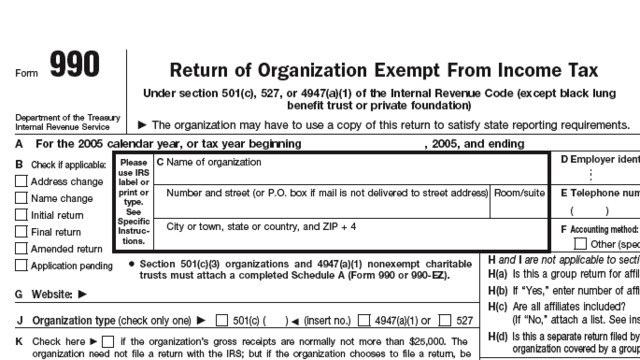
Many state filings draw from records the CPA already helps maintain: Form 990 information, financial statements, governing documents, officer details, and prior filings. Before a client begins an online application, reconcile those records with the facts used in fundraising materials and the organization’s current governance.
A practical pre-filing checklist can flag issues early: Is the officer list current? Are financial statements complete for the period requested? Is there an IRS extension that affects internal timing but not necessarily the state deadline? Does the organization have prior correspondence or a public status record that must be addressed first? This review is not legal advice; it is a disciplined way to make sure the packet is consistent, traceable, and ready for the appropriate professional review.
4. Assign ownership for signatures, portals, and payments
Registration work often stalls because everyone assumes someone else has the portal credentials or authority to sign. CPAs can help clients assign a responsible owner for each dependency: account access, document assembly, officer signature, payment approval, submission, and regulator correspondence.
The owner does not have to perform every task. The point is to establish a named handoff and backup contact before a deadline arrives. For firms using client-service checklists, these dependencies can sit alongside the usual year-end and Form 990 workflow so charitable-registration questions are raised while records are already being assembled.
5. Preserve proof and schedule the next review
A submitted application is not the end of the control cycle. Keep confirmation pages, receipts, accepted certificates, deficiency notices, and regulator communications in a shared filing record. Then add the next renewal date, lead time, required attachments, and responsible person to the client’s calendar.
That record becomes especially valuable when staff, board officers, or outside providers change. It lets the client show what was filed, identify what is still pending, and start the next cycle without rebuilding the history from inbox searches. It can also make future multi-state planning more efficient, because the organization has a clearer view of current registrations, prior issues, and recurring documentation needs.
The advisor’s role is to turn a fast-moving fundraising plan into a set of visible decisions and accountable handoffs. With a documented footprint, separated workstreams, reconciled records, assigned owners, and retained proof, nonprofit clients are better positioned to ask the right state-specific questions before the filing sprint begins.

ABOUT THE AUTHOR:
Nizar Yaghi is the founder of Compliance Express, which helps nonprofit teams organize charitable-registration workflows. Learn more at https://www.compliance-express.com/multi-state-charitable-registration/.
Photo credit: rawpixel.com/Freepik
Sign in to get access to this free resource, and all of our whitepapers and reports.

Download this content today!
Register Now Already registered? Click here to Log In
Tags: accountants, Accounting, cpa, CPAs, Form 990, fundraising, Nonprofit, nonprofits