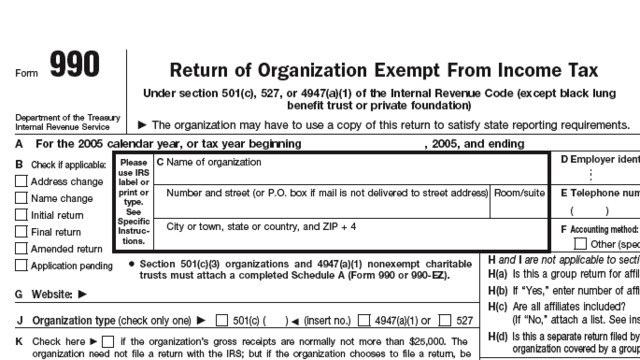




Preparing an IRS Form 990 is often viewed as an accounting exercise. And of course, it largely is. The preparer reconciles revenue and expenses, confirms compensation figures, completes the applicable schedules, and works through the governance questions with the client.
But sometimes, the return will expose a problem that cannot be resolved by selecting the most defensible box or adding an explanation to Schedule O.
The Form 990 is an information return, but it is also a public account of how a tax-exempt organization operates. It requires information about the organization’s activities, finances, governance, compliance, compensation, and transactions with insiders. Except for certain contributor information, the completed return is generally available for public inspection under Internal Revenue Code Sections 6033 and 6104.
For CPAs, the difficult question is not whether every unusual fact requires legal counsel. It is recognizing when the accuracy of the return depends on resolving an underlying legal issue.
Here are seven situations that should prompt closer review.
1. The Organization’s Activities No Longer Match Its Exempt Purpose
A nonprofit’s programs can change considerably after it receives recognition of exemption. New leadership may add services, enter commercial arrangements, or begin operating in ways that were never contemplated in its organizing documents or exemption application.
Part III of Form 990 asks the organization to describe its mission and significant program services. Those descriptions should be consistent with the organization’s articles of incorporation, governing documents, IRS determination letter, prior returns, website, grant materials, and actual operations.
A difference in wording is not necessarily a problem. Yet at the same time, a material change in purpose or activity may be.
The Form 990 instructions require an organization to report significant changes to its activities and certain changes to its governing documents. A preparer who discovers that the organization has effectively adopted a new mission should not treat the issue merely as a drafting exercise. Counsel may need to evaluate whether amendments, state filings, an IRS disclosure, or other corrective steps are required.
2. Compensation Was Paid, but the Approval Process Is Missing
Compensation reporting is not limited to placing the correct amount in Part VII.
For public charities and certain other exempt organizations, Section 4958 may impose excise taxes when an organization provides an economic benefit to a disqualified person that exceeds the value received in return. A founder, officer, director, key employee, substantial contributor, or family member may fall within the statute depending on the facts.
Reasonable compensation is less likely to be challenged when it was approved in advance by an authorized body composed of individuals without conflicts, based on appropriate comparability data, and documented contemporaneously. See Treas. Reg. § 53.4958-6.
The absence of that process does not automatically establish an excess benefit transaction. And of course, falling within the rebuttable presumption does not confirm the transaction was permissible either.
When this sort of transaction does take place, it is important for the accountant to look at the entire picture. The organization may need a legal review of compensation, reimbursements, bonuses, housing, vehicle use, loans, or payments to related entities.
3. The Client’s Governance Answers Are Not Supported by Its Records
Part VI asks about board independence, family and business relationships, conflicts policies, whistleblower policies, document-retention practices, compensation approval, and the board’s review of the return.
These questions generally concern actual governance practices, not what the organization wishes it had done.
A policy adopted after year-end usually does not permit the organization to report that the policy was in effect during the completed tax year. Likewise, a board member is not necessarily independent simply because the organization has never formally identified a conflict.
The CPA should compare the proposed answers with the bylaws, board minutes, annual disclosures, employment arrangements, vendor records, and information received from officers and directors. When the records contradict management’s proposed response, the issue should be resolved before filing.
4. Transactions With Insiders Were Informal or Poorly Documented
Schedule L reports certain excess benefit transactions, loans, grants or assistance, and business transactions involving interested persons.
Potential problems include undocumented advances to officers, personal expenses paid through an organizational credit card, rent paid to a director, contracts with a board member’s company, and amounts carried for years as “due from officer.”
The Schedule L instructions require some transactions to be reported regardless of amount. An outstanding loan does not disappear because the client calls it an advance. Nor does a transaction become arm’s length merely because the price appears reasonable.
Counsel may need to determine whether the transaction was authorized, whether it should be corrected, whether Section 4958 applies, and whether Form 4720 or state-law action is required.
5. Related Entities Exist, but No One Has Mapped the Relationships
Many nonprofits operate through affiliated foundations, supporting organizations, limited liability companies, management entities, title-holding companies, or organizations with overlapping boards.
Schedule R requires reporting concerning certain related organizations and transactions. Related-organization information can also affect compensation reporting, board independence, revenue, liabilities, and other portions of Form 990.
The legal definition of control does not always follow the client’s informal understanding of affiliation. An entity described as “completely separate” may still be related because of board appointment rights, common control, ownership, or governing-document provisions.
Before completing Schedule R, the CPA may need an organizational chart supported by the governing documents rather than by management’s description alone.
6. Restricted Funds Were Used for Another Purpose
Financial records may show that donor-restricted funds, grant proceeds, endowment assets, or funds held for a sponsored project were used for general operations.
The accounting treatment is only part of the issue. The organization may have obligations under a gift instrument, grant agreement, fiscal-sponsorship arrangement, state charitable-trust law, or contract with a government agency.
The Form 990 should accurately report the funds, but accurate reporting does not cure an unauthorized use. Before the return is filed, counsel may need to evaluate restoration of funds, donor or grantor consent, board action, disclosure obligations, or other corrective measures.
7. The Books Reveal Conduct That Cannot Be Fixed on the Return
The return preparation process may uncover unreported payroll, worker classification problems, private use of charitable assets, unrelated business activity, prohibited political campaign intervention, lobbying concerns, foreign activities, or diversion of assets.
Some of these matters require additional tax forms. Others may threaten exemption, create excise tax exposure, or implicate state law concerns. And this may be the first opportunity that an outside professional can take a fresh look to flag potential issues.
Schedule O can explain an event. It cannot retroactively authorize a transaction, restore restricted funds, correct an unlawful payment, or create governance records that never existed.
Know When the Return Is No Longer the Main Problem
CPAs are not expected to diagnose every legal issue presented by a nonprofit client. They are, however, often the first professionals to see the full picture. The general ledger, payroll records, contracts, board minutes, and Form 990 questions may reveal inconsistencies that no single member of management has recognized.
When the correct reporting position depends on whether an activity was authorized, a payment was lawful, an entity is controlled, funds were properly used, or a transaction must be corrected, the issue has moved beyond return preparation.
At that point, the best service to the client is not finding a better description for the return. It is identifying the underlying problem before the organization signs and publicly files it.
====
Jake A. Leahy is a tax attorney with Airdo Werwas, LLC. He holds an LL.M. in Taxation from Georgetown University Law Center, J.D. and is Chair of the Chicago Bar Association YLS Federal Tax Committee.
Sign in to get access to this free resource, and all of our whitepapers and reports.

Download this content today!
Register Now Already registered? Click here to Log In
Tags: Income Taxes, IRS, Taxes