By Michael Cuglietta
Orlando Sentinel
(TNS)
Karla Perez and her husband are supporters of President Donald Trump, so when they learned this summer about new investment accounts his administration designed for children, they quickly signed up their one-year-old son.
“What we hope is that when he’s 18 and he can access it, that he has money to set up his future, whatever he wants to do with it,” said Perez, 29, of Orlando, who plans on depositing $2,000 a year into her son’s account with the expectation that by the time he hits adulthood, it will be worth six figures.
“He’ll have access to use it if he decides he wants to open a business or purchase a home,” she said. “Something to help him have more flexibility when he goes into adulthood.”
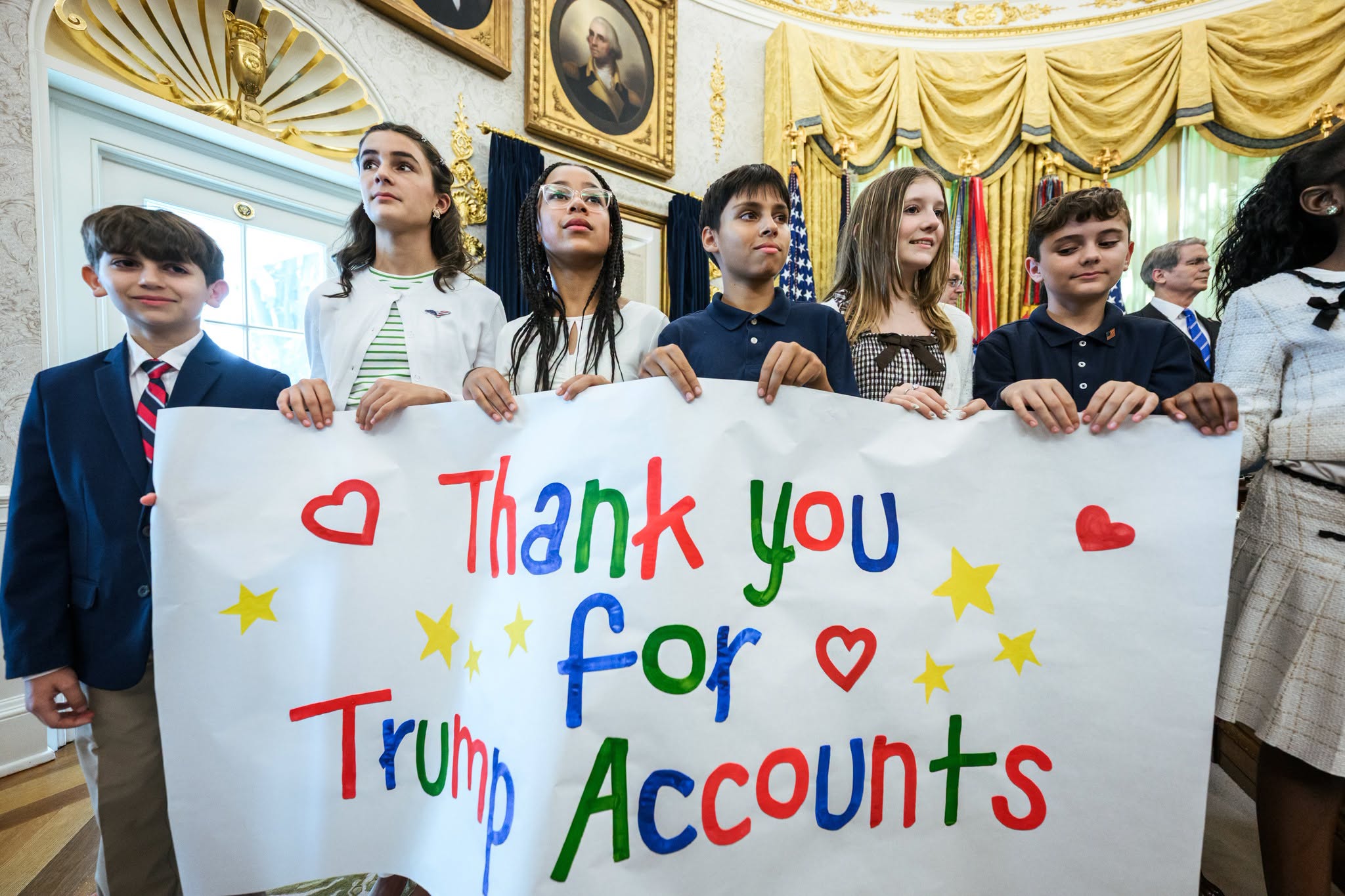
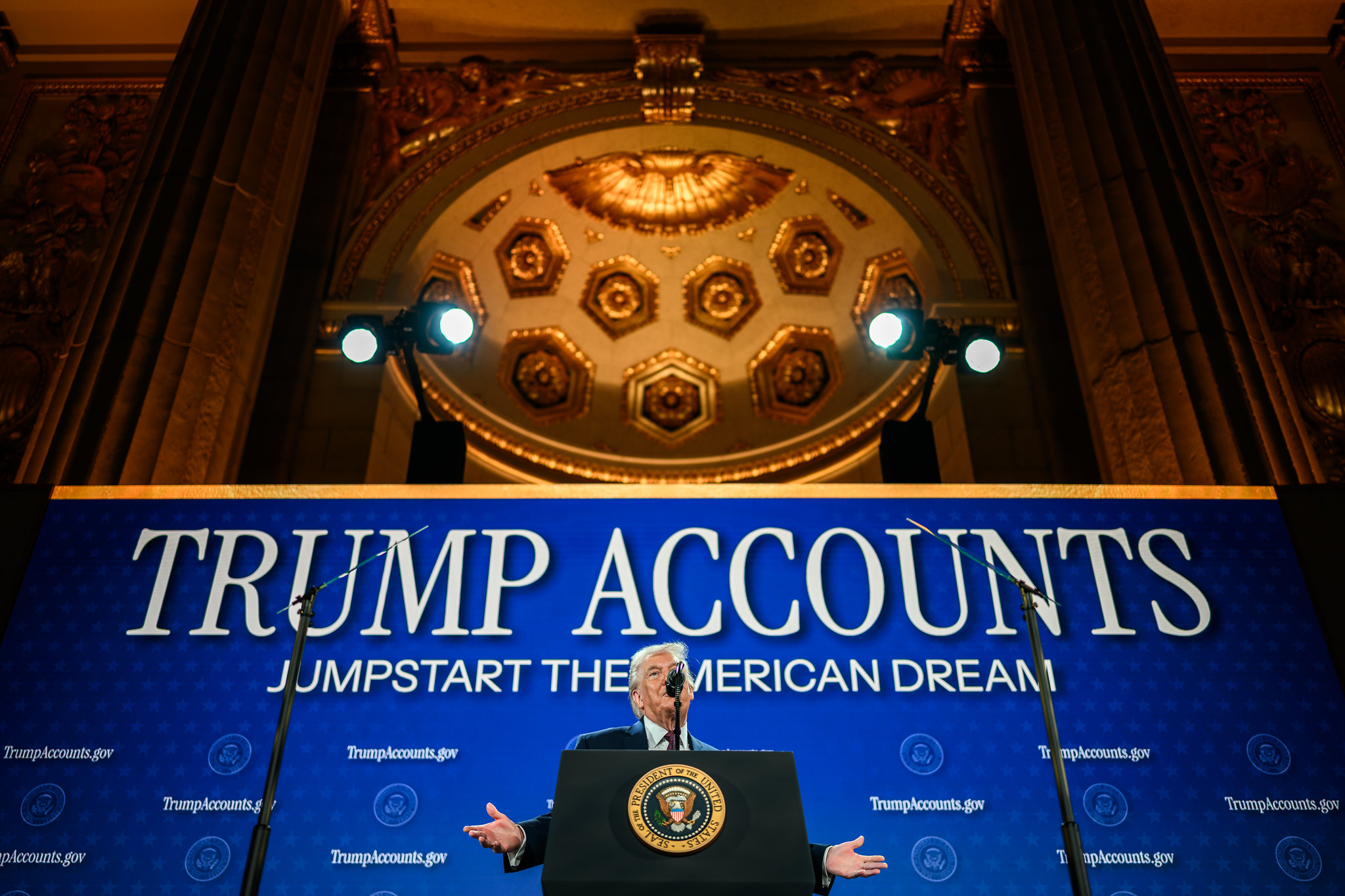
Millions of children became eligible for the new “Trump Accounts” this summer, with those born during the president’s second term eligible for a $1,000 donation from the federal government. The accounts are stock funds overseen by the federal government but with strings attached. At a July rally in Georgia, Trump touted them, saying every child in the country now has a “great start in life and a really fair shot at the American dream.”
But some experts fear the accounts will further solidify the nation’s wealth gap as more well-off parents contribute to their children’s accounts while those in low-income households are unable to fund them. Others caution that, as an investment, Trump Accounts are not the best option for parents looking to give their children a financial leg up at age 18.
“I can see what the government’s trying to do in encouraging learning about investing early on. I can give them kudos for that,” said Tommy Lucas, financial advisor and part-owner at Moisand Fitzgerald Tamayo in Orlando. “But from a practical perspective, I would fill up different buckets first in 99% of scenarios before I’m really looking into putting some serious money into these Trump Accounts.”
Parents whose young children qualify for the $1,000 donation should certainly open the accounts, Lucas said, but additional contributions might not make sense. The accounts are designed for retirement, so though there are exceptions that could give their children some money for school or housing, most withdrawals before age 59½ will come with financial penalties.
As of July 10, 6.5 million accounts have been set up, and $1.5 billion was deposited into them, according to the White House.
Up to $5,000 a year can be contributed to each account. The money is invested in the stock market, and the Trump administration projects that if a family contributes the maximum allowable amount, the account could be worth up to $271,000 when a child turns 18.
Individuals, employers, state and local governments and philanthropists can also contribute to the accounts. The Michael & Susan Dell Foundation, a family charity that helps impoverished children, for example, pledged $6.5 billion to give $250 to all children 10 and under living in zip codes with median annual incomes below $150,000. Under the program’s rules, the foundation, however, is not allowed to direct its donations to low-income families but must give to all qualifying children in the selected zip codes.
Recommended Articles


Payroll September 10, 2026
Opinion: Trump Accounts Show Why Government Trust Matters

Payroll September 1, 2026
American Airlines Says It Will Match $1,000 for Trump Accounts
Lucas, who lives in a qualifying ZIP code, set up accounts for his four children and each got the $250 donation from the Dell foundation.
“As the owner of a firm here, I don’t need $250,” Lucas said. “But if you’re going to offer it up, it would be stupid not to take it.”
Giving charitable donations to families who don’t need them is troubling as it comes when inflation is high, and the administration is slashing funding for social services and other supports that many families rely on, said Ashley Burnside, senior policy analyst at the Center for Law and Social Policy in Washington, D.C.
“They’ve made dramatic cuts to Medicaid, to SNAP,” Burnside said, referencing federal programs that provide health insurance and help purchasing food. “If a parent can’t afford groceries each month, it’s going to be very unlikely that they ‘re going to be able to put money away towards a child’s account or towards college savings.”
When children turn 18, they can use the accounts toward the purchase of a first home, higher education and qualified medical expenses, but they will pay income taxes on any money withdrawn. If the money is taken out for nonqualifying expenses, they will pay an additional 10% penalty.
For parents who can contribute, there are smarter options for college savings and for helping with home buying, said Kevin Smith, a financial advisor at Wealthspire in Maitland.
He is advising his clients to set up the Trump Accounts to get any eligible donations but then put their money elsewhere.
Smith recommends a 529 account for college savings because the money is tax and penalty free when used for education expenses.
“They also allow you to change underlying beneficiaries if one child doesn’t use all those funds,” Smith said. “And at the end, if there are leftover funds, you can convert those into Roth IRAs.”
For a downpayment on a first home, Trump Accounts limit the withdrawal to $10,000.
“With how expensive houses are these days, $10,000 is not going to get you near what you need to put down,” Lucas said, adding that if his clients want to help children save for a house he’d suggest other lower-tax options that allow for bigger withdrawals.
Jenny Pokempner, an attorney at the Youth Law Center in San Francisco believes Trump Accounts are flawed because they don’t target low-income families. A better option, she said, would be to model the accounts after Connecticut’s baby bonds. That state program automatically sets up investment accounts for all babies whose parents are on Medicaid and gives them $3,200.
Still, she believes the accounts are a good first step and said it is important that all families set them up, as they could serve as vehicles for future administrations to get money to needy families.
“This could be a building block that, in future years, you do amend and create within these accounts more of the features some of us would like to see,” Pokempner said. “But that’s a longer game kind of project.”
_______
©2026 Orlando Sentinel. Visit orlandosentinel.com. Distributed by Tribune Content Agency LLC.
Sign in to get access to this free resource, and all of our whitepapers and reports.

Download this content today!
Register Now Already registered? Click here to Log In
Tags: children, investment accounts, Payroll, Taxes, Trump Accounts