



By Sabrina Eaton
cleveland.com
(TNS)
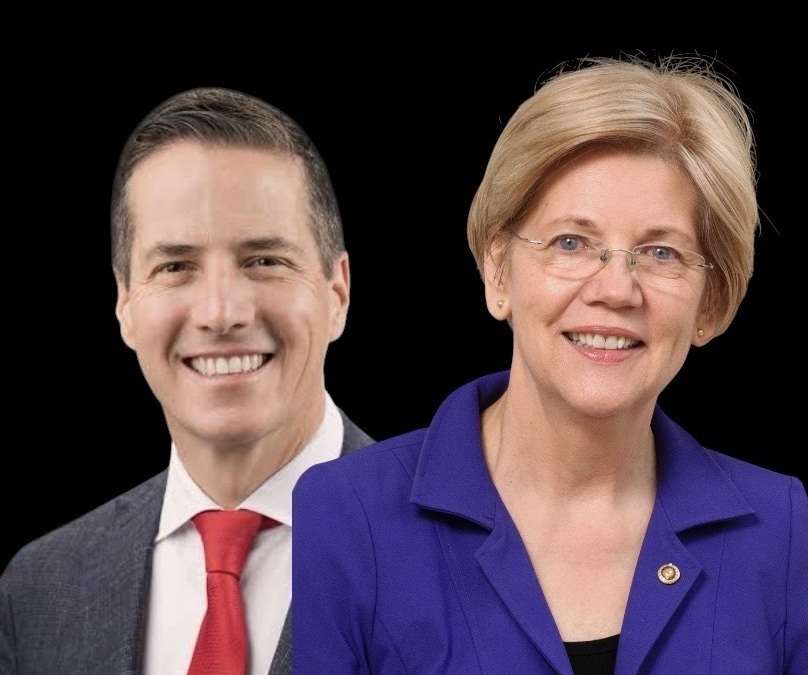
WASHINGTON – U.S. Sen. Bernie Moreno of Ohio and U.S. Sen. Elizabeth Warren of Massachusetts don’t agree on much, but they have agreed to work together on legislation to improve Social Security’s solvency.
Moreno, a Republican former car dealership owner, and Warren, a Democrat and longtime consumer advocate, propose lifting the payroll tax cap.
They both are members of the U.S. Senate Committee on Banking, Housing and Urban Affairs.
“According to one estimate, eliminating the payroll tax cap would inject around $3 trillion into the program over the next 10 years,” Moreno and Warren wrote in an opinion piece published Tuesday in The New York Times. “Lifting the cap so that all income is treated the same would generate substantial revenue that would extend the solvency of Social Security for another generation.”
Citing a new report from the trustees who oversee Social Security’s trust funds, they note that without action from Congress, the fund from which most Social Security beneficiaries are paid will be depleted by late 2032, leading to potential benefit cuts of more than 20%.
“Instead of cutting benefits for the retirees who count on Social Security, we need to take bipartisan action to protect those benefits, reward work and restore fairness,” the pair wrote. “That starts with a common-sense solution: lifting the Social Security payroll tax cap.”
Recommended Articles
The payroll tax cap, or taxable maximum, is $184,500 a year. Workers and their employers each pay 6.2% on wages up to that amount (self-employed individuals pay 12.4%). Social Security withholding for one worker on the maximum amount is $22,878, or 12.4%. Those who make more than the maximum don’t have to pay Social Security payroll taxes on the extra income.
“Since the vast majority of Americans make less than that, most people are paying Social Security taxes on 100% of their earnings while the highest earners are paying on only part of theirs,” Moreno and Warren wrote.
About 6% of workers make more money than the level where Social Security payroll taxes are capped: 9% of all male workers and 4% of all female workers, the Social Security Administration says.
But because the income of top earners has increased faster than that of workers below the cap, the portion of the nation’s aggregate earnings subject to the payroll tax cap fell from 90% of aggregate earnings in 1982 to 81% in 2021, according to the Congressional Research Service.
The Congressional Research Service says that raising or removing the cap could improve the program’s long-term solvency. The full extent of that improvement would depend on whether benefit levels for those high earners increase.
Raising or eliminating the cap on taxable earnings base while maintaining the current benefit structure, where benefits are calculated based on the full contribution base, would lead to higher monthly Social Security benefits for individuals who earned more than the current taxable earnings base during their careers.
The Congressional Research Service estimates their higher benefit payments would be more than offset by greater tax revenues. The system’s solvency would be more improved if the benefits cap was retained, but that would break the traditional link between benefits and contributions.
Past efforts to lift or eliminate the Social Security payroll tax cap have run aground due to political gridlock and inability to reach agreement on whether higher earners should get higher payouts.
In their opinion piece, Moreno and Warren asked why a middle-class nurse should pay a larger share of her paycheck than a wealthy corporate lawyer.
“This is doubly unfair in an economy in which top earners’ wages, over time, have pulled far ahead of those of the average worker.” they wrote.
They noted that one 2025 poll found that 65% of Democrats and 62% of Republicans support lifting the cap, “including a significant majority of respondents with annual household income over $200,000.”
“This is a no-brainer: The wealthiest Americans, who have benefited the most from America’s opportunities, should contribute the same percentage of their income as a factory worker in Chillicothe, Ohio, or a teacher in Worcester, Massachusetts,” the senators wrote, calling on members of Congress from both parties to unite to save the Social Security system.
Former Social Security Administration commissioner Martin O’Malley, a Democrat who led the agency in 2023 and 2024, applauded Moreno’s stance in an interview with CSPAN, agreeing that the cap on taxable income should be scrapped.
Recommended Articles

“If we do that, Social Security will be able to pay 100% of benefits earned for the far, far future, we’re talking about past 2090 and we can increase benefits, so that those benefits keep pace with inflation, which right now they don’t exactly do,” said O’Malley, a Democratic former Maryland governor.
_______
©2026 Advance Local Media LLC. Visit cleveland.com. Distributed by Tribune Content Agency LLC.
Sign in to get access to this free resource, and all of our whitepapers and reports.

Download this content today!
Register Now Already registered? Click here to Log In