
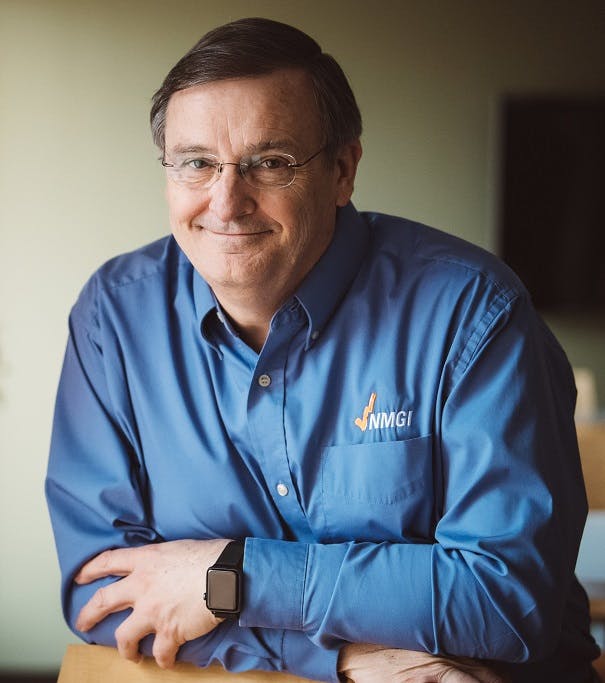




In this episode of Accounting Technology Lab, Randy Johnston and Brian Tankersley, CPA, CITP, CGMA, give a behind-the-scenes look at the 2026 CPA Practice Advisor Thought Leader Symposium, where leading voices in accounting technology gathered to discuss the profession’s future. Hosts Randy Johnston and Brian Tankersley highlight key themes including AI integration, “vibe coding,” private equity’s growing influence, and the evolution of client accounting services (CAS).
The Accounting Tech Lab is an ongoing podcast series that explores the intersection of public accounting and technology.
View the video below:
Or listen to the podcast using the below player:
Transcript
(Note: There may be typos due to automated transcription errors.)
SPEAKERS
SPEAKERS
Brian F. Tankersley, CPA.CITP, CGMA, Randy Johnston
Brian F. Tankersley, CPA.CITP, CGMA 00:00
Welcome to the accounting Technology Lab brought to you by CPA practice advisor, with your host, Randy Johnston and Brian Tankersley. Hi everybody. It’s Brian working hard at the lab today, but I thought I would let you know that do have a quick announcement. We have a giveaway. We’re going to be giving away one Rico scan, snap IX, 2500 receipt edition. We’re going to draw. We’re gonna make the drawing right after April 30. No purchase required. Suggested Retail value, $599 this is a one has one touch simplicity, and our friends at Rico graciously provided it to us with automatic invoice, OCR, detachable receipt guide for small and curl documents and lightning fast, 45 page a minute, duplex scanning. It transforms paperwork into clean, searchable digital data in seconds. If you want to register, it’s CPA te.ch/scan snap. The rules are at CPA te.ch/rules and the privacy policy is at CPA, te.ch, forward, slash, scanner, dash, privacy. And for those of you attending the video, attending the video version of this, I’ve actually put on the screen now a QR code that you can capture and use to register for the for the again, for the scanner. Giveaway again. We’re giving one away. We’re going to give it away again right after April 30 and again you must, you must be an accounting professional when all the rules again are at CPA te CH, CPA te.ch/rules so anyway, with that, thanks for joining us, and here we are back in the lab.
Randy Johnston 01:39
Welcome to the accounting Technology Lab. I’m your host, Randy Johnson, with co host Brian Tankersley, and we want to talk about the 2026 CPA practices, advisor, thought leader symposium held in Dallas earlier this year. And it’s such a nifty event to go to now, this particular event, which was March 18 through 20th at the Galleria hotel, Weston hotel in Dallas was such a fun thing. So why so fun? Because you get to hang with really intelligent influencers to the profession and hear what they’re thinking about and what they believe the impacts will be on the profession. Now this historically, had been paid for by several different software publishers, historically, and so this year’s was underwritten by practice ERP, by Zoho, and I felt bad for Val steed, who was unfortunately down with the flu, so physically couldn’t attend, and when the additional sponsors were right, works the hosting company, as well as Walters clewer and Walters cluer had two representatives in the room. Now, as Brian and I are talking about this, I want you to understand why we’re talking the way we do. Gail Perry, who is pictured currently in the photo on the screen, has been the editor for some time for CPA practice advisor, and she’s always had us operate under the Chatham rule. You can say what was said in the meeting, but you can’t attribute it to anybody without their permission. So Brian and I take pretty good notes of these meetings, because what we’re trying to do is learn from others. You know, so much of the time, many of us live in a bubble, and we just don’t get to have any input from the outside. But in this type of group, we’re very blunt about the way that we discuss things, and there’s a lot of, I’ll say, emotion in the room, because people are very committed to their clients, the way they think about the profession and so forth. So again, we were fortunate to have people from literally all over the world. I think Michael Sue came in the furthest from Taiwan, but there were many others in the room that were, you know, in from pretty good distances. And, you know, with the TSA shutdown, we were really concerned how, you know, people would be able to get in for the travel. Now, all of that said, we talked about lots of different topics. So Brian, that’s a lot of setup. What might you say about the thought leader event before we get really into the thick of it.
Brian F. Tankersley, CPA.CITP, CGMA 04:24
Well, I think it was a good event. You know, I was sad to not see Clayton Oates make the long trek from Australia. But, you know, I think we had a good I think we had a very good get together there, you know it. We had some new members in there, you know, Jerome. We had Rebecca from the Maryland society and some others that joined us as new members to the group. You know, it was a it’s very nice. You know, I really enjoy, in particular, some of the practitioners that are in there. You know, Aaron and Aaron Berson and Michael sue in particular are. Very, have very interesting approaches. And you know, I, I think you know that between them and the consultants, there were a lot of people that were doing interesting things with AI, including vibe coding systems to to try to basically put themselves out of work and automate many of the processes that they have,
Randy Johnston 05:21
yeah, and so, speaking of that, sorry to interrupt you, but in the picture, two of the practitioners. One of them is Garrett Wagner, who’s at the top of Jennifer Lee Wilson’s hand there, and Tim on the other thing,
Brian F. Tankersley, CPA.CITP, CGMA 05:33
Aaron’s right there. You’ve got Michael said right there. Who’s the other one you were talking about, Tim
Randy Johnston 05:39
Moy over to the right in the blue shirt. So you know, these practitioners though were something else. And I’ve got to tell you, I had a similar experience on this vibe coding at the AICPA accelerator program in New York, because here we wound up with somebody walking up and saying, Look at what I’ve written in vibe code. But Garrett showed me his vibe coded applications and like those are pretty darn stunning. Garrett, and I understand why it’s such an advantage to you. And you know, there were other things that were coded, literally coded during the meeting in less than 10 minutes by people around the table as we were talking about them. Because we’d talk about them, they’d turn around and say, You mean like this, and they’d already have the code running because of these new techniques. So Brian, sorry to derail you,
Brian F. Tankersley, CPA.CITP, CGMA 06:27
and I will say that one of the things I’m testing right now, you know, for a nonprofit that serves homeless folks that’s actually celebrating its 10th Anniversary this month, my wife was one of the founders, and one of the things that I’m testing is a vibe coding tool for printing name badges for the volunteers. So it will go through and see, it’ll go through and give them a place to sign in, or can have a database of the volunteers, and we have a way for them to log in and then get their badge when they’re there, and that confirms that they’ve signed our liability waiver. And so, you know, and this is all going to run in containers on Linux. And you know, again, I’m, I’m, I’ve set up containers. I’m okay with containers, but it really has let it really has given me the confidence to go forward and create this, because there’s, there were gaps in my knowledge, and the vibe coding really made it possible to do this. But I will say that we talked about CAS at the meeting. We we had interesting presentation for the practice ERP folks and the Wolters Kluwer folks. I think they brought in the perspective of the software vendors who are trying to navigate this big transition we have, you know, the fact is, vibe coding is never going to replace your tax software, and it’s never going to replace most of your audit software. So we’ve got to figure out how to work and play well with others in this. Also, the thing that, the scale, that the prep, that the vendors have, in particular the Thompson and cch folks, you know, the thing is, with the research, is that you do have to be right, and it’s difficult to do that with chat GPT. You know, yesterday I was setting up open claw, which is recognize one open claw. It was libre chat, that is an open source tool that lets you aggregate multiple different chat in multiple different AI engines so that you can check things and you can do more complex queries and things like that. And one of the things I noted was that the hallucination is still there, and it’s it’s very real. When you get into the more arcane the thing you’re asking, the more likely it is that it that AI is just going to blow it. I had a query I was using to test it, and three different AI engines got the query wrong, not and made things up, and they made different things up. And so this world we’re living in, it has more uncertainty than ever, which means we need more accountants to bring more certainty to this world than we’ve ever had.
Randy Johnston 08:57
Yeah, so thank you for that setup, Brian, because what I’m going to do next is something a little out of the ordinary, because remember chatham’s rules. So I can’t tell you who said this, but I want to call it a few interesting ideas, and they’re not random, but they’re going to sound random as you’re listening to them. But I want you to give some pause and thought to each of these. So one of the thoughts was to focus on something new. You have to give up something from the past. Another interesting observation was that many CPA firms are attracting grinders, and instead of, you know, having relationships, there’s a lot of transactional things going on, and we know that PE is complicating this where advisory maybe isn’t as important because it’s not as transactional, and that’s an interesting approach. But. Phrase related to this was whacka rat. Yeah, I’ve heard whack a mole, but whacka rat still makes me laugh every time I think about it. We also another interesting comment was we go through lean years to come out better. And think about how many of you listening right now have been through a lean year, gone through the tough time and come out better on the other side. So in general, we’re fairly awful at short terms for long term gain. We just don’t have the vision. I thought that was interesting, but there were other items that were just observational. You know, a whole lot of the attitude in the profession right now is we’re predicating a lot of our decisions based on software providers providing the AI. And we will have different sessions here in the accounting Technology Lab, where we absolutely believe in a lot of these products, that the vendors are using AI to make their products better. But we can’t let the AI arriving in a product we have today be the silver bullet. We’re waiting for the red pill, green pill. Type of you know, that’s not the deal that’s coming, as we would see it, but the amount of vibe coding piece that’s going on there is a big deal. Another term that I’ve actually used in columns before and now after again, the event was the whole idea of a saspocalypse, the idea that paying per seat to software vendors those days are becoming less, maybe not to a close, but becoming less because of the AI tools. And in other episodes, we’ve talked to you about MCP and so forth. And I
Brian F. Tankersley, CPA.CITP, CGMA 11:59
think it’s important to note here that Sridhar vimbu, the the major shareholder in and the CEO, and the former CEO of Zoho, now the chief scientist there, has said the same thing and has said in his organization, he has realistically, you know, he’s changed the way they’re staffing because of Claude, and Claude is Now a significant part of his strategy going forward.
Randy Johnston 12:23
And when we look at the major layoffs that are already occurring in companies where we’re laying off, you know, 4000 people at a time, I think it’s just the beginning of the wave for a lot of that. But another rather interesting,
Brian F. Tankersley, CPA.CITP, CGMA 12:39
and let me say this, okay, but I’ve been because I’ve been doing a lot of thinking about this over the last month or so. I think that that’s actually a good thing, because that’s going to take Pete, that’s going to that takes a lot of good software engineers out, and that means they’re going to go out and create new things on their own, rather than do them in the context of a big company. So they’re going to be free to take bigger risks than the big company would ever let them take, because they’re they can do it their way. And so it’s, I think, I think we’re going into just like when, when the big layoffs happened in the insurance companies, when they got SAP and all kinds of things like this, we ended up with new businesses and new business models and things like that that came through this. I think we’re going to have, we’re going to have an innovation explosion that’s going to come from all those very smart people that are now figuring out, okay, what’s next for me? So I don’t want you to, I don’t want you to think that we’re bearish on this future. We’re very bullish. We think it’s going to be a very exciting time, but it is going to be very turbulent. And there are going to be, you know, there are going to be situations where, when, where people are forced into situations that are more uncertain than they’re comfortable with. But that’s, you know, that’s the nature of the economy,
Randy Johnston 13:57
I guess it is to a degree. And as you’re saying that, Brian, I have actually the same conclusion, because I’m just going to cite now the bubble that happened with y 2k or with the real estate market, or in 2008 you pick your bubble wherever it was. But every time people that have gotten laid off of big companies have gone start to start small companies and create brand new things. And as I’ve watched, accounting professionals exit very large firms from merger transaction roll ups, they’ve gone out and started wildly successful new generation small firms that operate in a different way. It’s a really nifty thing to watch. And in fact, another one of the comments in during the meeting was, today, every business is a startup because of AI. There’s probably a lot of truth in that. And one more nugget that I really enjoyed is, I think I might have been born for this time because I. Didn’t know how to code, but Claude is helping me do all this code. And you know, there’s many people that were in the room that had that same attitude, and frankly, you just disclose it with your containers and virtual machines. You’re not a coder, but you know, in last night, so now you can code.
Brian F. Tankersley, CPA.CITP, CGMA 15:20
Well, the thing is, I’m like a software developer on meth. I have these gaps in my brain that exist, and, you know, I’m good at the stuff I’m good at, but then there, there’s these holes like an ice cream scoop out of my brain, because I just don’t understand certain concepts. And what’s great is the AI can bridge the gap for those pieces I don’t understand, and I can be the best I can be at it. Okay. Now, am I as good as a professional software developer with 20 years of writing code? No. But is it good enough for internal use? You bet. Okay.
Randy Johnston 15:54
And in fact, that whole 70% comment came up multiple times. If I can do 70% of the lift. Maybe that’s good enough. And as soon as I heard that phrase, it’s like, Yep, I get it good enough. Now I might have used 80% the 8020 rule, but realistically, I understand what they were getting to, hey, 70% is close enough for everything I need for
Brian F. Tankersley, CPA.CITP, CGMA 16:19
my clients well. And I think that’s an analogy. I think that’s analogous to advisory in many ways. You know, we talked quite a bit about advisory, and, you know, it’s really we’re changing what accountants do. You know, the compliance stuff is very black or white in most cases. You know, there are strategies, obviously, but the compliance stuff is right or wrong. And again, we don’t have a lot of creativity in here. This is more like, this is more like a poker game. Okay, there’s risk. You have to manage the risk and and you have to go forward. I’ve often said that advisory is advisory, and accounting is like merging the merging the cheerleaders in the chess team. And and you know that there’s, there’s a lot to that. It’s a different game, but you’re very capable of doing it, but you have to change the way you look at things, and you have to, you have to really, you have to really approach things from a risk management perspective. That is anathema to what you and I have been taught in the accounting profession, where we have our standards, and you must meet these standards.
Randy Johnston 17:26
And you know, another comment that it’s like I knew that, but I’d forgotten that was that the IRS currently has 18 different databases. And you know, as soon as I heard that, it’s like, oh my, I could take AI to hook all these things together and actually create a new generation IRS database. I mean, if that was my project, I visualized how I go about it. It’s that’s not simple, but with these
Brian F. Tankersley, CPA.CITP, CGMA 17:54
tools, yeah, but that’s such a lift to move that much cheese from a political perspective that it’s going to take something catastrophic to force that to happen, because the the folks with vested interest are going to fight that kicking, nailing and screaming.
Randy Johnston 18:11
And you know that I’ve talked about this Brian because of health care, a similar type of problem, where my we can do so much with health care right now with these types of tools, but you have a lot of legacy kicking and screaming that’s going to prevent some of that progress.
Brian F. Tankersley, CPA.CITP, CGMA 18:29
That rent seeking behavior is just is going to is, you know, has always held back innovation. And, you know, again, we don’t want to move, we don’t want to innovate at the speed of you know, at the warp speed, but I think that we have to remember that there’s what you can do and what people will let you do, and they are two very different things. So the finding that Overton window of what is acceptable and what’s not acceptable and how much you can move is going to be a big challenge during this transitory period
Randy Johnston 19:02
we’re in. Yeah, now one thing we did ask for permission to talk about Dirk shinpock And Tim Moy with practice CRP Tim is a practitioner out of Wisconsin. Did demonstrate their platform that they evolved together. And you know, Tim basically brought the tribal knowledge of accounting firms to Dirk, who then put a wrapper around NetSuite to really make practice ERP what it was, and they had different estimates for us, but we actually asked specifically, how much of practice ERP is your intellectual property, and how much of its net suite? And you know, they basically said, Well, 40% 50% 60% so it’s probably 5050, ish. But you know, obviously you and I had the opportunity to see the net suite roadmaps, and we can see where things could go. With these types of systems, but it is very workflow centric. They had some interesting MCP model context protocol AI interfaces that they were able to show us and how they might be able to scale that system to 1000 users or more. And we know many of you who listen in are from smaller firms, but I do have practice ERP deployed in firms as small as 11 right now. And so I want you to understand that when we looked at these different types of, you know, approaches, that there were things that were quite interesting. And again, the visions from so many so one of the other major topics that we talked about was staffing. In fact, I think Brian, you called it out. It was really staffing. It was really a private equity discussion. It was really a client accounting services discussion. And then we went through a lot of different miscellaneous topics, which I thought were also fascinating, because we did dwell some on AI and so forth, again, little nuggets that our intent of recording today’s podcast for you was to extract a few of the nuggets without violating any confidences. But for example, one of the things that caught my eye and ear was using the AI engine of Kimmy so heavily. And I went back and looked, and of course, Kimmy is, you know, in the top 10 AI engines out there, just like Gemini has flipped into a very dominant position because of its low token cost. And, you know, I did a project two days before we recorded this episode, and I consumed the better part of a million tokens over about an hour period. Well, that wasn’t very expensive in the big picture of things, but I also have been watching the reports on Claude, where even for their paid subscriptions, they can’t satisfy the token demand right now, so they’re having a hard time, you know, living up to their commitment. And of course, you’ve got all of these AI platforms maneuvering in big ways right now, but there’s over 600 AI platforms out there in one form or another. So Brian, your earlier comment about hallucinations still being there, the engines that are being used, and why we’re using what we’re using. But, you know, the Kimmy comment was interesting as well as, you know, limb three and some
Brian F. Tankersley, CPA.CITP, CGMA 22:34
others well, you know, the other piece that I think is interesting is that the legal profession now, there have been some court cases that have come down that have basically said that what you communicate to the public AI engines is discoverable. And so I think there’s, there are a lot of lead and that highlights that there are a lot of legal issues that still have to be worked out. And so, you know, while we’ve been talking about and running at great speed toward using the public AI engines and using public data centers. That’s one vision of what can happen. But another vision is what we talked about in our CES podcast, where we have a, you know, we have a Snapdragon NAS, or we have a, you green NAS, or something like that, has a graphics, has a, you know, a huge amount of GPUs on it, and has huge computing power, and then we have a locally run large language model, like an open llama or something like that. And I’ve actually got an instance of open open llama running in my lab. And one of the things to know about this is that this, you know, there’s, we’re in such a dynamic market that we don’t know which way it’s going to go, okay? And nobody does. And so you really almost have to cover your bases as you’re looking at this.
Randy Johnston 23:46
Yeah. Now we did have a bit of a discussion about, you know, client accounting services, or CAS, and first comment out of someone’s mouth was, I hate the name, you know, Cas, without an as would just be, well, you got the idea. But here’s an analogy, Brian, you’ll recognize, but I thought it was worth our listeners hearing this, because one of the attendees said, Look, I’d like for you to think about advisory perhaps as a dessert store, and the CAS is probably much more of the restaurant. And he said, what happens is you’ve got some people that are pastry chefs and some that are sauce chefs, and you’ve got others that are sous chefs, and just because I’m a line cook doesn’t make you a chef or a Michelin star chef. And he said it was really not so important to rename but to scope your CAS services properly. And I think that’s actually a quite interesting way of thinking about it, because as I’ve reflected, and I did reflect on this chef comment, I realized how much difference there is, and I’m going to take something really mundane think about. Hamburger franchises that are out there, you know, I’m not even going to try to name them all, but isn’t it pretty much true that ground beef in a bun is presented in lots of different ways. And I suspect if some of you who are listening eat ground beef on a bun, sometimes you go to, you know, chain a versus chain B, but just because there’s a big difference
Brian F. Tankersley, CPA.CITP, CGMA 25:25
in quality between a McDonald’s hamburger and a Five Guys. I mean, there are different nations, you
Randy Johnston 25:33
know, or in and out, or Whataburger and again, you know, each of you from different regions probably have your preferences, but you probably recognize the higher end or higher better quality. And what’s interesting is quality isn’t always tied to price, which is another one of those fascinating attributes to me. But you know, when we were talking about calves in particular and the service offerings that were available there. And staffing, again, many of the observations would be similar to what you might have heard in the past or having us talk about in the past, but it seems like staffing isn’t as much of a challenge as it was, except for the retirement factor, which is starting to really become a pressure point. And, you know, it looked like well and
Brian F. Tankersley, CPA.CITP, CGMA 26:26
for better, for worse, private equity is forcing that because they are demanding that some of these folks, some of these, you know, folks that are experienced partners, that have been taking the lion’s share of the fees coming in, you know, they’re demanding that they step aside and and, you know, as part of their buyouts. And so there is a, there is a transition happening here. And you know, private equity is not all bad in that it allows, it allows higher levels of innovation. It permits them. Doesn’t mean they do them, but it allows higher levels of innovation. And it gets, you know, it helps redistribute some of the, you know, some of the fees around the firm, which could be good could be bad, depending
Randy Johnston 27:09
on how it goes, yeah. And one of the statistical comments I heard, which I decided I was going to take the effort to go build it out, was the statement that there had been 86 recorded PE transactions, and that the top 30 firms all have PE in them, and that we just went through our first significant flip of Citron, Cooperman to Blackstone. And it’s like, yeah, I think that’s right, because remember, the five year cycle on PES are pretty real. But the other thing that was a I hadn’t considered it was that 20% of all the deals done in 2025 were continuation funds. And the comment that was made further is that makes them more of a Ponzi scheme, like the financial bubble. And I’m listening to that thinking. First, I hadn’t recognized that many of were continuation funds, and that it indicates, typically, that you’ve overpaid for what you’ve purchased, and you’re going to try to do a strip assets and flip thing. And again, it was very interesting to watch, you know, some people in the room. PE, great. Some people in the room. PE, absolutely awful. And you know, I’m just trying to learn from all these people that are on the front lines, involved in these transactions, in some cases. And again, you and I don’t have a dog in the hunt, right? You know, we’re basically just trying to do the best we can, just like many of you as our listeners, are trying to do the best you can with your company, your firm, for your clients, and with the products that you’re either building or using. And so one thing we are clear about is there’s way much spin in the marketplace. There’s a lot of people that want you to believe that they’ve got the secret sauce. And I’m going to tell you, if you’re thoughtful and you’re taking care of your clients, you probably have the secret sauce.
Brian F. Tankersley, CPA.CITP, CGMA 29:08
Yeah, I think, you know, in this, just like we were talking about hallucinations just a few minutes ago, in this era, there is a lot of fear, uncertainty and doubt and a lot of gaslighting going on. And, you know, the CPA, you know, the thing is, what gets measured gets managed, and the CPA is the ultimate truth. O meter in most organizations where they are the person that figures out, okay, is this true? Is this false? What actually did happen? And, you know, it’s, I think it’s, I think it’s important for everybody to hear that, because, you know, as more information gets flows at us, there are more gaslighting opportunities, and there’s more truth sorting needed. And so I think, I think, you know, we are, I think the accounting profession as we know it is, is going to change, but I think it’s, I think. It’s still here. And, you know, with the huge amount of information coming at people, we need somebody to sort the sheep from the goats, okay? And I think that that’s going to happen, yeah?
Randy Johnston 30:11
Well, you know, we wanted you to get a flavor of what we experienced over a couple of days. I wish everybody could experience those types of interactions, because you just walk away saying, That’s very interesting. Now, how can I apply that to the benefit of my clients and firms? Well, Brian and I always appreciate you being along. Any parting thoughts, Brian on any other things from the thought leader symposium, because again, friends, we were there for, you know, a couple of three days, and we’re trying to summarize lots of insightful conversations, many of which were done in confidence. So again, we’re trying not to violate a confidence. But give you a little bit of a peek into what some of the most influential people in the profession
Brian F. Tankersley, CPA.CITP, CGMA 30:56
are thinking. I will say that it’s the value in the thing is not just the group discussion, it’s also the one on one discussions. Because I find that that especially the people in that room, they think everybody comes at things from a different approach and a different angle. And so it’s it’s funny, because when I’m talking to the people in that room, my blind spots are easily illuminated that I’m missing, because we can talk through and they see it from a different perspective. And I think it’s nice to get together and have a group that to talk about those things. It’s almost like it’s a support group for what’s going to really happen. And it’s been a privilege to be associated with that group for, you know what, 1516, years now, yeah,
Randy Johnston 31:43
and I, while you were saying that, Brian just actually pulled up the list of attendees, I went through every person in that list. I had a one on one conversation with everybody in that list, and I realized, since March 20, when the last session ended, I’ve actually used something that I’ve learned from every single person on that list in a discussion where I just said, Well, recently I heard and I learned this, and I realized just right now, while you were saying it came from that list. So hopefully you and bro, you learned something from Brian and I today as we were talking about this, we’ll talk to you again in another accounting Technology Lab. Good day, good day.
Brian F. Tankersley, CPA.CITP, CGMA 32:26
Thank you for sharing your time with us. We’ll be back next Saturday with a new episode of the technology lab from CPA practice advisor. Have a great week.
= END =
Sign in to get access to this free resource, and all of our whitepapers and reports.

Download this content today!
Register Now Already registered? Click here to Log In