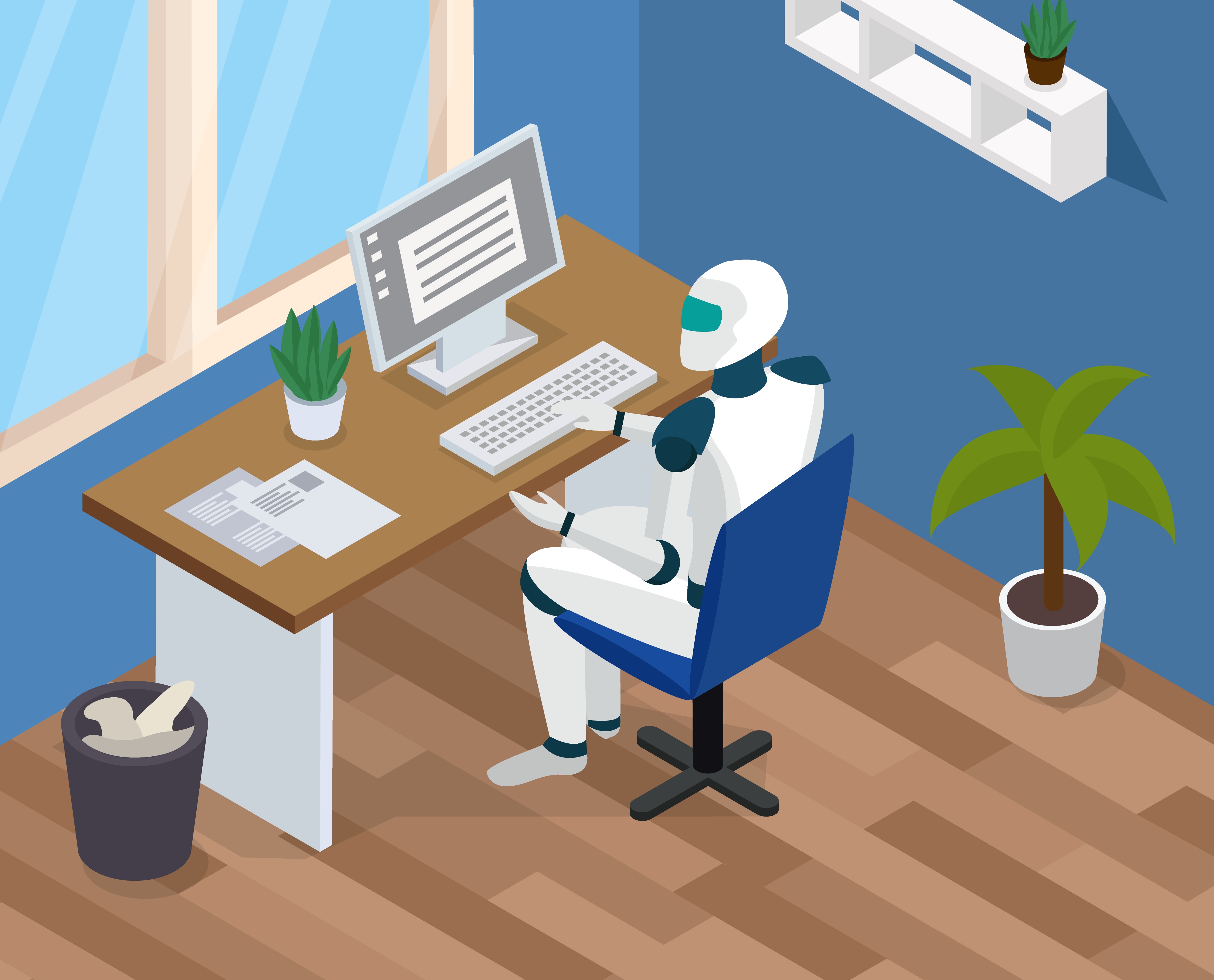
Workers are bypassing managers and turning to ChatGPT for help with work decisions, stress, and communication—a trend Resume Now calls the “AI boss effect.” From writing emails to handling tough conversations, employees say a conversational artificial intelligence chatbot or assistant provides support they often don’t get from human leaders, according to a new survey from the resume building platform.
According to the AI Boss Effect Report, based on survey responses from nearly 1,000 employees, 97% have sought workplace advice from AI tools like ChatGPT, and 63% do so frequently. Many say AI is faster, safer, and less intimidating, especially for sensitive issues like feedback, stress, or career uncertainty.
- Related article: RoboBossing: 66% of Workers Say AI in Leadership Would Make the Workplace More Fair and Efficient
Key findings of the survey include:
- AI is replacing managers as a go-to resource: 97% of employees have sought workplace advice from AI instead of their boss, often due to fear of retaliation (57%).
- Productivity depends on ChatGPT: 77% say losing access would hurt their work, and 44% say it would seriously harm productivity.
- AI outperforms managers in empathy and guidance: 72% say ChatGPT gives better advice, and 49% say it’s been more emotionally supportive than their manager.
Why workers are turning to AI instead of their boss
Workers say ChatGPT feels safer, faster, and more judgment-free than their human manager.
- 57% fear retaliation for asking the wrong question.
- 47% say ChatGPT is faster and more convenient.
- 38% don’t want to seem incompetent.
- 37% don’t trust their manager’s judgment.
- 32% feel more comfortable asking AI than a person.
- 70% say ChatGPT understands their work challenges better than their manager.
“These findings reflect a growing gap between what employees need and what they feel comfortable asking their leaders,” Resume Now said.
How employees use ChatGPT on the job
ChatGPT is becoming a behind-the-scenes partner in upward communication and daily productivity.
- 93% have used it to prepare for a conversation with their boss.
- 61% have sent a message to their manager written by ChatGPT.
- 35% used ChatGPT to write a message, then edited it.
- 57% rely on ChatGPT for writing and editing emails, reports, and other tasks.
- 53% use it for brainstorming or creative ideation.
- 52% use it for coding or debugging.
- 40% rely on it for research and summarization.
“These numbers suggest that ChatGPT has quietly become a core part of how employees manage upward communication and creative productivity,” Resume Now stated.
AI as emotional support
It’s not just about productivity. Workers also report that ChatGPT provides emotional support, and in many cases, more than their boss.
- 49% say ChatGPT has been more emotionally supportive during work-related stress than their manager.
- 40% say the support is about the same.
- 93% say they would feel comfortable discussing mental health or stress with an AI assistant.
“For many, AI offers a private space to vent, reflect, or think through problems without judgment or consequences,” Resume Now said.
Does it work? Employees say yes
Not only do workers rely on AI, but they also believe it delivers better results than traditional leadership.
- 72% say ChatGPT has given them better advice than their boss.
- 56% say it at least doubles their output.
- 26% say it helps a lot.
- 15% say it saves time here and there.
- 77% say losing access would hurt their productivity.
- 44% say it would seriously hurt their productivity.
- Only 2% say ChatGPT has no impact on their output.
A shift in trust and communication
The data reveals a subtle but powerful shift in how employees think about guidance and leadership. Many workers are aware of AI’s role in shaping workplace outcomes, and transparency has become a priority, with 91% saying they have suspected AI made an unfair decision that affected their job.

“These responses suggest that workers are not anti-AI. They want transparency, fairness, and access to tools that support their success,” Resume Now said.
In addition, the traditional manager-employee relationship is evolving. AI tools are filling gaps in trust, communication, and support, whether employers realize it or not.
“ChatGPT is not replacing managers, but it is exposing the disconnect between what workers need and what they feel safe asking for,” Keith Spencer, career expert at Resume Now, said in a statement. “When people turn to AI for emotional support or advice, that is not just a tech trend. It is a trust gap. Managers need to see that as an opportunity to reconnect, not compete.”
Photo credit: Arsenii Palivoda/Dreamstime/TNS
Sign in to get access to this free resource, and all of our whitepapers and reports.

Download this content today!
Register Now Already registered? Click here to Log In