



By Lee Guthrie
Tahlequah Daily Press, Okla.
(TNS)
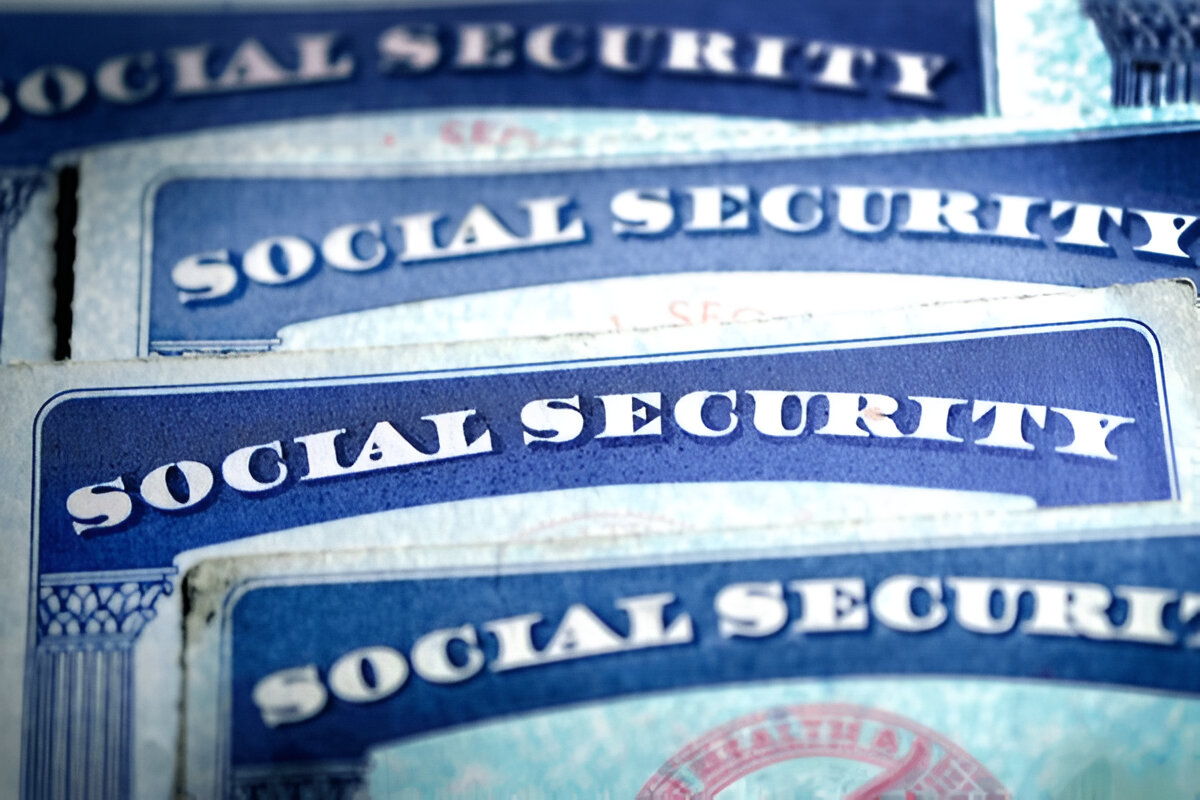
Social Security is 90 years old, and a new report from American Association of Retired Persons shows a sharp decline in confidence in the program’s future—especially among younger adults.
The report, released by Melanie Henry, senior associate state director, Communications and Community Outreach for AARP, states just 25% of adults ages 18-49 expressed confidence in Social Security, compared to 48% of those 50 and older.
“Overall, confidence has dropped 7 percentage points since 2020,” states the release.
The report also highlights the growing reliance on Social Security, with more than 82 million Americans projected to depend on the program by 2035—13 million more than currently receive these benefits.
In Oklahoma, more than 838,000 residents count on Social Security, states the report.
“For 43% of them—262,494 people—it makes up at least half of their income,” states the report. “For 22%—135,460 people—it provides 90% or more of their income.”
Additional findings showed 96% of Americans say Social Security is important; 78% worry it won’t provide enough to live on in retirement; and 67% believe it’s more important to retirees now than five years ago.
Justin Calico works for Prime as a delivery person and is in his early 30s. He said he isn’t sure how the system works, other than the age for retirement went up again, and he doesn’t hold out much hope of its being around when he is ready to retire.
The “full retirement age”—when a person can get the full benefit amount—used to be 65, but it currently ranges from 66 to 67, depending on birth year. Reduced benefits can begin at 65, but the amount doesn’t increase once the recipient hits 70. For those born 1943-1954, the FRA is 66; for those born in 1960, the FRA is 67. Congress has recently discussed raising the FRA to 70.
“Social Security deductions depend on how much my check is every week and generally it’s between $15-$50,” Calico said. “My uncle is on Social Security; he was forced into retirement by his job and health and had to retire 15 years early. He’s only pulling in about $1,000 a month.”
He said his uncle depends on his daughter and her husband for help make ends meet.
Lakota Sauceda, 27, said she started saving for her retirement when she got her first job at 21, because of the admonition of her boss. She currently works for the owner of “All Paws on Deck,” delivering Prime packages.
“I don’t have much confidence of it being around when I’m ready to draw, but they’ve been saying that for years,” Sauceda said. “I’m not banking on it; I have retirement plans other than Social Security.”
Initially she opened a 401(k), and with a previous employer, she contributed to a 401(b).
“Once I get more established in my career, I’ll meet with a financial adviser to find out my best options,” Sauceda said. “I have an aunt that barely makes ends meet. She has to live with family; she could not live alone with her Social Security.”
She said she worked in the health care profession for a while, and those she met that had issues with income and were on Social Security couldn’t even afford medicine.
“I’ve seen some statistics, and the cost of living increase was less than 3%, but the cost of groceries, housing and other things has gone up 30%,” Sauceda said.
Her mother has always been good with money, Sauceda said.
“I remember going to the store with her as a child, and if I wanted a new toy she would tell me to use the money I’d saved because that’s what that money is for,” Sauceda said. “My previous employer—I started there at 21—told me if I started retirement savings now, I could retire as a millionaire.”
She said that started her thinking about it, and watching people she knew struggle proved it was even more important to get a plan in place.
Early in the summer, some Social Security recipients received an extra check that was explained by the Social Security Administration. The payment was to make up for people whose benefits were affected by the Windfall Elimination Provision and Government Pension Offset.
“These provisions reduced or eliminated the Social Security benefits for over 3.2 million people who receive a pension based on work that was not covered by Social Security—a ‘non-covered pension,’ because they did not pay Social Security taxes,” states an explanation published April 1 on the SSA site.
Some people, like Connie and John Guthrie, put that payment aside in case it was a mistake and the SSA required them to pay it back.
Rachel Pittman said she received the “weird $555” payment this year, and found it strange.
“I couldn’t find anything about it on the news, and the round number was just odd,” Pittman said.
She said it takes all day to get SSA on a phone call, but luckily, the Muskogee office has a drop box.
U.S. Rep. Josh Brecheen, R-OK, said if Congress does not act by 2034, the trustees will issue an automatic “revenue to outlay cut” of 24%.
“The average payment right now is $1,400, and they will cut it to $1,100 if Congress doesn’t act,” Brecheen said.
Photo credit: Lane V. Erickson/Shutterstock
_______
© 2025 the Tahlequah Daily Press (Tahlequah, Okla.). Visit www.tahlequahdailypress.com. Distributed by Tribune Content Agency LLC.
Sign in to get access to this free resource, and all of our whitepapers and reports.

Download this content today!
Register Now Already registered? Click here to Log In