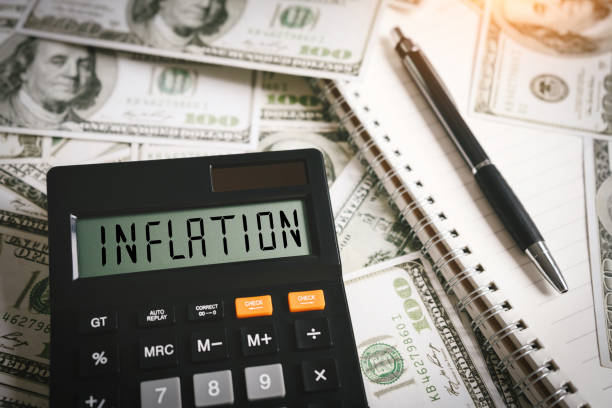




Wages have not yet fully caught up to inflation since the pandemic-era surge in prices, but the gap is narrowing. This year’s index now stands at -1.2 percentage point, according to Bankrate’s 2025 Wage to Inflation Index.
This means prices have risen 1.2 points more than wages since the beginning of 2021. While this is progress, compared with previous wage-to-inflation gaps, it still means that pay increases still haven’t made up for the corresponding surge in prices.
For more information: https://www.bankrate.com/banking/federal-reserve/wage-to-inflation-index/
Inflation has risen 22.7% since January 2021, while wages have grown 21.5% over the same period, according to the latest data provided by the Bureau of Labor Statistics for the second quarter of 2025. The gap has been as wide as 4.8 percentage points in the second quarter of 2022 and began narrowing in the third quarter of 2022, according to Bankrate’s analysis.
Recommended Articles

Retirement September 30, 2026
History of Social Security COLAs

General News September 17, 2026
Trump Talks About New Tariffs if Canada Joins EU
General News September 16, 2026
Federal Reserve Raises Interest Rates for First Time Since 2023
“Economists call the U.S. economy ‘resilient,’ but many Americans don’t agree,” said Bankrate Economic Analyst Sarah Foster. “Over half of Americans (56%) say the U.S. economy is on the wrong track, compared to 1 in 4 (26%) who say it’s on the right track, according to Bankrate’s Consumer Sentiment Survey. One likely reason for Americans feeling so downbeat is that their wages still haven’t fully recovered from the shock of post-pandemic inflation.”
Looking at the past 12 months, progress has slowed amid a cooling labor market and stubborn inflation. From Q2 2024 to Q2 2025, the pace of wage increases dropped by 0.6 percentage point while the pace of price increases dropped by just 0.3 percentage point. Bankrate predicts the gap between wages and inflation will close by the third quarter of 2026 if wages continue to outpace inflation at the same rate.
“These projections are not a forecast,” Foster noted. “If the labor market were to slow more or if inflation were to pick up, the road to recovery could take even longer, underscoring what’s at stake if tariffs drive up prices and weigh on job growth, or if the Federal Reserve keeps interest rates too high for too long.”
Not all workers have lost ground to inflation according to Bankrate’s analysis. Wages are outpacing pandemic-era inflation in four industries: retail trade, health care and social assistance, leisure and hospitality and food services and accommodation. Wage growth is furthest behind in education, construction, financial activities, professional and business services, and manufacturing.
| Industry | Wage growth since 2021 | Current gap |
| Retail | 23.2% | +0.5 |
| Healthcare and social assistance | 24.4% | +1.7 |
| Leisure and hospitality | 26.8% | +4.1 |
| Accommodations and food services | 27.5% | +4.8 |
| Manufacturing | 20.2% | -2.5 |
| Professional and business services | 19.9% | -2.8 |
| Financial activities | 19.3% | -3.4 |
| Construction | 19.1% | -3.6 |
| Education | 17.9% | -4.8 |
“The job market functions like any other market, and faster wage growth can be a sign that workers in some industries are still hanging onto some bargaining power,” Foster added. “We also know that Americans are itching for change, something today’s no-hire, no-fire labor market is making difficult with nearly half (48%) of Americans in the workforce saying they are likely to look for a new job in the next 12 months, according to Bankrate’s Worker Intentions Survey.”
Sign in to get access to this free resource, and all of our whitepapers and reports.

Download this content today!
Register Now Already registered? Click here to Log In