

By Antonio María Delgado
Miami Herald
(TNS)
More than a dozen customers of a Florida tax preparation business told federal investigators their returns contained deductions and expenses they had never incurred. When the operators suggested the customers might have lied to obtain larger refunds, a federal judge found no evidence supporting that explanation.
Instead, U.S. District Judge Carlos E. Mendoza concluded that the evidence strongly suggested the preparers had intentionally submitted fraudulent returns, exposing unsuspecting customers to potential IRS audits and additional tax liabilities.
Now a permanent injunction bars Juan Humberto Garcia and his company, The Tax Master of BVL Inc., from preparing federal tax returns. They were also ordered to surrender $558,520 in fees.
The judgment, entered Nov. 9 in Orlando, is the latest in a series of federal enforcement actions against Florida preparers accused of inflating refunds through invented business losses, expenses and deductions.
Several cases have unfolded in South Florida, including one whose customers described returns claiming expenses for businesses they did not own, vehicles they did not have and home improvements they had never made.
The cases illustrate a troubling aspect of fraudulent tax preparation: Preparers collect their fees deducted from refunds, while customers can be left answering to the IRS.
“Defendants’ customers rely on Defendants for tax preparation services but unbeknownst to them, Defendants improperly prepare their taxes and expose them to stressful audits and tax liability,” Mendoza wrote when granting a preliminary injunction back in February.
The volume of customer testimony helped persuade him that the discrepancies were deliberate.
“While one or two instances of customers not recognizing the deductions on their returns might indicate that a mistake was made, over a dozen customers testifying that defendants submitted fraudulent tax returns on their behalf strongly suggests that defendants were intentionally preparing and filing fraudulent returns,” he wrote.
The defendants suggested that customers had supplied false information, then changed their accounts when the IRS began investigating. Mendoza rejected that explanation, finding no evidence the customers had intended to submit fraudulent returns.
The Justice Department sued Garcia and The Tax Master of BVL in March 2025. Investigators had begun examining the operation years earlier, and Mendoza found that improper returns continued even after legal proceedings began.
The permanent injunction was entered by agreement. A separate defendant, Marcos Yariel Figueroa, agreed to a two-year restriction on preparing returns without admitting the allegations. No monetary judgment was entered against him.
The $558,520 judgment against Garcia and his business is money ordered surrendered through the enforcement action, not compensation awarded to customers.
Businesses they didn’t own
A separate Miami case offers a detailed account of how fabricated deductions can appear on returns without taxpayers’ knowledge.
On Oct. 26, U.S. District Judge Jacqueline Becerra permanently barred Aniel Saint-Hilaire from preparing federal returns for others or participating in a tax preparation business. She entered a $576,121.94 judgment against him: $571,739.47 in profits ordered surrendered and $4,382.47 in expenses associated with discovery violations.
The judgment followed more than two years of litigation and a hearing at which 10 customers described financial information on their returns that they said they had never provided.
Irfan Bostanci’s return reported a business loss exceeding $1,000, although he did not own a business. Luis Bravo testified that he had not reported business losses and was unaware any had been claimed on his behalf.
Tia Brown’s return claimed $1,500 in education credits for 2021, although she testified she had not attended classes or courses during the years under examination. Other customers discovered credits for energy-efficient home improvements they had never made.
Several had deductions for contributions to health savings accounts, despite never contributing to such accounts.
The testimony revealed a recurring pattern: Customers entrusted Saint-Hilaire with their taxes, received copies and left without carefully examining the deductions. They had paid him to handle the complicated calculations and paperwork, the court noted, and relied on his expertise.
Fuel tax credits presented another problem. Those generally apply to fuel used for qualifying off-highway business purposes, not ordinary commuting.
One customer’s 2022 return claimed a $406 credit associated with 2,220 gallons of fuel. He told investigators he did not operate qualifying vehicles or equipment and had only discussed how much he drove for work.
Several customers testified that their only fuel purchases were for personal vehicles. Another did not own a vehicle at all.
Becerra found the customers credible. Saint-Hilaire maintained that the figures came from them and suggested some had blamed him after feeling intimidated or pressured by investigators.
But he offered no evidence supporting that explanation, the judge found. She also rejected his testimony that he possessed supporting documentation, noting that he had not produced it in court.
Thousands of returns, years of warnings
Federal authorities alleged that Saint-Hilaire prepared more than 10,000 returns between 2019 and 2023, with 99% claiming refunds. Investigators estimated he prepared another 2,366 during the 2024 filing season, with 98% seeking refunds.
According to the court, he charged between $600 and $1,650 per return, deducting fees from customers’ refunds.
The IRS selected a random sample of 150 customers for its investigation. Forty-five participated in interviews, and agents examined 72 returns from 2021 and 2022.
Every return reviewed contained at least one deficiency resulting in an excessive refund, according to government evidence described in the court order. The average discrepancy was $5,227.
Certain deductions appeared at rates far exceeding national averages.
Unreimbursed employee business expenses, claimed on fewer than half of 1% of returns nationwide, appeared on 59% of those Saint-Hilaire prepared. Most employees have not been eligible for those deductions since federal tax changes took effect in 2018, the court noted.
Residential energy credits appeared on 37% of his returns, compared with about 2% to 3% nationally. Fuel tax credits appeared on 25% of his 2024 returns, compared with about 1% nationally.
Health savings account deductions surged from approximately 2% of his returns in 2021 to 45% in 2022.
The IRS had warned Saint-Hilaire about earned income tax credit errors in 2013 and 2014. A subsequent investigation identified errors in 339 of 375 customer returns examined.
Authorities assessed $45,000 in preparer penalties related to understated tax liabilities for 2013 and 2014, followed by $75,990 in penalties in 2018 for failures involving earned income tax credit requirements.
Investigators also found he continued preparing returns after his tax preparer identification number was revoked. Some returns listed other preparers’ names or identification numbers, although customers identified Saint-Hilaire as the person who handled their taxes.
To calculate the profits he would surrender, Becerra accepted a figure based on 59% of his preparation fees—corresponding to the share of returns claiming unreimbursed employee business expenses—minus a proportionate share of legitimate business expenses.
Customers left exposed
Other Florida cases involve similar allegations.
In March, a federal judge in South Florida issued a preliminary injunction against Christopher Brown and Superior Taxes LLC, a Miami Gardens business, after the government presented evidence involving improper head-of-household filing status, inflated business losses and questionable education and residential energy credits.
Another federal lawsuit targeted Glicerio D. Mirambel Jr., a Cutler Bay preparer accused of inventing businesses and losses on customers’ returns. Those allegations are distinct from the judicial findings in the Garcia and Saint-Hilaire cases.
The separate proceedings do not establish that preparer fraud is increasing in Florida or that authorities have launched a coordinated statewide crackdown. They do underscore the risks for people who depend on paid preparers.
The IRS generally holds taxpayers responsible for the accuracy of returns filed in their names, even when someone else prepares them. Fabricated deductions can lead to audits, additional taxes, interest or penalties, depending on the circumstances.
The records reviewed do not establish how many customers in these cases were ultimately audited or required to repay money.
But for those who testified, the problem began with a basic expectation: They had paid someone to prepare their taxes correctly.
Instead, federal judges found that returns submitted on their behalf contained deductions they had never claimed, leaving them exposed to problems with the IRS long after the preparers collected their fees.
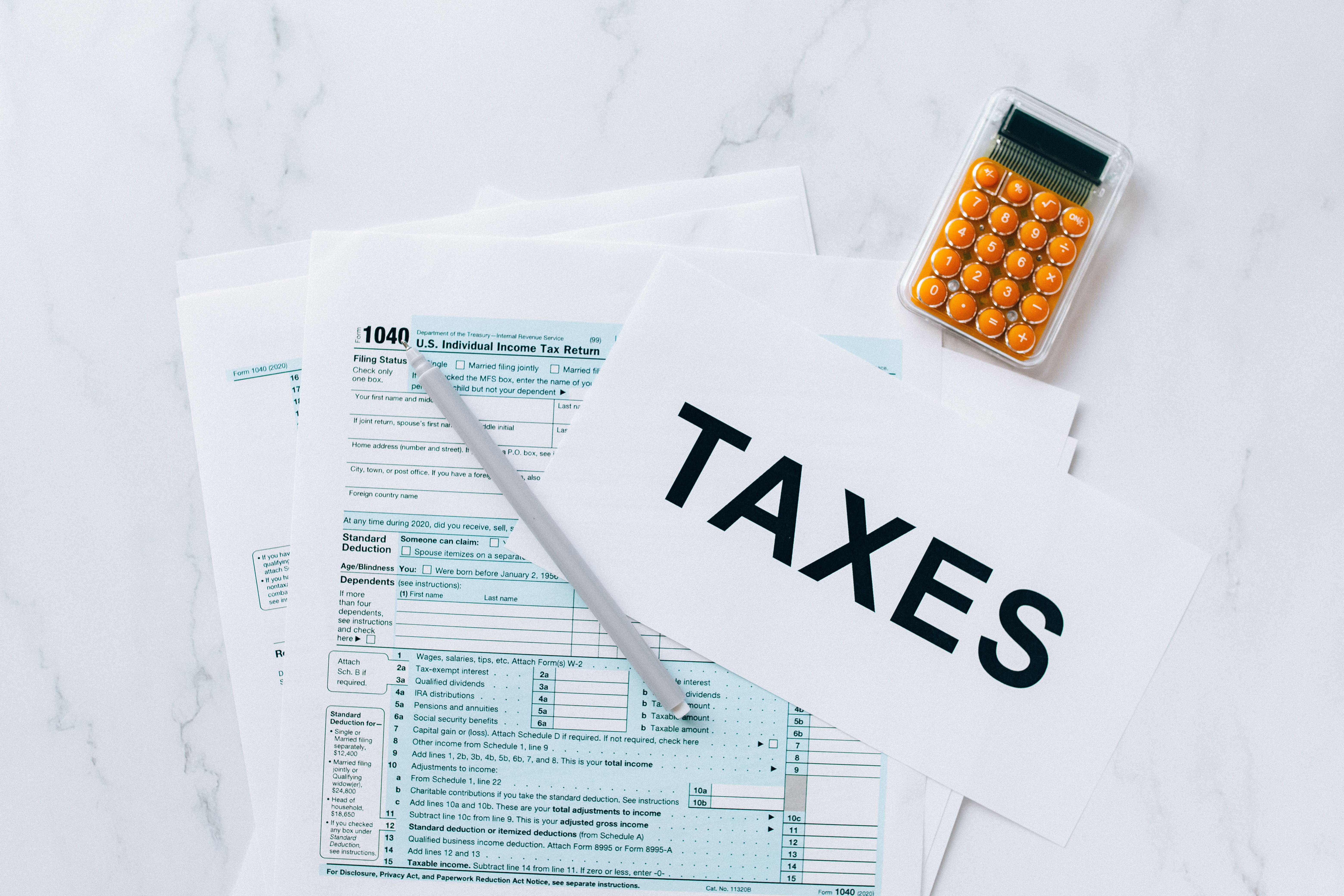
Photo credit: Tara Winstead/Pexels
_______
©2026 Miami Herald. Visit miamiherald.com. Distributed by Tribune Content Agency LLC.
Sign in to get access to this free resource, and all of our whitepapers and reports.

Download this content today!
Register Now Already registered? Click here to Log In