

The Public Company Accounting Oversight Board is proposing to update what it says are outdated provisions in the auditing standard related to auditor comfort letters.
The proposed amendments to AS 6101, Letters for Underwriters and Certain Other Requesting Parties, would remove the 135-day convention that could prevent auditors from providing negative assurance—meaning the auditor finds no evidence to dispute certain facts—as to subsequent changes in selected financial statement items in comfort letters, the board said on Nov. 3.
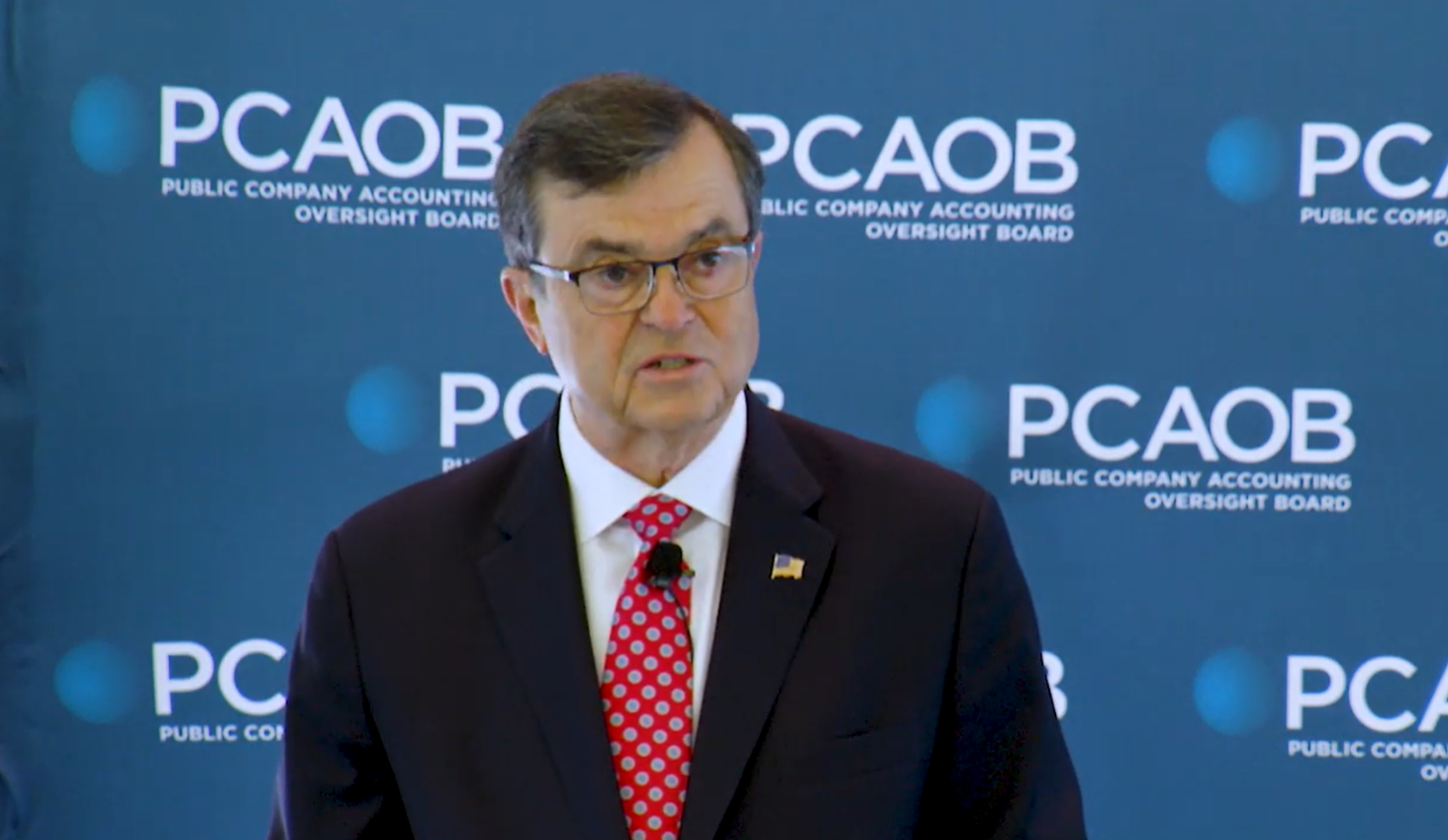
PCAOB Chairman Demetrios Logothetis said during a board meeting on Tuesday that the targeted changes to AS 6101 would make sure the “outdated timing convention does not stand in the way of auditors providing negative assurance when they believe it is appropriate.”

“The change is narrow, but it matters,” he added. “It would help ensure that the standard continues to work as intended in today’s capital markets.”
Comfort letters are an important source of information for underwriters to consider when companies raise capital. According to accounting firm Mayer Brown, a comfort letter is “a letter delivered by an issuer’s independent accountants to the underwriters or initial purchasers in connection with an offering that provides certain assurances with respect to financial information included in a registration statement, prospectus, or offering memorandum used for the securities offering.”
Some public companies could plan to raise capital 135 days or more after the end of the most recently audited or reviewed period and before filing their next required financial reports. During that period, an underwriter—usually an investment bank—involved in the fundraising could seek negative assurance as to subsequent changes in specified financial statement items as part of their due diligence. Even if the auditor decides that providing such assurance would be appropriate under the circumstances, the existing 135-day convention prohibits the auditor from doing so, the PCAOB says. In this situation, if the requested negative assurance relates to a date 135 days or more after the end of that period, the auditor might report in a comfort letter only the procedures performed and findings obtained. This convention can prevent an auditor from providing the broader comfort that an underwriter may seek, even when the company is current in its required filings, the board added.
As a result, under existing AS 6101, which hasn’t been substantially amended since its adoption as an interim standard in 2003, there are periods of time in which the auditor is unable to provide negative assurance. For example, for a calendar-year filer, the auditor is unable to provide negative assurance between a date that is 135 days or more after the third quarter reporting date (Sept. 30) and the date the annual report is filed, which is generally due no earlier than March 1 and up to March 31, depending on filer status.
The existing convention can have real consequences, Logothetis said. An underwriter may be unwilling to move forward without negative assurance from the company’s auditor, and a company that has met its filing obligations “could face an unnecessary obstacle in accessing the capital markets solely because of the passage of time,” he added.
If adopted, the proposal would replace the 135-day convention with an approach tied to applicable filing deadlines. Under the proposal, an auditor could provide negative assurance after the end of the most recent period for which the auditor performed an audit or review and before the filing deadline for the issuer’s next required annual or interim financial statements.
“Updating this outdated provision better aligns an auditor’s ability to keep investors informed about company performance with current reporting and filing deadlines,” said Logothetis, who added that the proposal is another step in the PCAOB’s efforts to improve its auditing standards. “This proposal would preserve investor protection, support efficient capital formation, and make clear that the decision to provide negative assurance remains solely a matter of the auditor’s professional judgment.”

Board member Kyle Hauptman said there’s nothing magical about the 135-day number, even though it reflected the reporting framework at the time. But 135 days was never the point, he added. The point was to make the standard work with the reporting framework.
“Companies do not plan their capital needs around a 135-day clock in a PCAOB auditing standard. Opportunities arise. Markets change. A company may determine that it is the right time to raise capital. Our standard should not unnecessarily get in the way simply because a certain number of days has passed,” Hauptman said. “And that gets me to what I think is really the question here. Why replace 135 with some other number? If what matters is the reporting deadline, why not tie our standard to the reporting deadline? That is what this proposal does. And I think it gives us a more durable standard. If reporting requirements change again down the road, we should not have to come back here just to change the number again.”
Board member Mark Calabria said the PCAOB’s proposal preserves a clear boundary: if an issuer fails to file its next required financial statements on time, the auditor may not provide negative assurance under the proposed framework.
“The economic effects of the proposed approach deserve careful consideration. The current rule may affect the timing or cost of capital raising. In some cases, issuers may prepare additional interim financial information or obtain additional reviews. In others, underwriters may undertake further due diligence or delay a transaction,” he said. “At the same time, providing negative assurance over a longer period may involve added risk and cost. Audit firms may need to revise methodologies and train personnel. Some engagements may require more extensive procedures. Investors could also place too much weight on limited procedures performed long after the latest audit or review.
“Public comment should help us assess the likely benefits, costs, and unintended consequences,” Calabria added. “In particular, useful evidence would address current market practices, transaction costs, capital formation and competition, auditor risk, investor understanding and protection, and effects on emerging growth companies and smaller issuers. That evidence will help us determine whether the proposal achieves the appropriate balance.”
The deadline for public comment on the proposal is Jan. 4, 2027. They can be emailed to comments@pcaobus.org or sent by postal mail to Office of the Secretary, PCAOB, 1666 K Street, NW, Washington, DC 20006-2803. All comments should reference the board release number, PCAOB No. 2026-008, in the subject or reference line.
Photo credit: Public Company Accounting Oversight Board/Flickr
Sign in to get access to this free resource, and all of our whitepapers and reports.

Download this content today!
Register Now Already registered? Click here to Log In
Tags: Accounting, audit, Auditing, auditing standards, auditors, comfort letters, PCAOB