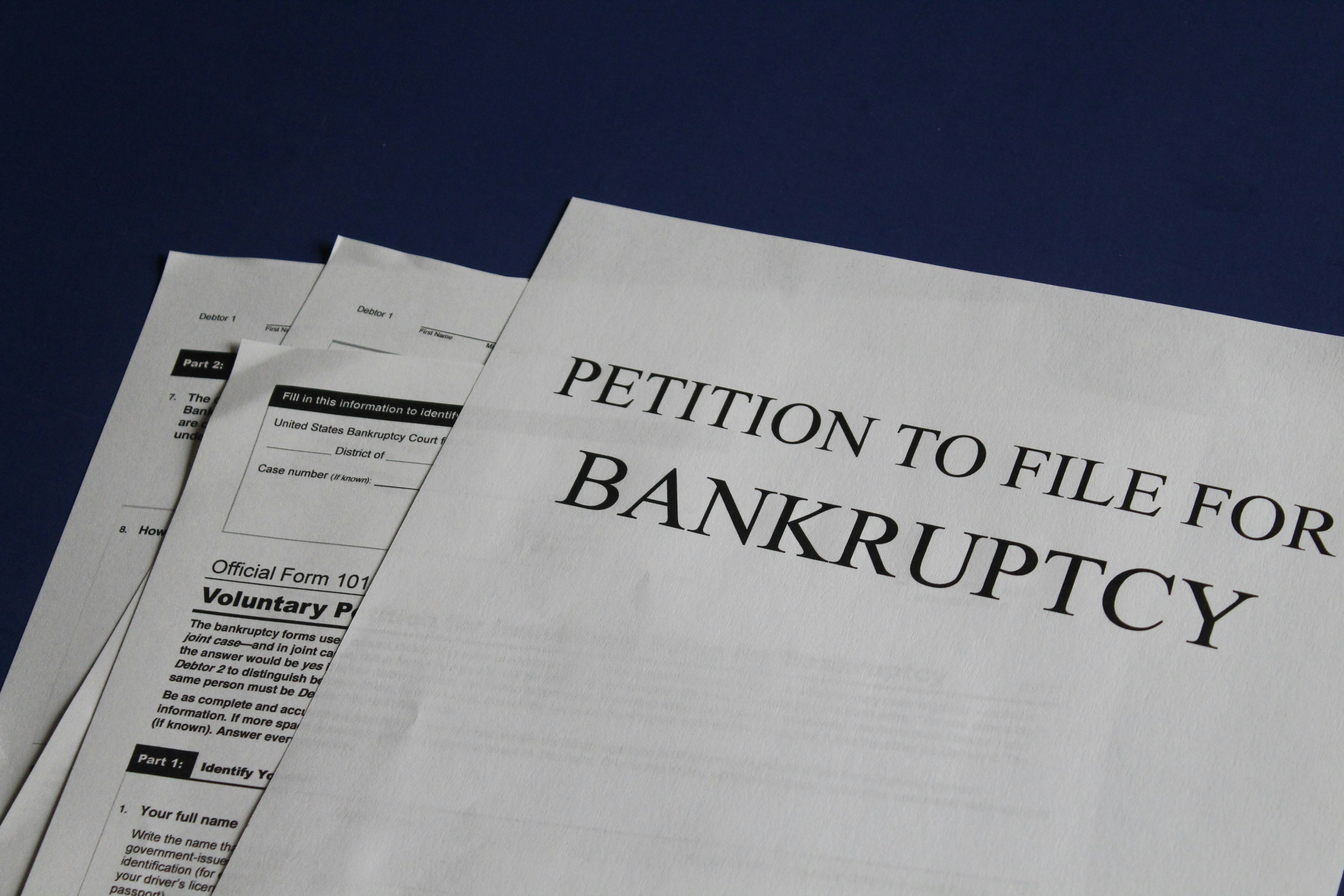


For a small company, Chapter 11 is a last chance to reorganize rather than liquidate, and the first weeks set the course. Within days, the court decides whether the business can use its cash and pay its people; within weeks, it forms a view of whether management can be trusted to stay in control. Both rest on the numbers in the opening package: sworn, and every later correction costs credibility.
Those numbers come mostly from the company’s accountant, whether an outside CPA or an in-house controller, who holds the most complete financial record the company has. The debtor’s financial advisor or chief restructuring officer usually arrives late, with only days to prepare.
This article explains what the official bankruptcy forms filed at the start of the case (the petition, the list of largest unsecured creditors, the schedules of assets and liabilities, and the statement of financial affairs) are trying to learn, what they ask for, and what the accountant must provide and check before any of it is sworn. It assumes the company has decided to file and has engaged bankruptcy counsel.
The framework is general; local rules, U.S. Trustee practice and the facts of each case may change the details.
What the forms are trying to learn
Chapter 11 is a trade. The filing stops every collection action against the company, and management keeps running the business. In exchange, the debtor owes the court, the U.S. Trustee and its creditors full, sworn disclosure, starting with those forms. They are built to answer four questions.
- What does the estate hold? The asset schedule is the court’s first sworn inventory of everything the company now holds for its creditors, by category and at the debtor’s own stated value. It is the baseline every later question about value starts from.
- Who has a claim on the estate, and in what order? The claim schedules show the court how much of the estate is already pledged, and how much is left for everyone else.
- Secured: lenders with liens are paid from their collateral and what it produces, cash included, up to its value. Any shortfall becomes an unsecured claim.
- Unsecured: paid from what is not pledged, level by level, each in full before the next; within a level, pro rata.
- The case’s own costs: lawyers, advisors, debts incurred after filing, and goods received in the 20 days before filing. If secured lenders hold liens on every asset, nothing is unpledged: the lawyers get paid only if those lenders agree to set some aside.
- Priority claims: wages and benefits up to a cap per employee, consumer deposits up to a cap, then certain taxes.
- General unsecured creditors.
- Owners.
- Where did value go before the filing – clawback windows? The statement of financial affairs shows the court where cash went in the run-up: payments to creditors – last 90 days, insiders – last 12 months, and transfers outside the ordinary course – last two years. It is the court’s first assessment of value that could come back to the estate.
- Can management be trusted to keep running the business? The package is the court’s first test of management’s credibility, on three counts:
An officer signs every form under penalty of perjury, so the answers are personal.
- Consistency: do the attached financial statements and tax return agree with the schedules and with the revenue reported in the statement of financial affairs?
- Currency: are the books current? The package shows when statements were last prepared and inventory last counted, or carries a sworn statement that no statements exist.
- Conduct: what did management pay itself and other insiders in the last 12 months?
What the forms ask for
The same official forms apply in a standard Chapter 11 and in Subchapter V; the Subchapter V election is a checkbox on the petition. Five forms carry the financial content.
| Form | What it asks for | When |
| Voluntary petition (Official Form 201) | Debtor’s industry code; number of creditors; Subchapter V election; prior/related bankruptcy cases; property needing urgent protection | At filing |
| List of the 20 largest unsecured creditors (Form 204) | Creditor name/contact; claim nature and amount; contingent, unliquidated or disputed | At filing |
| Schedules of assets and liabilities (Forms 206A/B, D, E/F, G, H and the summary) | Assets (A/B); secured claims (D); priority and general unsecured claims (E/F); leases/contracts (G); codebtors/guarantors (H) | Shortly after |
| Statement of financial affairs (Form 207) | Income (Part 1); pre-filing transfers to creditors and insiders (Part 2); lawsuits and receiverships (Part 3); other transfers (Part 6); closed accounts (Part 10); names of bookkeepers, statement preparers and recipients; officers; insider payments (Part 13) | Shortly after |
| Declaration (Form 202) | Officer’s sworn declaration of accuracy | With each form |
What the company and its accountant provide
Almost none of this is filed. Only the latest financial statements and tax return reach the court; the rest is the evidence behind every sworn answer on the forms, and its quality decides whether those answers hold up.
| Document | Feeds | When |
| Financial statements; last two federal tax returns (FILED) | Voluntary Petition attachments (small business, Subchapter V); Statement of Financial Affairs, Part 1 (income) | At filing |
| Latest trial balance; receivable and payable agings | Voluntary Petition; List of 20 Largest Unsecured Creditors; Schedules A/B, D, E/F | At filing |
| Depreciation schedule | Schedule A/B (equipment, vehicles) | Shortly after |
| Unpaid payroll and sales taxes; tax refunds and loss carryforwards | Schedule E/F (priority taxes); Schedule A/B (refunds/NOLs) | Shortly after |
| Names of bookkeepers, statement preparers and recipients | Statement of Financial Affairs, Part 13 | Shortly after |
| Bank statements (12 months) | Schedule A/B (cash); Statement of Financial Affairs, Parts 2 and 10; cash budget | At filing |
| Payroll register | Schedule E/F (priority wages); first-day wage request | At filing |
| Loan documents; loan statements | Schedule D | Shortly after |
| Leases; key contracts | Schedule G | Shortly after |
| Insurance policies; inventory value (last count) | Schedule A/B; Statement of Financial Affairs, Part 13 | Shortly after |
Why it matters: credibility gained or lost
Every form is signed under penalty of perjury, and in Chapter 11 a scheduled claim counts as filed. Errors in the package do not stay paperwork; they become sworn statements and creditor claims. Quality control before filing is the accountant’s main contribution.
- Tie out before anything is sworn. Revenue in the Statement of Financial Affairs should match the tax returns and financial statements; schedule totals, the trial balance; cash, the bank at the petition date. Inconsistencies are the first test of management’s credibility.
- Grade every number. Mark each figure as reconciled, estimated or unknown. A labeled estimate can be amended; an unlabeled error is a sworn misstatement.
- If the books are unreliable, start from evidence, not the ledger. Bank, lender, payroll-provider and vendor statements come first. File firm figures where the evidence exists and labeled estimates elsewhere, then clean up during the case. An earlier article in CPA Practice Advisor, “Chapter 11 Financial Reporting When the Accounting Books Are Unreliable” (October 12, 2026), sets out the method.
- Don’t plug before filing. Unsupported late entries draw questions. Flag the problem instead.
- Outside CPAs: releasing client records needs the client’s written consent (professional rules and, for tax returns, Section 7216), and continued work for the company after filing needs court approval, which counsel requests with the first-day papers.
After the filing
The accountant’s role grows after filing. It starts on the petition date, when the books split: pre-petition liabilities are frozen and post-petition activity is recorded separately. Every report that follows depends on that cutoff. The financial advisor or chief restructuring officer prepares the monthly operating reports; the accountant supplies the inputs: the monthly close, bank reconciliations, receivable and payable agings, and tax filings, which remain due during the case.
===
Carlos Flores is a turnaround manager and fractional CFO with CFO Fractional. He serves as financial advisor to the debtor or chief restructuring officer in small and mid-sized Chapter 11 cases.
Sign in to get access to this free resource, and all of our whitepapers and reports.

Download this content today!
Register Now Already registered? Click here to Log In