



By Anthony Man
South Florida Sun-Sentinel
(TNS)
The most recent round of public, preelection polls show Florida voters are stressed about affordability and the cost of living. But it’s unclear if they’ll approve a plan that would significantly reduce property taxes on owner-occupied homes and condos.
Three polls last week show far different outcomes for Amendment 3, the proposed change to the Florida Constitution.
- Passing narrowly, with 63% support.
- Falling short of passage, with 55% support.
- Failing overwhelmingly, with 42% support.
Passage requires 60% of the vote.
“It’s probably going to be close. I can make a case logically for it to pass, and I can also make a case for logically that it won’t,” said Aubrey Jewett, a political scientist at the University of Central Florida. “60% is a pretty significant threshold.”
The proposal
The proposed amendment to the Florida Constitution would reduce property taxes for owner-occupied homes and condominiums.
It would also place an additional limit on increases in the taxable property values for business and commercial property.
The homestead exemption, which currently reduces the value of an owner-occupied home subject to taxation by $50,000, would increase to $150,000 in 2027 and $250,000 in 2028. It would not apply to non-school property taxes.
It would also reduce the maximum annual increase in the value of non-homesteaded properties subject to taxation to 5%, down from the current 10%.
The result would be reductions in taxes for residential property owners, providing relief after years of widespread property tax increases.
Opponents warn of another result: tax increases for owners of other property, fee increases, reductions in local government services—or a combination of the three.
The service cuts, opponents warn, could extend to public safety such as police and fire protection, as well as parks and libraries and hospital and health services. It could also shift control from localities to Tallahassee, as local governments seek money to maintain their operations.
“The basic case for why it would pass is it is promising a big tax cut to homeowners. And that’s a really big group of Floridians, many of whom turn out to vote, and historically when we have offered tax cuts on the ballot, they have passed more often than not,” Jewett said.
“On the ‘no’ side, though, it’s really probably a tax shift, not a tax cut,” Jewett said. “Almost certainly local governments will have to find other sources of revenue because I think objectively there isn’t a lot of waste in local government. Yes, they have increased spending quite a bit in the past five years, but it is because of population growth and inflation, primarily.”
“This could end up with a pretty big tax increase for renters and business owners,” he said.
Republican majorities in the Legislature, joined by a handful of Democrats, placed the referendum on the ballot to show their concern for voters’ worries about affordability. Most Democrats said the affordability issue that voters care about most, and the state could take steps to mitigate, is the high cost of windstorm insurance.
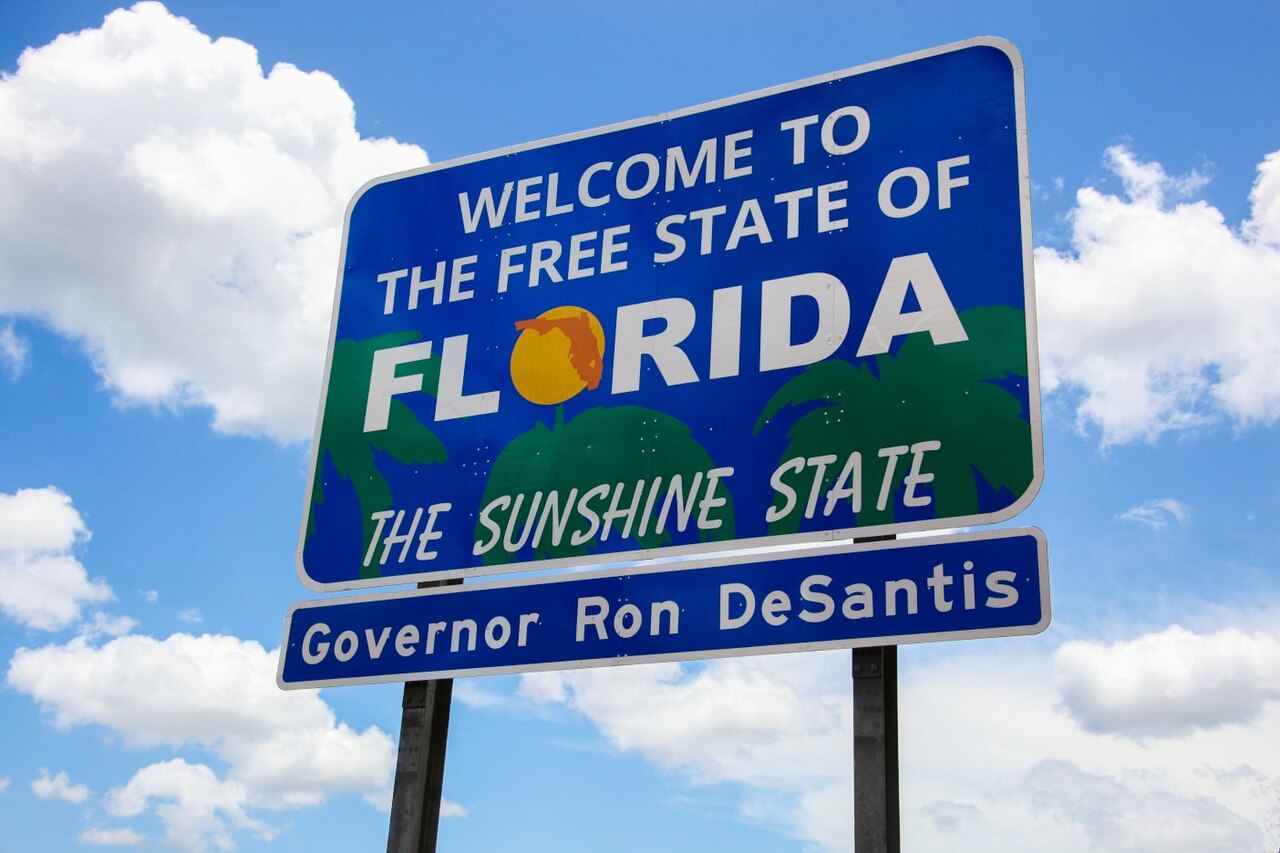
The proposal is supported by the Republican Party of Florida, Gov. Ron DeSantis and the Florida Realtors. It is opposed by the Florida Democratic Party, many local elected officials, sheriffs and unions that represent police and other government employees.
Cost concerns
The amendment comes at a time when voters report continued and increasing frustration with the economy and the cost of living.
“Affordability (is) a No. 1 issue to many voters right now,” Jewett said.
In a Targoz Market Research poll for the James Madison Institute, 19% of Florida likely voters said their household financial situation was better off than a year ago, 38% worse off, and 42% about the same.
The results were similar in a Mason-Dixon Polling & Strategy poll conducted for NBC 6 and Telemundo Station Group: 26% said they were better off financially than a year ago, 39% worse off, and 34% about the same.
Mason Dixon/ NBC 6/Telemundo found 26% of respondents said grocery and food prices have had the greatest impact on their ability to afford everyday expenses. Property taxes were far down the list, at 6%. Income not keeping pace with costs, gas prices, healthcare costs, rent or mortgage, and insurance costs were all higher.
In the Targoz/James Madison Institute poll, voters cited five issues as “the primary driver of housing affordability problems in Florida:” interest rates (22%), property insurance (19%), property taxes (17%), lack of housing supply (14%), and government fees and regulations (10%).
Even though voters don’t see property taxes as the biggest driver of affordability troubles, “voters can only vote on what they’re presented with,” Jewett said. And that’s the property tax amendment. “That means if they’re really feeling the pinch, a lot of homeowners may say, ‘I understand all these arguments, but I just really feel we need some affordability relief.’”
Referendum numbers
- Yes, 63%; no, 21%; unsure, 15%. That’s from the Targoz Market Research poll for the James Madison Institute.
- Support, 42%; oppose 35% undecided, 23%, from a survey conducted by St. Pete Polls for Florida Politics.
- Yes, 55%; no, 26%; undecided, 19% from Mason-Dixon Polling & Strategy for NBC 6 South Florida (WTVJ-Ch. 6) and Telemundo Station Group.
Among those who said they would vote “yes” in the Mason-Dixon poll, 49% said property taxes are too high, 29% said government spending is excessive and 21% cited the increased cost of living.
Among those who said they would vote no, 55% said they were concerned about cuts to local services including public safety, 30% said local governments would make up the revenue from residents in other ways, and 13% said they were concerned it could raise the cost of renting.
Why the difference
There are multiple reasons why polls that seem to ask the same thing produce widely different results.
Polls aren’t precise, even though they’re often depicted that way. “A poll is a snapshot of a moment,” said Kevin Wagner, a Florida Atlantic University political scientist who has conducted polls during many previous election cycles but isn’t this year.
“There’s always going to be a lot of statistical noise,” he said.
The three recent property tax polls illustrate many of the reasons experts cite for different results.
Different pollsters use differing methodologies. In the case of the three polls that reported asking about the property tax proposal, one used live callers, another was online only, and the third was a combination of online surveys and automated phone calls.
The live caller poll, which is the most expensive to conduct, had the fewest number of respondents. The all-online poll had the largest number. Pollsters once universally considered live calling the Gold Standard of polls, but there’s no longer unanimity with far fewer people answering unknown callers.
The three polls were conducted at roughly, but not exactly, the same time. There was some overlap in timing for two of the polls, and not the third.
Each pollster asked significantly different questions. One boiled down the issue much more than what voters will see on the ballot; one summarized it, and another had respondents read the full text of the language that will appear on the ballot.
Different pollsters use different methodology to determine just who among the people they reach is really a “likely voter.”
Another difference among the property tax questions the polls asked: whether respondents were asked if they’d “support” the proposal versus whether they’d “vote yes.”
Different polls
The St. Pete Polls/Florida Politics survey asked: “Do you support or oppose the state constitutional amendment 3 ballot question that would eliminate non-school property taxes on homesteaded primary residences?”
That’s a simplified version of what voters are being asked. The proposal would not eliminate non-school taxes for homeowners; it would have the effect of eliminating those taxes for many, but not all.
The poll surveyed 836 likely Florida voters from Oct. 5-7 through automated phone calls and text. St. Pete Polls reported a margin of error of plus or minus 3 percentage points.
The Mason Dixon/ NBC 6/Telemundo survey question was more detailed. It provided factual details about what voters would see on the ballot. It asked people if they would vote yes to support or no to oppose the amendment.
The poll surveyed 625 registered voters, all of whom said they were likely to vote, from Sept. 28-Oct. 1 by live telephone callers. Mason-Dixon reported a margin of error of plus or minus 4 percentage points.
The margin of error for smaller groups, such as the number of people who said they would vote for or against the amendment, can be much higher because the sample sizes are much smaller.
(Simultaneously, Mason-Dixon surveyed Hispanic voters for Telemundo. The results were: yes, 58%; no, 31%; undecided 11%.)
The Targoz Market Research poll for the James Madison Institute, which is a right-leaning think tank based in Tallahassee, had the most detailed question. Respondents in the online poll were shown the language as it appears on the ballot. And it asked people if they would vote yes or no on the amendment they’d just read.
Targoz surveyed 1,200 registered voters, including 857 likely voters, online from Sept. 28-Oct.4. Targoz reported a margin of error of plus or minus 3 percentage points for the survey of likely voters. The margin of error for smaller groups of respondents is higher.
Photo credit: Wikimedia Commons
_______
©2026 South Florida Sun-Sentinel. Visit sun-sentinel.com. Distributed by Tribune Content Agency LLC.
Sign in to get access to this free resource, and all of our whitepapers and reports.

Download this content today!
Register Now Already registered? Click here to Log In
Tags: ballot measures, Florida, property tax, property taxes, Taxes