



By Taylor Millard
DC Journal
(TNS)
High cost, low benefit.
That’s the projected impact from a proposed tax hike on carried interest, according to an analysis from the Tax Foundation.
Carried interest is a share of an investment fund’s profits awarded to its managers. For example, if a fund’s investments perform well, managers might receive 20 percent of the profits above an agreed-upon target.
Critics—including President Donald Trump—call the tax treatment a loophole. Qualifying carried interest is taxed at the lower long-term capital gains rate rather than at ordinary income tax rates, even though managers receive it for overseeing other people’s investments.
Current law generally requires an investment associated with carried interest to be held for more than three years to receive the lower rate. Congress increased that period from one year in the 2017 Tax Cuts and Jobs Act. Because private-equity funds often hold investments longer than three years, critics say much of the tax advantage survived.
The Washington-based Tax Foundation found that taxing carried interest as ordinary income would reduce the primary federal deficit by just $16.3 billion over 10 years if the economy remained otherwise unchanged.
After estimating how people and businesses might respond to the higher tax, the foundation reduced that figure to $6.1 billion. That calculation assumes the tax would modestly discourage work, saving and investment, slightly shrinking the economy and offsetting some of the new revenue.
The current national debt is $39.8 trillion.
“It is somewhat small in the big picture of mounting US debts and deficits,” Garrett Watson, the Tax Foundation’s vice president of federal tax policy, said.
When federal interest costs are included, the foundation estimated that the policy would reduce total deficits by $19.6 billion before accounting for economic changes and by $7.5 billion afterward.
The foundation projected that the tax would leave the ratio of publicly held debt to the size of the economy largely unchanged. It estimated that long-term economic output and income would each decline by less than 0.05 percent. The economy would also have the equivalent of 9,000 fewer full-time jobs.
Those are small changes in a national economy, the foundation acknowledged. The tax would primarily affect Americans in the highest-earning 20 percent, reducing that group’s after-tax income by less than 0.5 percent.
“Taxing carried interest punishes long-term risk-taking and pulls capital away from the businesses and workers who depend on it,” Eric Ventimiglia, executive director of Pinpoint Policy Institute, told InsideSources.
Other researchers believe changing the tax treatment would raise substantially more money.
A separate analysis by Yale’s Budget Lab projected that a broad carried interest proposal could raise approximately $100 billion over 10 years. It estimated that legislation introduced by Sens. Ron Wyden, Sheldon Whitehouse and Angus King could raise $87.7 billion. A 2023 estimate from the Joint Committee on Taxation put the figure at $63.1 billion.
The estimates are not directly comparable.
The Tax Foundation examined a general policy taxing carried interest as ordinary income and adjusted its results for projected economic effects. Yale used newer research to estimate that considerably more carried interest exists than previous studies assumed.
The underlying data are uncertain because taxpayers do not report carried interest on a separate line of their tax returns. Researchers must estimate its value using partnership records and assumptions about how investment funds operate. That helps explain why the projections range from $6.1 billion to $100 billion.
Congress has debated carried interest since 2007. The Obama and Biden administrations supported taxing it as ordinary income. Trump also called for ending its preferential treatment during both of his presidential campaigns.
Nevertheless, the tax advantage survived. A proposed change was removed from the 2022 Inflation Reduction Act to secure enough Senate support for the larger bill. Trump raised the issue again during Republican tax negotiations in 2025, but Congress left it out of the final One Big Beautiful Bill Act.
In April, Wyden, D-Ore.; Whitehouse, D-R.I.; and King, I-Maine, introduced the Ending the Carried Interest Loophole Act.
The bill would require fund managers to report calculated compensation each year and pay ordinary-income and self-employment taxes on it, even before receiving the corresponding profits. They would receive a matching capital loss intended to prevent the same income from being taxed twice later.
Wyden said the change would bring greater fairness to a tax code that favors wealthy investors over the middle class.
“The effect of that system has been the strangulation of prosperity and opportunity for everybody but the ultra-wealthy,” he said.
Supporters say carried interest is payment for managing clients’ money and should be taxed like other compensation. The investment industry says it is a return tied to long-term risk and that higher taxes could reduce investment in businesses.
The bill has Democratic and independent sponsors but no Republican sponsors, leaving it with little immediate path through the Republican-controlled Congress.
The Tax Foundation’s findings also show the limits of addressing the national debt through a narrowly targeted tax increase. Social Security’s retirement trust fund is projected to exhaust its reserves in late 2032, and the Medicare trust fund financing Part A is expected to follow in 2033.
Taxes may be part of a broader fiscal solution, the Tax Foundation argues, but Congress must also address federal spending. Its analysis suggests that even a widely debated tax increase aimed at some of the country’s highest earners would do little by itself to change the nation’s debt trajectory.
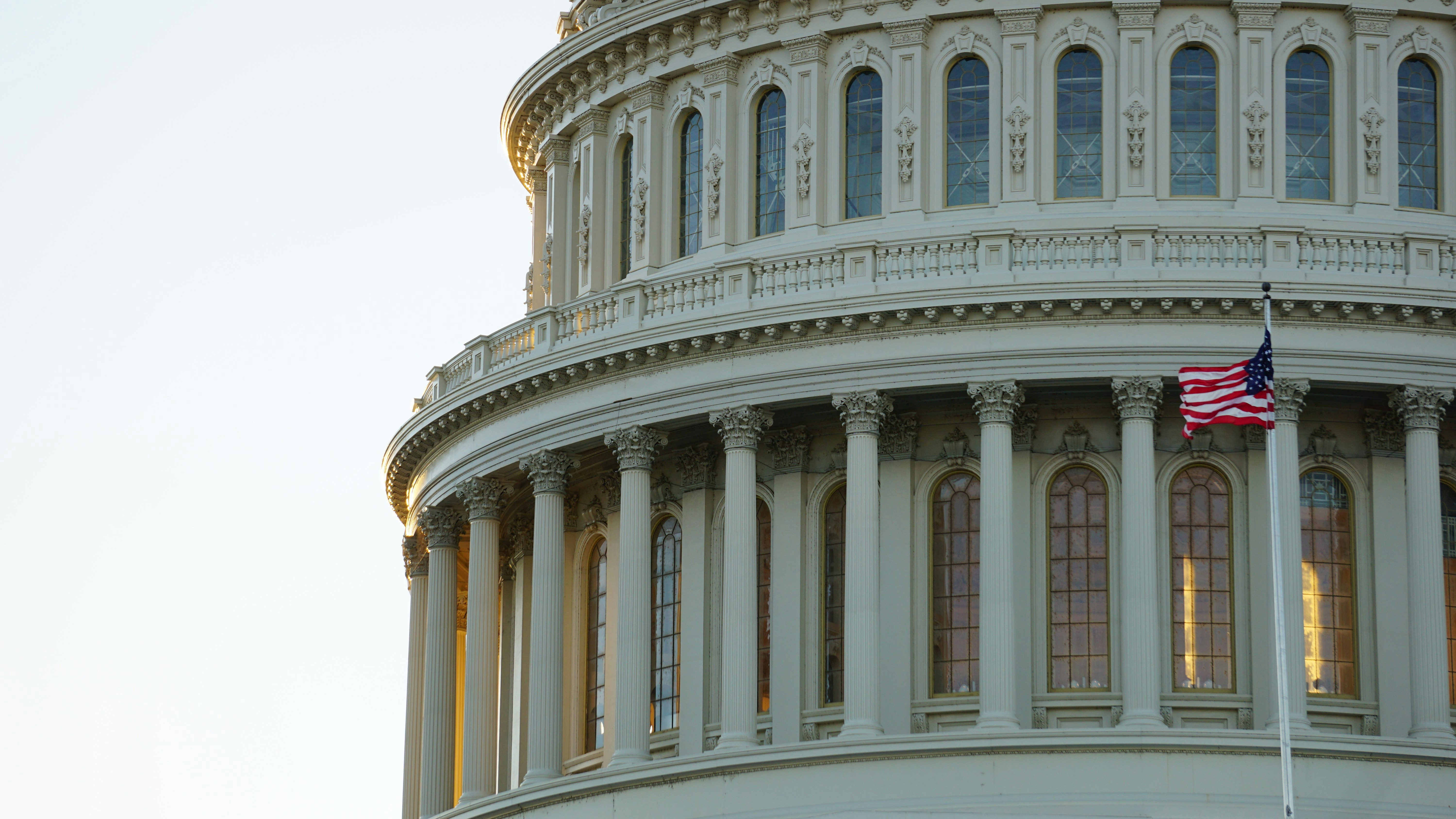
Photo credit: Ian Hutchinson/Unsplash
_______
© 2026 DC Journal. Visit dcjournal.com. Distributed by Tribune Content Agency LLC.
Sign in to get access to this free resource, and all of our whitepapers and reports.

Download this content today!
Register Now Already registered? Click here to Log In