



A client comes to you complaining that their AP process is painstaking. Invoices are taking too long to approve, staff are spending hours entering data, and A client comes to you complaining that their AP process is painstaking. Invoices are taking too long to approve, staff are spending hours entering data, and month-end always seems to uncover a few surprises.
Ideally, you could give them advice that would smooth out their processes, making them a grateful client who sees your value.
That requires understanding the impact AI for accounts payable is having and how it solves the everyday problems they face.
Where AI is helping accounts payable teams today
Traditional automation of the AP process has historically been used to solve the problems of manual AP, including inaccuracy. AI now builds on that, making the AP process smarter, faster, and more intuitive.
Here are four AP challenges where AI is already delivering measurable results:
1. Manual data entry and miscoded invoices
One of the clearest signs that a client’s AP process is under strain is when staff spend hours each week entering invoice data. The process is labor-intensive and prone to errors that can lead to miscoded invoices, rework, and reporting inaccuracies.
Traditional optical character recognition (OCR) can help, but it often depends on information appearing in expected locations on the page. When suppliers change formats, exceptions start piling up.
AI addresses this problem by capturing and classifying invoice data based on context rather than layout. It can recognize key invoice details across different supplier formats and use them to populate records, suggest coding, and prepare transactions for review.
For many finance teams, the value comes from reducing the volume of routine work without sacrificing accuracy, and the data backs this up.
PLANERGY’s 2025 benchmarking shows that AI-powered OCR now achieves accuracy rates of up to 98% and has helped organizations reduce invoice processing times by an average of 35%, suggesting that teams no longer have to choose between speed and data quality.
2. Slow approval cycles
Many AP teams have approval workflows in place. The problem is that invoices still stall; waiting on approvers, flagged for exceptions, or sitting with no clear owner because they fall outside standard thresholds.
The added challenge is that any delays along this chain compound over time, leading to payments falling behind and favorable supplier terms slipping by.
Those delays are often accepted as part of the process, but they may be more avoidable than many teams realize. PLANERGY reports that organizations using AI-powered AP solutions reduced average invoice approval cycles from 19.5 days to just 3.2 days.
Instead of relying on manual follow-ups and exception handling, AI can route invoices automatically based on predefined approval rules, sending each issue to whoever actually needs to act on it.
A high-value invoice can be escalated to a senior approver, a purchase tied to a specific cost center can be routed directly to the relevant department head, and an invoice that’s been sitting without action can trigger an automatic reminder.
Often, the biggest difference is getting the right problem in front of the right person sooner, making it easier to keep payments on track and maintain strong supplier relationships.
3. Limited visibility into AP performance
AP teams generate enormous amounts of data, but turning that information into actionable insights isn’t always straightforward. The information may already exist in reports and dashboards, but identifying meaningful trends and opportunities can still be a time-consuming process.
AI-powered analytics can help connect the dots in real time. It can track spending trends, flag potential risks and unusual payment activity, monitor supplier performance, and help teams identify opportunities to improve cash flow and working capital management.
The demand for this type of visibility is growing. According to PLANERGY, more than 55% of AP leaders have made agile analytics a priority as they look to spend less time compiling information and more time acting on it.
4. Duplicate and suspicious invoices
As AP volumes increase, so does the challenge of identifying duplicate invoices and potentially fraudulent transactions. This explains why AI-powered fraud detection has been adopted by 61% of AP systems in 2025, up from 55% the year before.
Manual reviews and spot checks can only go so far. They’re effective when an issue is obvious, but sophisticated duplicates are often designed to avoid detection through small changes to invoice numbers, formatting, or supporting details.
AI can review every invoice in the context of the organization’s broader transaction history, searching for patterns that would be difficult to spot manually. It can identify invoices that look highly similar, flag unusual spending patterns, and surface transactions that warrant a closer look before money leaves the business.
3 AI-powered accounts payable tools worth knowing
If your clients are seriously considering adopting AI-powered accounts payable automation software or you want to point them in that direction, here are three options worth exploring and the specific AP challenges they’re designed to address:
1. Rillion: AI accounts payable automation across the full AP workflow
Rillion is an option worth considering for clients looking to apply AI across the full AP process. The platform uses AI to handle invoice capture, suggest coding, and route approvals, reducing the amount of manual intervention required from receipt through payment.
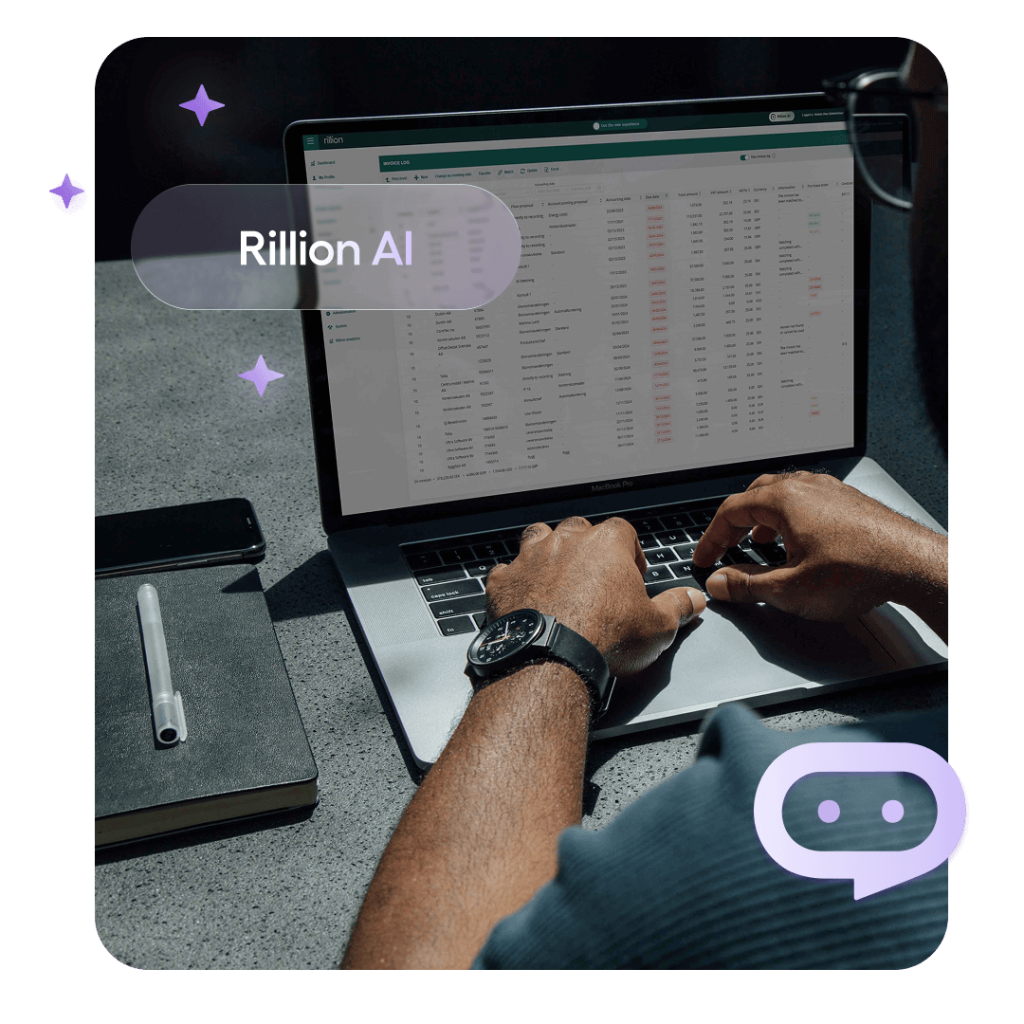
Its AI-powered invoice capture achieves more than 95% accuracy, helping teams process high volumes of invoices without spending hours keying in data or correcting errors.
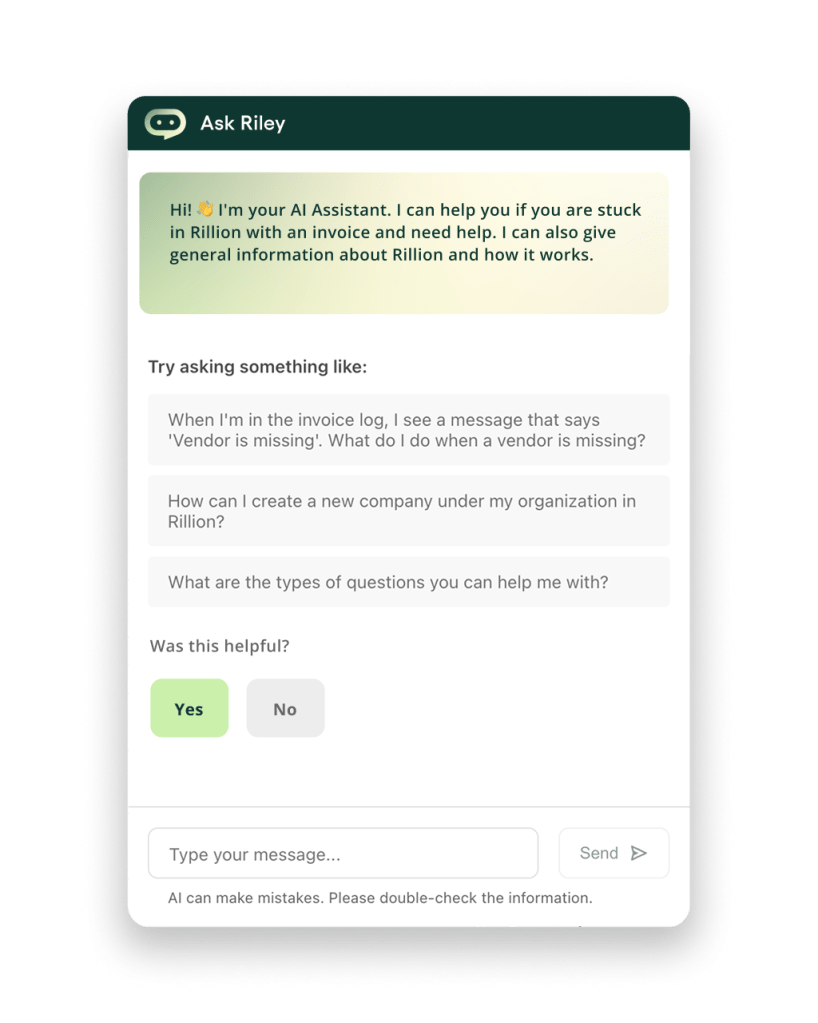
A built-in AI assistant also allows users to quickly retrieve information about invoices, suppliers, approvals, and payment status, eliminating much of the searching that often accompanies AP work.
For teams with existing finance infrastructure, Rillion connects with more than 50 ERPs, including Microsoft Dynamics, NetSuite, Sage, and SAP, so AI-powered AP workflows can be added without replacing the systems already in place.
2. Medius: AI for AP operations and supplier communication
Medius extends AI beyond invoice processing into the day-to-day communication that surrounds AP. Its AI assistants help approvers find answers faster and automatically handle routine supplier questions about invoice and payment status.
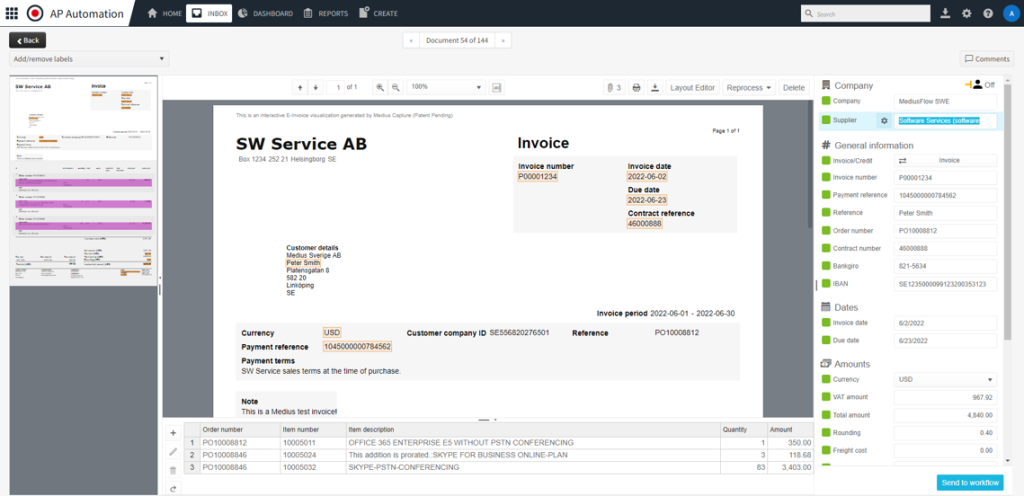
For teams processing large numbers of invoices, that can mean fewer supplier emails landing in the AP inbox and fewer questions bouncing between departments.
3. Yooz: AI-driven fraud detection and compliance support
Yooz uses AI to automate invoice processing, approvals, and payments, but one of its most notable applications is fraud detection.
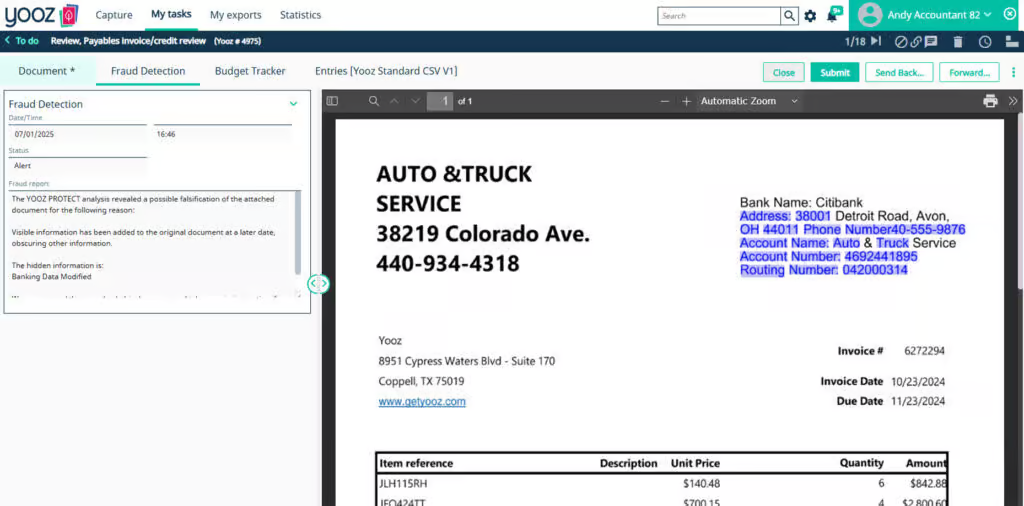
The platform can identify suspicious invoices, unusual payment behavior, and inconsistencies in vendor details, helping teams investigate potential risks before money leaves the business.
What CPAs like you can do when it comes to AP pains
For CPAs and advisors, the most useful conversations about AI often start with process challenges rather than software.
A simple question like “Where does your team lose the most time in AP?” can surface the most pressing pain points: slow approvals, recurring data entry, matching exceptions, duplicate payments.
From there, it becomes easier to identify where automation would actually move the needle, and to frame the conversation around ROI rather than features.
At the same time, it’s important to separate practical AI applications from the broader hype surrounding the technology.
Today’s AI-powered AP automation tools are generally not replacing accountants or taking over financial decision-making. Instead, they’re helping teams handle repetitive tasks more efficiently by capturing invoice data, suggesting coding, routing approvals, matching documents, and surfacing transactions that warrant review.
When evaluating options with clients, focusing on these specific use cases can lead to a more productive discussion than focusing on AI itself.
===
Linnea Arntén is Content & SEO Manager at Rillion and regularly writes about accounts payable automation, AI, and emerging trends in finance technology.
Rillion is an AP automation platform built for mid-sized and enterprise organizations, with AI-native invoice capture, automated approval workflows, three-way PO matching, and payment automation. The platform connects with more than 50 ERP systems, including Microsoft Dynamics, NetSuite, Sage, and SAP. Learn more at rillion.com.
Sign in to get access to this free resource, and all of our whitepapers and reports.

Download this content today!
Register Now Already registered? Click here to Log In