



By Andrew Graham
The Sacramento Bee
(TNS)
To labor leaders and advocates behind a campaign to align California Democrats behind increasing what corporations pay in state taxes, the Legislature’s budget agreement—though not yet ratified by the governor—includes what they see as a hard-fought win.
The deal the Assembly and Senate coalesced behind includes a step toward a significant new corporate tax. If accepted by Gov. Gavin Newsom, the state Department of Finance will be required to draft plans for lawmakers to tax corporations whose employees depend on Medi-Cal for health insurance coverage.
“This proposal is big, I think it’s transformative,” SEIU California Director Tia Orr told The Bee.
Her union was front and center of a coalition, labeled Unrig California, of powerful labor organizations that teamed up with health access groups and immigrant rights advocates to push the Legislature and Newsom away from cuts to healthcare programs and toward finding ways to raise more tax dollars off corporations.
“We have an imbalance in our system that not only Unrig California exposed,” Orr said. “I think Unrig California drove it to a point where we have a couple more steps to make to draw this across the finish line.”
Recommended Articles

‘Prayers for the next governor’
The bill, as currently drafted, would require the administration to produce tax proposals by March 2027. Which means Newsom could, if he desired, oversee their production and release or leave it to his successor.
That worried some lawmakers who say today’s leading elected officials just punted a tax increase—rarely the most popular policy proposal—to the next governor and Legislature.
“It’s been pushed down the line, down the road,” said state Sen. Lola Smallwood-Cuevas, D-Los Angeles. “Leaving it to the next governor unfortunately leaves a tremendous amount of uncertainty.”
Smallwood-Cuevas has separately been advancing a bill that would require the California Department of Health to publish reports detailing how many employees of large companies are enrolled in Medi-Cal.
Republican lawmakers who oppose any further tax increases, whether targeting businesses or individuals, also accused the Legislature of kicking the can—or perhaps something a little more politically hazardous—down the road.
“I will offer all the prayers for the next governor that will have to have the hard conversation, because Governor Newsom and this Legislature has pulled the pin in a hand grenade and is tossing it to the next governor,” Assemblymember David Tangipa, R-Clovis, told The Bee.
The Bee reached out to the two gubernatorial candidates who made the election, Republican conservative news commentator Steve Hilton and the Democrat candidate, former California attorney general and U.S. Health and Human Services secretary Xavier Becerra, for comment on the tax proposal.
“Steve Hilton has been firm that the state government doesn’t need to raise taxes,” Hilton spokesperson Hector Barajas said. “State population has remained basically flat, but tax revenues have doubled over the last decade. The problem isn’t a lack of taxes; it’s that spending has increased even faster than taxes have risen.”
Becerra, who faced criticism from his rivals in the Democrat primary both for campaigning on a vague policy agenda, did not respond to a request for comment. Hilton faces a steep, uphill battle to defeat Becerra, who early polls show carrying a 20-point lead into the general election.
The California Chamber of Commerce, which has so far led opposition to the tax proposal, endorsed Becerra shortly after he earned his spot in the general election. He is the first Democrat the longtime lobbying association has endorsed for governor, according to group spokesperson John Myers, though Becerra is also only the third gubernatorial candidate the chamber has backed at all. The group endorsed former Republican Gov. Arnold Schwarzenegger twice.
“California businesses depend on stability and certainty, and the world’s fourth-largest economy needs a governor who can work productively with both the private sector and our state legislature,” the group’s director said in a statement announcing the endorsement.
Bringing corporations to the table
One of the proposal’s principle architects said advocates for the tax increase had faced long odds from the start.
“We’re kind of living to fight another day,” Assembly Health Committee Chair Mia Bonta, D-Alameda, told The Bee.
But she sees promise in the budget agreement. She said, if fully enacted, it will crack through one of the principle arguments that has surfaced against the tax: Lawmakers don’t know how much revenue the measure could raise or whether there even is a widespread phenomenon of corporations offloading their employees’ health care to the state.
The budget agreement calls on both chambers to pass a bill that requires state agencies to find out how many corporate employees are enrolled in Medi-Cal. Having such data, Bonta said, “will remove, for me, the excuses around the idea not being fully vetted, the proposals not being fully understood.”
The proposal is opposed by a wide range of industry and trade associations: the California Chamber of Commerce; the Bureau; the Flasher Barricade Association, which represents producers of traffic safety devices; TechNet, which represents the state’s major technology companies. A representative for those groups wrote in a June 4 letter that the tax could backfire on people who pursue seasonal or temporary employment that has historically not come with health insurance, such as students or agricultural workers. Companies may be loath to hire such workers if doing so invokes a $285 a month fee to the state per uninsured employee, as the Senate had at that time proposed.
“Faced with additional financial burdens, employers may be forced to limit company growth, outcomes that could ultimately undermine the economic stability of the very workers the bill seeks to support,” the letter said.
Bonta has seen at least one other sign the budget agreement has teeth, she said. Representatives of the corporations that could get hit by the tax had so far shied away from engaging with her on it this year—an implication that they thought the idea could be easily killed off by other lawmakers. Since chamber leadership announced their budget agreement, however, Bonta said that’s changed.
“Many of these so-called mega corporations have come to me to say, ‘hey, can we actually start talking about that?’” she said.
The Legislature and the next governor will still have the coalition of labor unions and health advocates leaning on them next year, SEIU’s Orr said. Unrig California leaders have described the effort as a campaign that would last several years at least.
“We are dogged about making sure that this gets across the finish line,” Orr said. “I believe that we have the energy and the excitement, not only from the coalition partners, certainly from the 750,000 SEIU California members, to get this over the finish line.”
— The Bee’s Stephen Hobbs and Ben Paviour contributed to this story.
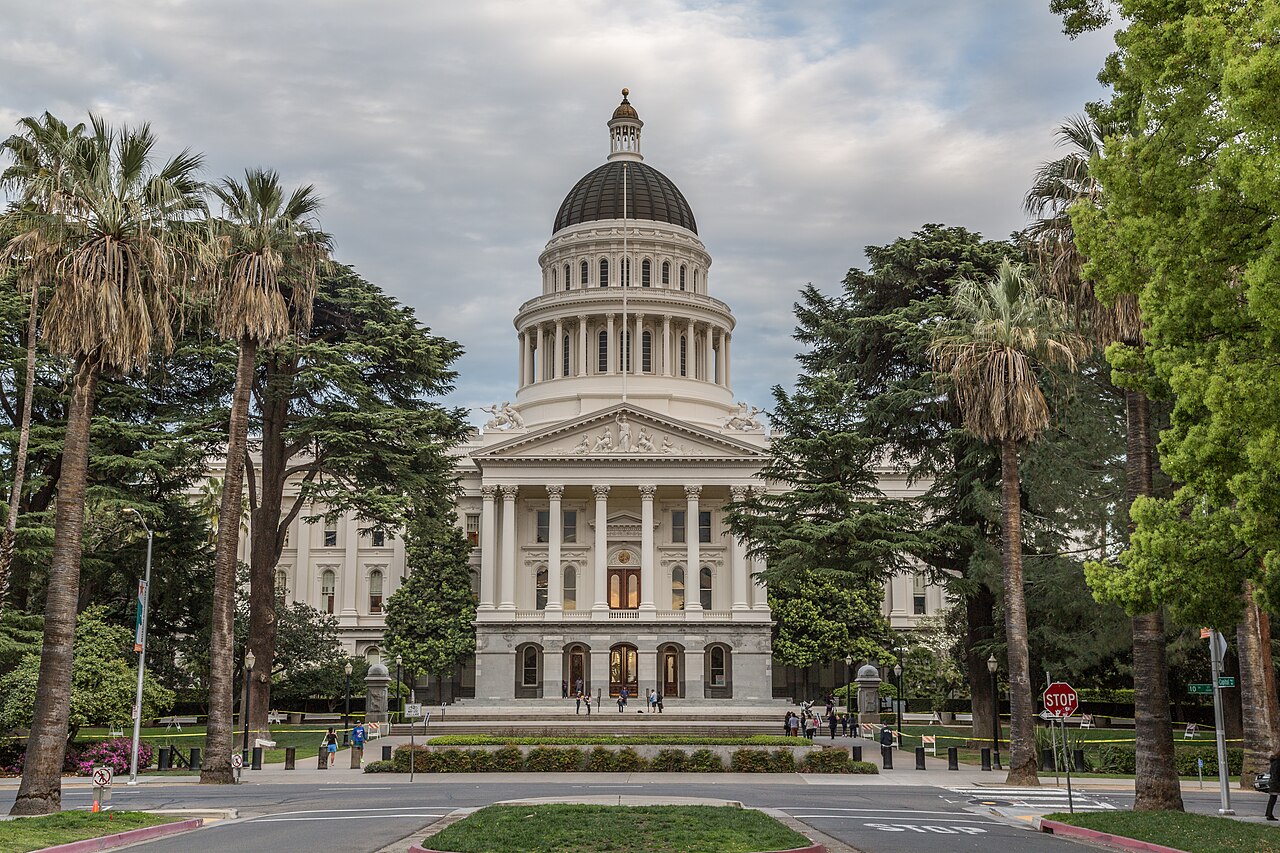
Photo caption: California State Capitol building in Sacramento (Tony Webster/Wikimedia Commons)
_______
©2026 The Sacramento Bee. Visit at sacbee.com. Distributed by Tribune Content Agency LLC.
Sign in to get access to this free resource, and all of our whitepapers and reports.

Download this content today!
Register Now Already registered? Click here to Log In