



By Beth LeBlanc
The Detroit News
(TNS)
LANSING — House lawmakers grilled the Michigan Department of Treasury on Tuesday about errors in a new tax platform that affected upwards of 27,000 taxpayers whose individual income tax returns were falsely flagged as problematic.
The department’s tax system automatically sent roughly 27,000 incorrect Notice of Adjustment letters in April that alleged individual income tax filers owed taxes they already paid or had to repay refunds they received.
Treasury officials, testifying before the House Oversight Committee on Tuesday, blamed the issue on a glitch associated with the department’s transition from a 40-year-old legacy system to a more modern software system used by more than 30 other states.
The 27,000 taxpayers affected by the issue represent less than 1% of the 5.1 million taxpayers who have filed their individual income tax returns, said Deputy Treasurer Kavita Kale.
“Yes, there was a mistake, we owned it, we problem-solved it, we implemented the changes and that’s the best we can do,” Kale said.
But lawmakers and at least one Lansing-based certified public accountant alleged the system at large and the corrections the department sent out afterward continued to confuse taxpayers.
Some of the responses the Treasury issued continued to have incorrect information, said Annette Craft, a CPA who has practiced accounting in Michigan for more than 36 years.
“It is self-evident that this new system was not adequately tested, which raises concerns about the competency of the system being resolved and the issues,” Craft said.
The state’s new tax processing software, referred to as GenTax, went live in November and is meant to modernize Michigan’s system, improve fraud detection and ensure refund integrity, said Katina Litterini, director of the state’s Tax Administration Services Bureau.
Since Jan. 26, roughly 90% of returns were processed within a four to six-week window while 10% needed additional information, including identity checks, missing data or verification, Litterini said. When the erroneous notices were sent in April, Litterini said, the department acted promptly to issue corrections and even met with CPA and tax professional groups to inform them of the issue and how they were attempting to solve it.
But Litterini acknowledged that the department’s contact center has a “very outdated phone system” that has complicated responses to filer concerns, including those associated with the notices. The system is scheduled for an upgrade next month.
She noted that the department’s call volume included people calling multiple times about the same issue. Since January, 69 people alone made up 11,000 of the calls received.
Lawmakers noted their offices also have acted as backup call centers, fielding dozens of calls from individuals frustrated by the new software or erroneous notices.
State Rep. Matthew Bierlein, R-Vassar, said his office received 125 calls from frustrated taxpayers, including one whose routine, annual farm preservation credit was flagged as problematic. When Bierlein’s office called Treasury about the issue, he said, the lawmaker’s office was informed review of the problem could take 25 weeks.
“What we’ve heard a lot is people who basically file the same tax return year over year over year are now being flagged,” Bierlein said.
State Rep. Jason Woolford, R- Howell, noted multiple constituents, panicked by a letter stating they owed more in taxes, automatically paid what the letter demanded instead of checking to see if it was erroneous.
“They are just paying these taxes when they know they don’t owe them because they’re afraid of what’s going to happen to them,” Woolford said.
Litterini assured Woolford that those individuals who paid in response to the erroneous notices would be credited with their money. Kale stressed that the department takes its role as fiscal stewards seriously and intends to do right by the taxpayers it serves.
“It’s not picture perfect, we get that, but we’ve also done everything we can to do better,” Kale said.
But a few lawmakers continued to question whether the issue was truly resolved, noting they’re still receiving calls from constituents encountering problems and unable to get through to the department.
“The problem is not solved and I still have many constituents that are in the wings right now,” said state Rep. Brad Paquette, R-Niles.
State Rep. Jay DeBoyer, the Clay Township Republican who chairs the House Oversight Committee, expressed concern that taxpayers caught up in the transition to the new system be made whole again.
“I hope that you understand how big of an issue this is that we’re dealing with, literally thousands and thousands and thousands of phone calls on this issue,” DeBoyer said. “Please take that back to your office and do what you can to fix this problem.”
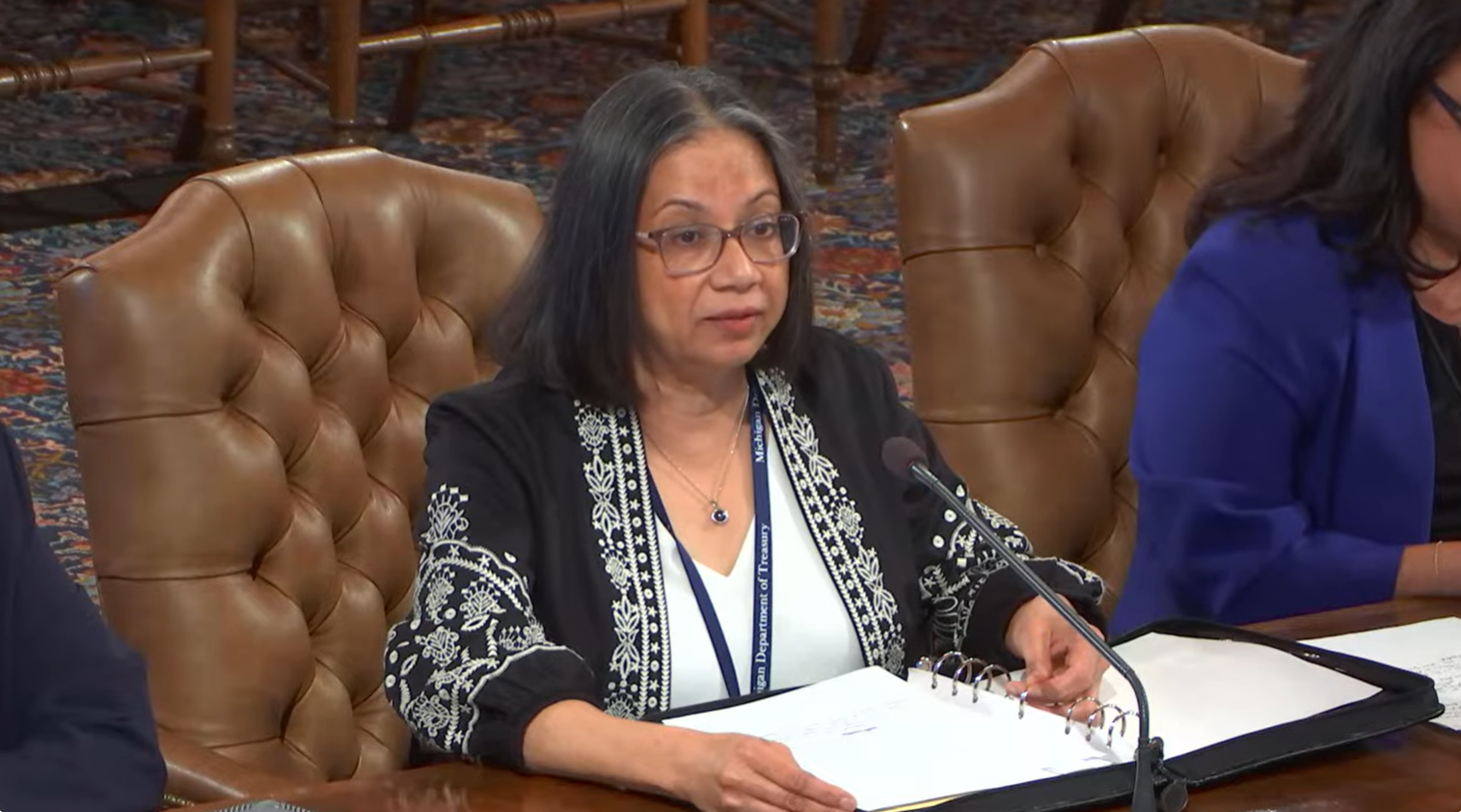
Photo caption: Michigan Deputy Treasurer Kavita Kale testifies during a state House Oversight Committee meeting on June 16, 2026. (Michigan House of Representatives/YouTube)
________
©2026 The Detroit News. Visit detroitnews.com. Distributed by Tribune Content Agency LLC.
Sign in to get access to this free resource, and all of our whitepapers and reports.

Download this content today!
Register Now Already registered? Click here to Log In