



The IRS will work more closely with payroll providers and created five work groups as part of a restructuring of its Security Summit program to quash tax-related identity theft and fraud.
The restructuring of the Security Summit framework is designed to strengthen protections and enhance information sharing across the tax system, the IRS said on June 8.
Formed in 2015, the Security Summit is a public-private partnership comprised of the IRS, state tax administrators, tax software companies, tax professionals, and the larger tax community whose goal is to safeguard taxpayers from various threats from fraudsters.
Since its inception, the work of the Security Summit has helped protect millions of taxpayers against identity theft and prevented billions of dollars from being wrongly paid out to cybercriminals, the IRS said.
But over the years, identity thieves have increasingly shifted to stealing underlying tax and financial information from taxpayers, businesses, and tax professionals to file authentic-looking tax returns, hoping to evade traditional cybersecurity protections.
“The ongoing collaboration between the IRS and its Security Summit partners demonstrates the value of bringing private sector expertise and awareness to help improve how government works,” IRS CEO Frank Bisignano said in a statement. “For more than 10 years, both parties have benefited from this arrangement and will continue to do so into the future.”
According to the IRS, the new Security Summit structure enhances collaboration with payroll partners, whose wage and withholding data has become an attractive target for cybercriminals. The five new work groups will focus on improving early detection of suspicious activity, enhancing data protection practices, and reducing the risk of compromised information used to facilitate fraud.

“Identity thieves continue to evolve, and so must we,” Jim Clifford, IRS return integrity and compliance services director who oversees the program, said in a statement. “By aligning our work across every stage of the tax lifecycle and strengthening collaboration with partners, including the payroll industry, we are better positioned to stop fraud earlier and protect taxpayers and the nation’s revenue.”
The new work groups include:
1. Pre-Filing: Early identification of potentially fraudulent information returns and suspicious behavior within payroll and tax administration processes that could enable identity theft or fraud, including closer coordination with payroll providers.
2. Forecasting: Identification of emerging schemes and proactive anticipation of threats before they are widely exploited.
3. Preventing: Implementation of proactive measures and tools designed to reduce opportunities for fraud, including strengthening safeguards across payroll systems and data exchanges.
4. Detecting and Reporting: Real-time identification of fraud indicators and enhanced intelligence-sharing among partners, including payroll industry stakeholders.
5. Responding: Deployment of technical controls and coordinated operational responses to security incidents.
In addition to the work groups, the Security Summit also uses the Coalition Against Scam and Scheme Threats, whose members focus on rapid assessment and response to time-sensitive threats.
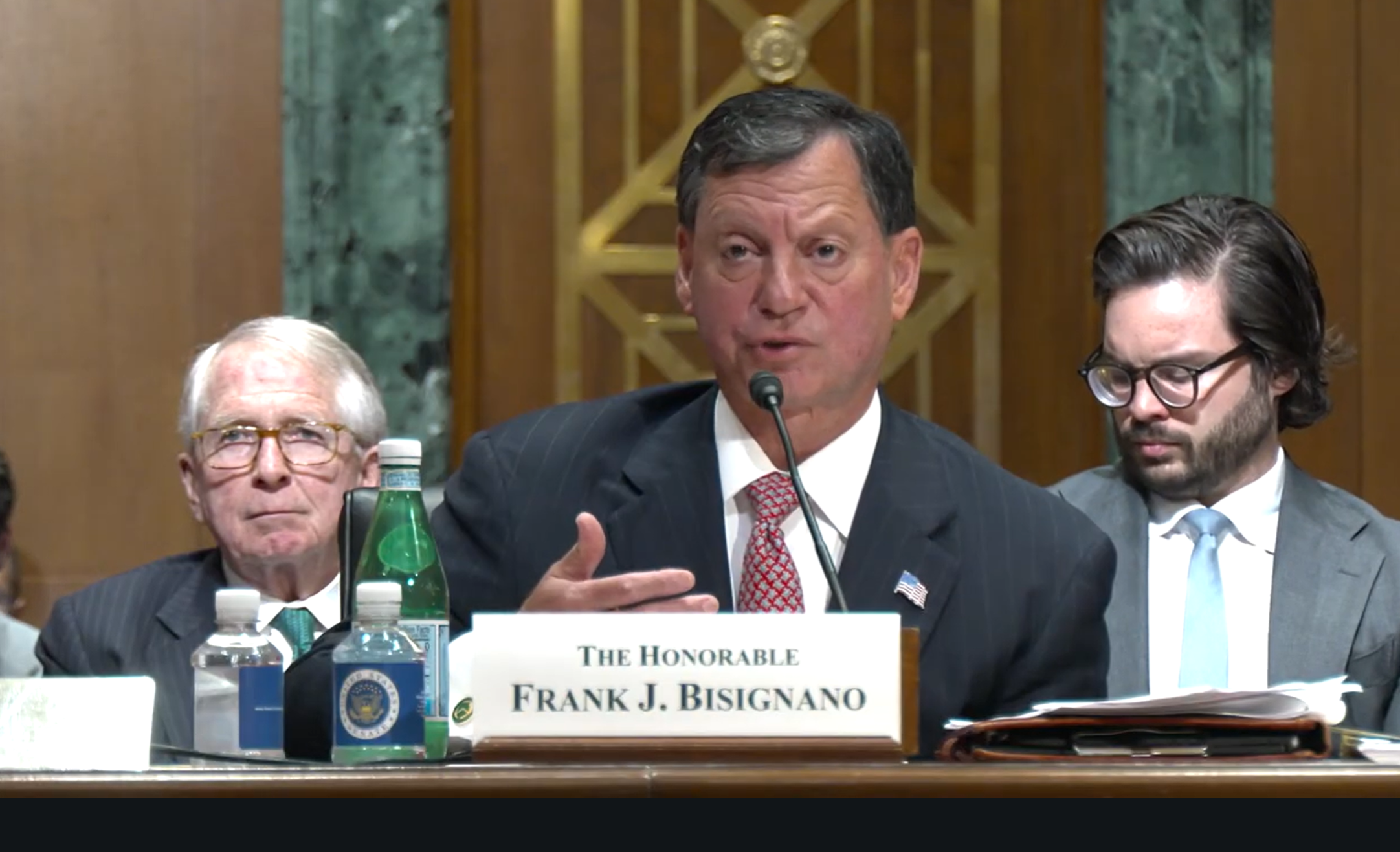
Photo caption: IRS CEO Frank Bisignano testifies during a Senate Finance Committee hearing on April 15, 2026.
Sign in to get access to this free resource, and all of our whitepapers and reports.

Download this content today!
Register Now Already registered? Click here to Log In