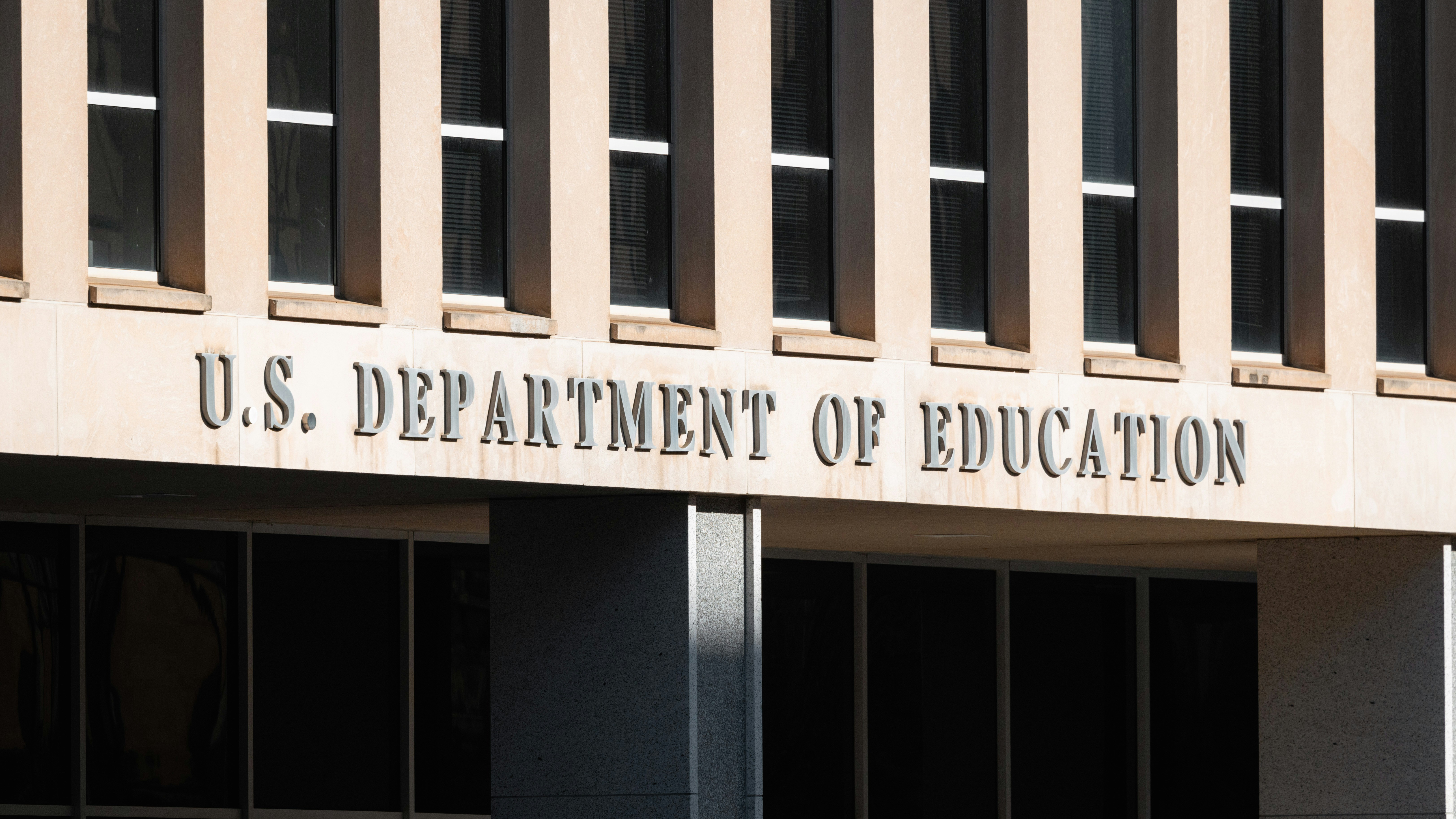
The U.S. Department of Education released a final rule on April 30 that defines the terms “professional student” and “graduate student” to determine federal student loan amounts based on the type of program in which a student is enrolled.
The rule defines “professional students” as individuals enrolled in one of 11 designated professional degree programs. Accounting isn’t one of them.
The 11 professional degree programs are:
- Pharmacy
- Dentistry
- Veterinary medicine
- Chiropractic
- Law
- Medicine
- Optometry
- Osteopathic Medicine
- Podiatry
- Theology
- Clinical psychology
Professional students in those programs would qualify for up to $50,000 in federal loans per year, with a $200,000 aggregate limit, while graduate students in “non-professional” tracks would be eligible for up to $20,500 in federal student loans per year, with a $100,000 aggregate limit. The changes are set to take effect July 1.
Last November, the Education Department redrew its list of educational programs that are counted as professional degrees for certain loan programs under the One Big Beautiful Bill Act student loan classification system and omitted several long-standing professions from the list. One left off the list was accounting.
The American Institute of CPAs, National Association of State Boards of Accountancy, the American Accounting Association, and state CPA societies had urged the Education Department to formally recognize accounting as a professional degree program.
The accounting organizations stated that the definitions of professional degree programs help determine loan eligibility, which can be a critical differentiator for a student striving to complete an accounting degree program and become a CPA.
Last January, the Education Department proposed a definition of “professional student” that included what would eventually be the 11 professional degree programs, drawing tens of thousands of opinions during a public comment period that followed.
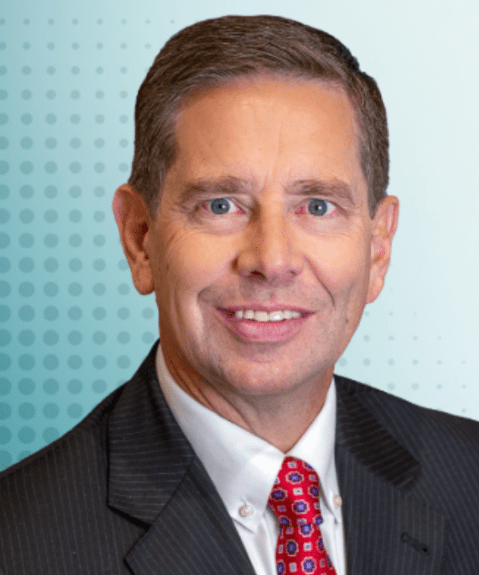
“Classifying accounting students as anything other than professionals fundamentally misrepresents the education and licensure required of CPAs,” NASBA President and CEO Daniel Dustin said in a statement last March. “The American economy, investors, and the public rely every day on the work of highly skilled CPAs to make critical decisions involving global trade, business operations and retirement planning. That is why certified public accountancy is a licensed, state-regulated profession. Federal policy should reflect that reality.”
In a March comment letter to the Education Department, NASBA said excluding accounting from the “professional” student category would:
- Increase financial barriers to meeting state CPA licensure requirements;
- Exacerbate existing CPA workforce shortages; and
- Undermine the public protection infrastructure that depends on a strong pipeline of licensed CPAs.
“A reduction in loan access may deter a broad range of students from entering the CPA profession at a time when the complexity of markets and businesses requires a robust, skilled, and highly educated workforce,” NASBA said in the letter. “Stakeholders in the profession have worked diligently to increase accounting enrollments and broaden access to the profession. Federal policy should not create additional barriers to entering a licensed field essential to economic stability and investor confidence.”
However, in regard to accounting, the Education Department said in its final rule:
The Department also disagrees with commenters that advanced accounting degrees beyond the baccalaureate level should be considered professional degrees. As the commenters themselves concede, these master’s degrees are not required, in general, to become a Certified Public Accountant (CPA). Even though students must have completed 150-credit hours or 225 quarter hours to sit for the Uniform CPA Examination, there is no specific requirement to earn a master’s degree. In other words, the master’s degree does not signify the beginning of practice in a given profession, because earning 150 credit hours is the primary determinate. In general, undergraduate accounting students can take all of the requisite coursework required to sit for the exam as part of their baccalaureate coursework, although the Department acknowledges that most institutions require less than 150 credit hours to graduate.
Recommended Articles


In its final rule, the Education Department finalized its Reimagining and Improving Student Education (RISE) plan that includes new repayment plans and limits to graduate student loans.
Among other key components of the rule include:
Parent PLUS loans
Parent PLUS borrowers are capped at $20,000 a year, with an aggregate cap of $65,000 per dependent. The lifetime loan limit is $257,500.
Graduate loans
The Grad PLUS loan program is eliminated and graduate loans are capped at $20,500 annually, with an aggregate cap of $100,000.
New repayment plans
Borrowers have two options for repaying student loans: the tiered standard plan and the repayment assistance plan.
Tiered standard plan: This plan includes fixed monthly payment plans for 10 to 25 years, based on the borrower’s principal balance.
- 10 years: Owe $24,999 or less
- 15 years: $25,000-$49,999
- 20 years: $50,000-$999,999
- 25 years: $100,000 or more
Monthly payments will start at $50 per month.
“This structure gives borrowers with higher loan balances more time to repay,” the Education Department said in a news release. The minimum monthly payments will help “borrowers make progress toward reducing their balance.”
Repayment assistance plan: This plan is based on a borrower’s income and family size. If a borrower makes payments on-time, unpaid interest will be waived.
The Education Department will reduce the principal equal to the amount borrowers pay, up to a total of $50. Minimum monthly payments are $10.
“Borrowers pay more during years when their income is higher and less during years that their income is lower,” the Education Department said.
Married borrowers will have prorated monthly payment amounts. This way, a spouse’s income won’t be double counted and negatively affect the other spouse’s loans.
Borrowers can default on a loan twice over the loan’s lifetime. To get back into good standing, borrowers must pay nine payments on time. This change doesn’t take effect until July 1, 2027.
— Tribune News Services contributed to this report.
Photo credit: Brelyn Bashrum/Unsplash
Sign in to get access to this free resource, and all of our whitepapers and reports.

Download this content today!
Register Now Already registered? Click here to Log In