By Gus Burns
mlive.com
(TNS)
The Michigan Supreme Court ordered the state Court of Appeals to take another look at the legality of Michigan’s 24% wholesale cannabis tax.
“The court of Appeals shall expedite its consideration of this case,” the Supreme Court ordered on April 22.
In December, the Court of Claims declined to block the tax from taking effect on Jan. 1 but said a trial could take place at a later date.
Recommended Articles
Court of Claims Judge Sima G. Patel rejected key arguments that the law implementing the tax was illegal.
The lawsuit claims the new tax altered the will of voters, who passed the recreational marijuana law in 2018 with a 10% excise tax.
The lawsuit argues the new tax fundamentally changes the legislation passed by voters and therefore required the support of three-fourths of the Legislature—which it did not receive.
Patel’s ruling said the voter initiative “plainly stated” the 10% retail excise tax was “in addition to all other taxes.” Because of that language, the court concluded that nothing in the law prohibits imposing additional, separate taxes on marijuana.
Now the Court of Appeals is being asked to review that decision.
The Michigan Cannabis Industry Association (MiCIA) filed the lawsuit with another marijuana business.
The MiCIA “applauds this Supreme Court decision instructing the Court of Appeals to take up our case,” said MiCIA spokesperson Rose Tantraphol. “The clock is ticking for cannabis businesses that are struggling all across the state, and an expedited consideration of our lawsuit in the Court of Appeals is what we have been fighting for.”
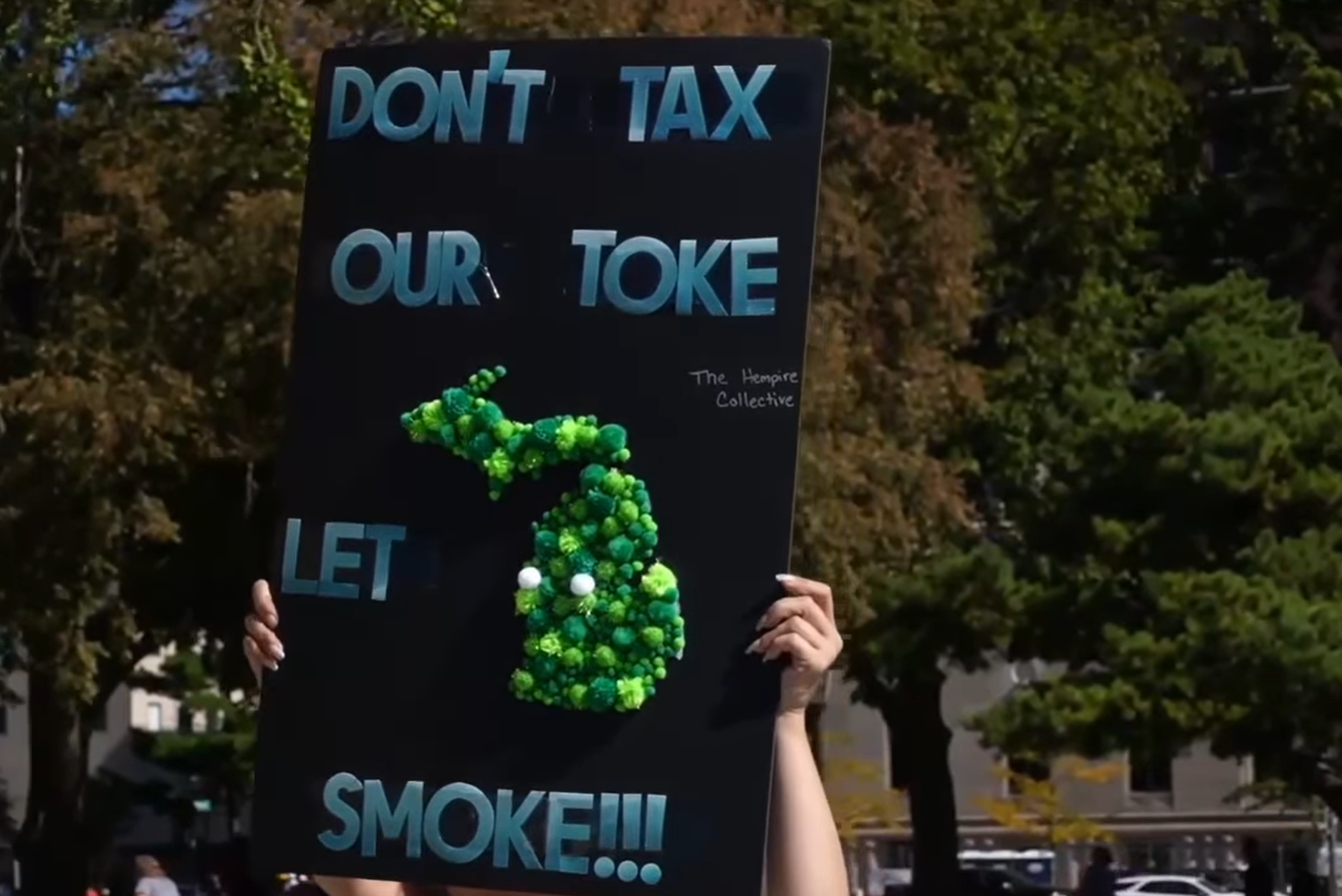
Michigan politicians passed the new tax with bipartisan support to balance the state budget. It is expected to generate $420 million annually, which would be used for road projects.
Critics claim the projected revenue is inflated and doesn’t fully account for lost sales due to price increases.
Recreational marijuana sales through March have dropped by $50 million compared to the same period in 2025.
“What we’ve seen since this additional 24% tax went into effect on Jan. 1 this year has been business closures and layoffs,” Tantraphol said. “Cannabis businesses always operate on thin margins, and this tax has pummeled our industry.”
Recommended Articles

The MiCIA and marijuana companies filed a second lawsuit in March against the state Treasury arguing that the wholesale tax is a disguised sales tax that results in unconstitutional tax pyramiding—when taxes are applied to already-taxed amounts.
Tantraphol said that lawsuit “exposes how the state’s tax-on-tax ploy ends up compounding what cannabis customers pay, leaving them shelling out even more cash thanks to an effective sales tax rate that exceeds the state’s legal 6% rate.”
Photo credit: Joel Bissell/mlive.com/TNS
_______
©2026 Advance Local Media LLC. Visit mlive.com. Distributed by Tribune Content Agency LLC.
Sign in to get access to this free resource, and all of our whitepapers and reports.

Download this content today!
Register Now Already registered? Click here to Log In