




By Matt Durr
mlive.com
(TNS)
Despite President Donald Trump projecting a significant increase in the average tax refund for Americans, it appears the numbers are falling short. IRS data from the 2026 tax season, released last week, shows the average refund is up but is nowhere close to the numbers previously touted by the White House.
So far in 2026, the average refund is $3,462, up from $3,116 when compared to the same period in 2025. The average refund for someone receiving direct deposit is $3,454, an increase over the average of $3,186 in 2025. That represents an 11.1% and 8.6% increase, respectively.
However, it is far short of the projected $1,000 increase promoted by the White House in January. In a press release issued on Jan. 26, 2026, the White House projected the average refund would increase by $1,000 or more. The same projected increase was promoted by the House Ways and Means Committee in November.
Trump has also promoted that refunds in the 2026 season will be the largest ever recorded. That claim appears to be on track.
While the average refunds are not as large as projected, the overall increase can be attributed in part to changes in the tax code made as part of the One Big Beautiful Bill Act passed last year. Among the major changes were no tax on overtime and tips, deductions on auto loan interest for American-made vehicles and more. Increases to the standard deduction are also contributing to the increased refunds.
Those changes were projected to have a much more significant impact on tax refunds than has been the case so far.
The most recent data is accurate as of April 3, 2026, meaning there’s still time for the average refund to increase. That’s especially true as millions of Americans still need to file their returns.
In 2025, more than 163.5 million returns were filed. The most recent data shows only 99.8 million returns have been received by the IRS in 2026. Although the number of returns is down, the number of refunds issued is up 3.1% to 69.8 million refunds issued.
During tax season, the IRS usually releases a weekly update on the return and refund data.
Typically, taxpayers who submit their return electronically and opt for direct deposit will receive payment within 21 days after the return is accepted. Taxpayers can track the status of their refund through the IRS’s Where’s My Refund tool.
According to the IRS, refund status will appear around 24 hours after a current-year return is e-filed, three or four days after a prior-year return is e-filed, or four weeks after a paper return is filed.
Taxpayers have until tomorrow, April 15, 2026, to file their 2025 return, or they may be subject to fines and penalties.
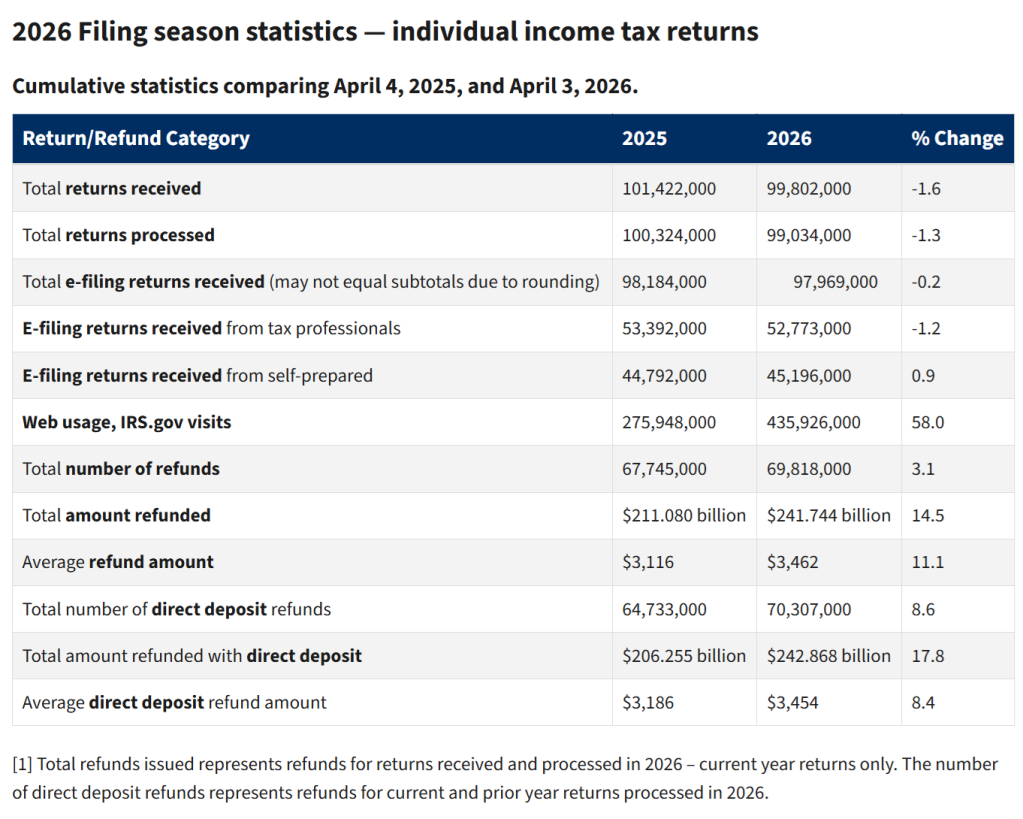
Photo caption: President Donald Trump talks to reporters before departure in Palm Beach, FL, on March 23, 2026.
_______
©2026 Advance Local Media LLC. Visit mlive.com. Distributed by Tribune Content Agency LLC.
Sign in to get access to this free resource, and all of our whitepapers and reports.

Download this content today!
Register Now Already registered? Click here to Log In