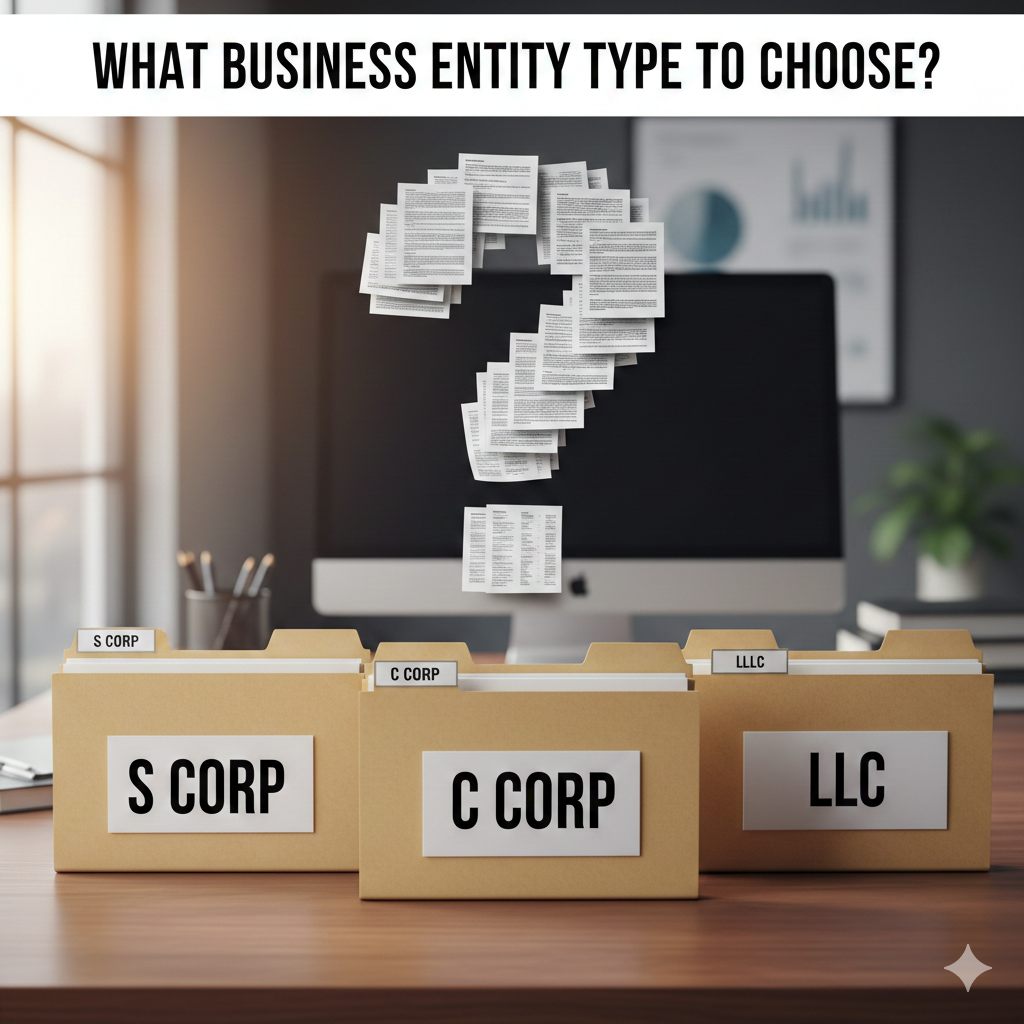




With their tax benefits and liability protections, S corporations continue to be one of the most popular setups for small to mid-size companies. They are the perfect in-between, providing many of the benefits of corporations with the simplicity of Limited Liability Companies (LLCs).
That said, S corps require specific procedures and compliance obligations that are a bit more complex than basic business entity types, especially with regards to payroll structures and profit distributions.
What is an S Corporation?
But first, a refresher on what an S corp is (and isn’t). Unlike an LLC or a C corporation, an S corp isn’t a business entity type. Instead, it is an optional election through the IRS that outlines how the business will be taxed. Under this model, LLCs and C corporations gain “pass-through” tax status, meaning their profits and losses are passed through to their owners’ or shareholders’ personal income tax returns.
The main drivers for a business to choose S corp status include the following:
- For C corporations, it avoids double taxation, in which profits are taxed at the corporate level and again at the personal level.
- For LLCs, it can lower self-employment taxes.
- For both C corps and LLCs, personal liability protection is maintained.
Recommended Articles


Taxes February 18, 2025
Are Married Couples Considered Partners in LLCs?
Salaries & Distributions for S Corps
With basic business structures, such as sole proprietorships and partnerships, business profits pass through to the owner’s personal tax return and are taxed as income. However, these amounts are subject to self-employment taxes such as Social Security and Medicare. In a traditional employee-employer situation, these taxes are split between the two. But for small businesses, in which the employee is also the employer, they must pay both, which hover around 15 percent.
With S corp status, business owners (for LLCs) and shareholders (for corporations) instead receive income through payroll, distributions, or both. Because only wages are subject to federal Social Security and Medicare taxes, their taxable amount is significantly lowered. Distributions are not subject to employment taxes; however, they are still taxed as income on personal returns.
Reasonable Compensation in an S Corp
With an S corp election, both LLC owners and corporation shareholders who conduct work for the company are considered employees and are required to be paid “reasonable compensation” for the work they do. The key here is “reasonable.” To avoid the practice of owner-employees and shareholder-employees taking small salaries to avoid payroll taxes, the IRS has set forth some guidelines to ensure their salaries are commensurate with the work they do.
Although the IRS doesn’t have specific rules regarding reasonable compensation, they offer this definition: “the value that would ordinarily be paid for like services by like enterprises under like circumstances.”
Factors used in determining reasonable compensation includes the following:
- Training and experience
- Duties and responsibilities
- Time and effort devoted to the business
- Distributions history
- Payments to non-shareholder employees
- Timing and manner of paying bonuses to key people
- What comparable businesses pay for similar services
- Where the company is located
- Compensation agreements
- The use of a formula to determine compensation
As far as a formula, there is nothing specific laid out in code, but a common strategy is the 60/40 approach in which 60 percent of compensation is salary and 40 percent is distributions. But this depends on a company’s total income.
The IRS also suggests that compensation should be based on how much of a company’s gross receipts are a result of services provided by the shareholder or owner. That said, anyone who works for a company, even in a minor position, must be considered an employee for tax purposes.
Payroll Tax Registration
It should be noted that even S corps without additional employees need to register for payroll taxes. The owner-operator or shareholder-operator is considered an employee and therefore must complete payroll tax registration both at the federal level and at the state level. At the federal level, payroll tax registration is required for withholding Social Security and Medicare taxes. At the state level, it is necessary for the withholding of State Unemployment Insurance. Failing to do so can put an S corp out of compliance and disqualify owners from receiving Social Security, Medicare, or unemployment benefits down the road.
Downsides of S Corp Status
Because S corp status can result in significant tax savings, it can also put businesses under increased scrutiny by the IRS. There have been cases in which LLC owners intentionally reduced their wages to reduce their taxable income thus lightening their tax burden.
The opposite has occurred in C corporations. Because wages are a deductible expense for these entities, there have been cases in which shareholders increased their own salaries (tax deductible) while decreasing their dividends (not tax deductible). To counteract this, the IRS looks at S corps under a sharper lens.
Failing to pay reasonable compensation can result in penalties, back taxes, or revocation of C corp status.
Requirements for S Corp Status for LLCs and C Corps
Not every LLC or C corporation is eligible for S corp status. Following are some requirements:
- It must be a domestic business, formed or incorporated in the United States.
- All shareholders must be U.S. citizens or legal residents.
- Shareholders may be individuals, certain trusts, or estates.
- Shareholders may not be partnerships, corporations, or non-resident aliens.
- The company cannot have more than 100 shareholders.
- For corporations, they can have only one class of stock. The IRS considers stock to be in one class if all shares have equal rights to distribution and liquidation proceeds.
- Certain financial institutions, insurance companies, and domestic international sales corporations are ineligible.
S Corporation Status Deadlines
Newly formed LLCs or C corporations can elect S corp status by filing Form 2553 within two months and 15 days (75 days) of formation or becoming active for the election to apply in the first tax year. Existing LLCs and C corporations must file the form and meet all eligibility requirements no later than the 15th day of the third month of the tax year they want the status to take effect, typically March 15 for companies that operate on a calendar year. Any existing or newly formed entities that miss their deadlines can apply for late election relief when the filing is made within three years and 75 days and the business shows reasonable cause.
Structure Payroll and Distribution for S Corps Correctly
If you have clients who are interested in S corp status for their business, it’s essential to provide them with the information they need to weigh the pros and cons and make the right decision. Choosing S corp status can reap significant tax benefits for businesses, but only if their payroll and distribution processes are set up correctly. As their trusted advisor, ensuring they understand the pros and cons can help them maximize their tax savings while keeping their business in compliance.
==
Nellie Akalp is a passionate entrepreneur, recognized business expert and mother of four. She is the CEO of CorpNet.com, the smartest way to start a business, register for payroll taxes, and maintain business compliance across the United States. Loved by entrepreneurs, accountants and lawyers, CorpNet offers transparent pricing and a simple ordering process. Payroll service providers and larger firms appreciate CorpNet’s quickly scalable software and API solutions.

Thanks for reading CPA Practice Advisor!
Subscribe Already registered? Log In
Need more information? Read the FAQs
Tags: business entity type, business formation, ccorp, distribution, llc, Payroll, scorp