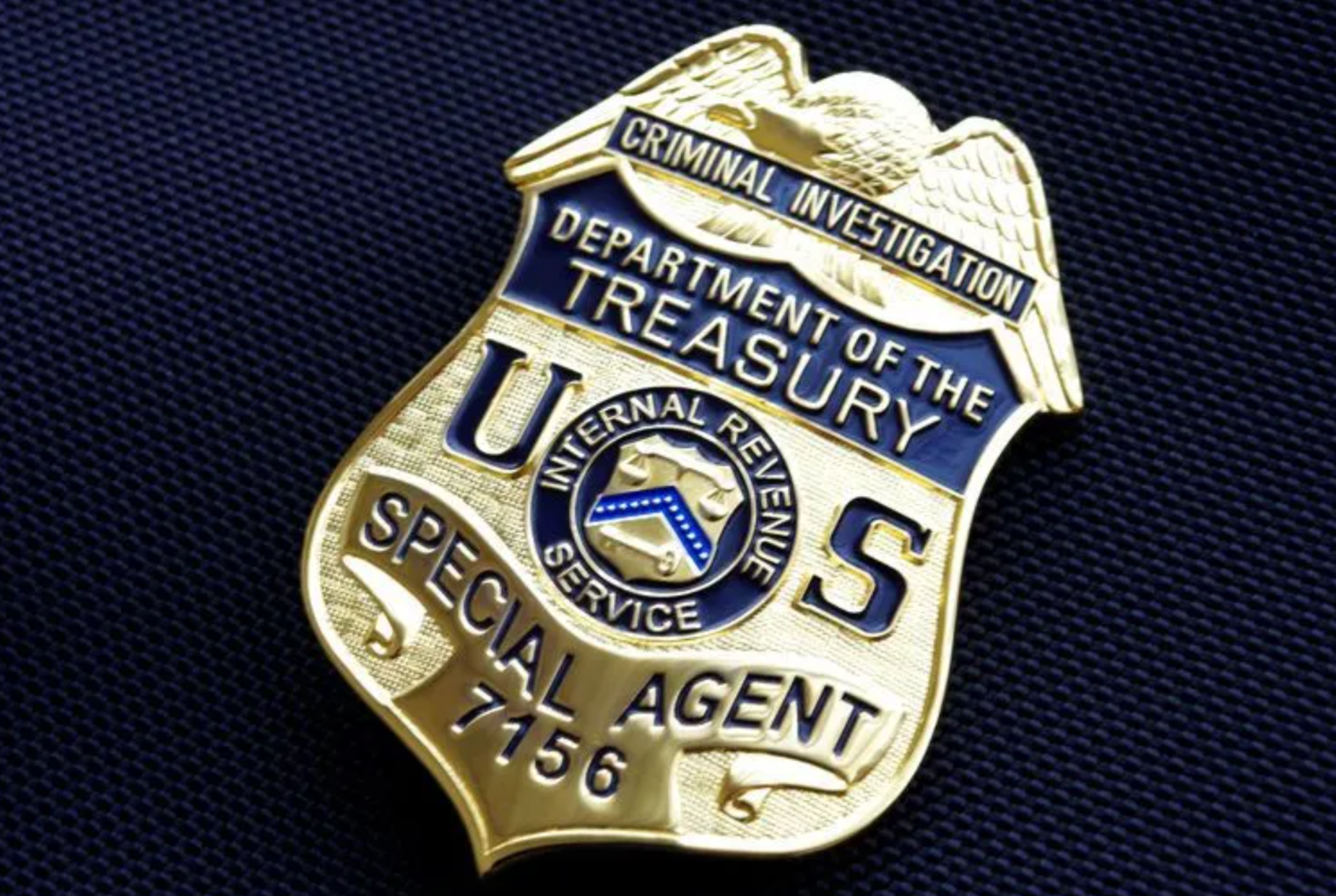




IRS Criminal Investigation released new statistics Tuesday highlighting how much the unit uses Bank Secrecy Act data in its investigations.
Under the BSA, which was enacted in 1970, financial institutions use suspicious activity reports to notify the federal government when they encounter instances of potential money laundering or tax evasion. This data is used by federal agencies like IRS-CI to investigate financial crimes.
New fiscal year 2025 metrics show that 94% of IRS-CI cases were searched against BSA data, resulting in more than 3.9 million searches of BSA filings.

This underscores the integral role BSA data has in uncovering and prosecuting financial crimes across the country, IRS-CI said.
“BSA data is often the first signal that something isn’t right,” IRS-CI Chief Guy Ficco said in a statement. “These filings become essential puzzle pieces in identifying patterns, following financial trails, and building cases that protect taxpayers.”
BSA filings are being used to build criminal cases against fraudsters engaged in money laundering, cybercrimes, abuse of government programs, narcotics trafficking, and more.
Recommended Articles
In FY 2025:
- Almost 89% of investigations conducted by IRS-CI had BSA filings associated with the primary subject;
- Nearly 80% of IRS-CI investigations had primary subjects associated with suspicious activity reports (SARs) and nearly 67% had primary subjects associated with currency transaction reports (CTRs); and
- 11.7% of IRS-CI investigations originated directly from a BSA filing.
The data shows that from FY 2023 to FY 2025, IRS-CI investigated 1,394 cases of refund fraud with alleged fraud totaling $2.9 billion. Ninety-nine percent of these cases had a BSA filing associated with the primary subject. Additionally, IRS-CI opened 1,006 employment tax evasion cases during this same timeframe with alleged fraud totaling $1.4 billion. Sixty-three percent of these investigations had a BSA filing associated with the primary subject.
IRS-CI said BSA data enables strong prosecutions, which results in high conviction rates, multiyear prison sentences, and millions in restitution for victims. From FY 2023 to FY 2025, IRS-CI cases using BSA filings resulted in:
- A 98% conviction rate and average prison sentences of 42 months;
- More than $450 million in asset forfeitures; and
- Nearly $500 million in restitution for crime victims.
CTRs provide law enforcement standardized, threshold-based transaction data that is used to identify patterns, trends, and criminal networks. Financial institutions file a CTR when a cash transaction totals more than $10,000 or an aggregated CTR when a customer makes multiple cash transactions totaling over $10,000 in a single business day—even if the transactions occur at different times, locations, or accounts.
In FY 2025:
- 66.8% of the investigations IRS-CI opened had a primary subject with a CTR, with 89.1% of those investigations having at least one aggregated CTR on a primary subject;
- Nearly half of the investigations IRS-CI opened had a primary subject with a CTR under $20,000; and
- Median cash-in and cash-out dollar amounts for CTRs used in IRS-CI investigations ranged between $12,000 to $12,543.
“Criminals deliberately structure transactions tied to illicit activity to avoid detection,” Ficco said. “CTRs provide concrete transactional data that often serves as evidence when proving criminal activity took place.”
IRS-CI said it leads or participates in SAR review teams in 94 federal judicial districts across the country. These teams consist of law enforcement partners that meet regularly to analyze BSA data; identify actionable SARs, CTRs, and Forms 8300; and assign leads to the appropriate federal agency for further investigation. These teams seized assets valued at $385.4 million between FY 2023 and FY 2025.
Additionally, in March 2025, IRS-CI announced CI-FIRST (Feedback in Response to Strategic Threats), a flagship public-private partnership to modernize how IRS-CI works with financial institutions by delivering actionable feedback on BSA reporting to financial institutions, facilitating knowledge exchange through CI-FIRST forums and FinTAX crime alerts, and strengthening coordination to better disrupt and combat financial crime.
IRS-CI’s Optimizing Financial Records Requests initiative, commonly known as OFRR, accelerates investigative timelines by streamlining and standardizing how IRS-CI seeks and how financial institutions respond to legal order and subpoena requests.
Photo credit: IRS-CI

Thanks for reading CPA Practice Advisor!
Subscribe Already registered? Log In
Need more information? Read the FAQs