


While many assume that the most dangerous jobs always come with big paychecks, the reality is more complex. Resume Now, an AI resume builder, analyzed the latest Bureau of Labor Statistics data and found striking differences: some of America’s riskiest jobs don’t even break $40,000 a year, while others offer six-figure salaries in high-hazard environments.
Truck drivers top the list with nearly 1,000 fatalities in 2023, yet earn just $57,000 a year. At the same time, airline pilots operate in one of the most hazardous environments and earn nearly $200,000 annually.
Key Criteria for Selection
Analysts at Resume Now reviewed the latest BLS Census of Fatal Occupational Injuries (CFOI) and Occupational Employment and Wage Statistics (OEWS) to identify careers that meet the following criteria:
- Danger: Occupations listed in the BLS Census of Fatal Occupational Injuries (CFOI) with fatal work injury rates well above the 2023 average (3.5 per 100,000) or high total fatalities.
- Salary Categories: One list includes jobs with a median annual wage under $60,000; the other highlights the highest-paying jobs from the high-danger pool.
- Ranking: Jobs in both lists are ordered by total fatalities, from highest to lowest, within each wage category.
“Dangerous work is not always high-paying and high pay is not always the whole story. These jobs show that risk comes in many forms and at many income levels. From the physically demanding work of roofers and truck drivers to the high-stakes responsibilities of airline pilots and vessel captains, each career demands skill, resilience, and the ability to face hazards head-on,” said Keith Spencer, career expert at Resume Now.
Below is a list of the most dangerous low-paying jobs in America, ranked by fatalities:
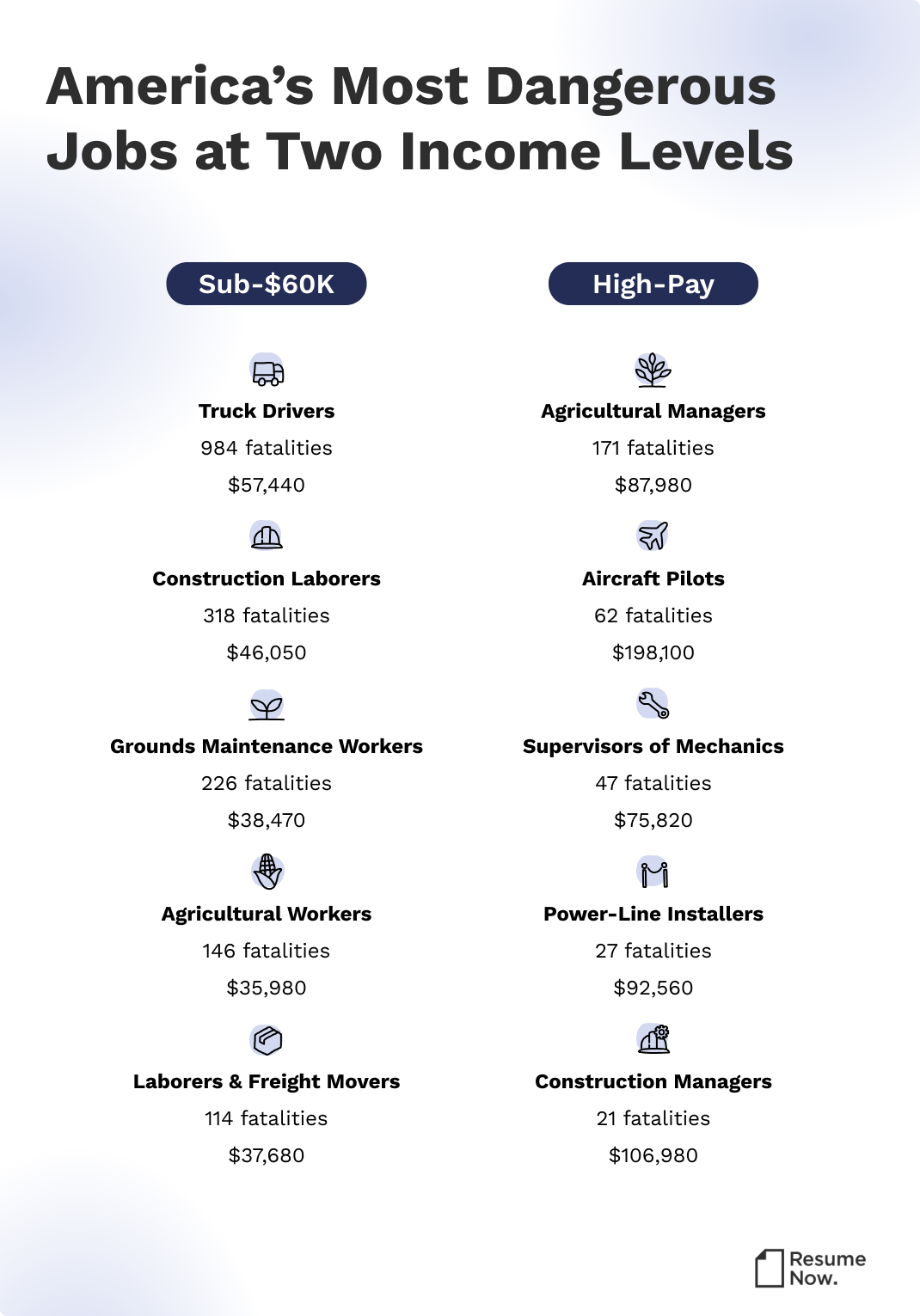
1. Driver/sales workers and truck drivers
- Fatalities: 984
- Median pay: $57,440 (Heavy and tractor-trailer drivers; the group with the majority of fatalities)
- Why it’s dangerous: Long hours on the road, vehicle accidents, and weather-related hazards
2. Construction laborers
- Fatalities: 318
- Median pay: $46,050
- Why it’s dangerous: Falls, heavy machinery, and exposure to all-weather conditions at construction sites
3. Grounds maintenance workers
- Fatalities: 226
- Median pay: $38,470
- Why it’s dangerous: Machinery accidents, falls, and extreme weather exposure
4. Agricultural workers
- Fatalities: 146
- Median pay: $35,980
- Why it’s dangerous: Risks include heavy machinery, exposure to pesticides, and unpredictable animals
5. Laborers & freight movers
- Fatalities: 114
- Median pay: $37,680
- Why it’s dangerous: Strains, crushing injuries, and vehicle-related accidents in warehouses
6. Roofers
- Fatalities: 113
- Median pay: $50,970
- Why it’s dangerous: Falls from heights, extreme weather, and heavy material handling
7. Security guards
- Fatalities: 79
- Median pay: $38,390
- Why it’s dangerous: Confrontations with intruders, theft prevention, and potential violent incidents
8. Logging workers
- Fatalities: 52
- Median pay: $49,540
- Why it’s dangerous: High risk from falling trees, equipment accidents, and remote work environments
9. Refuse and recyclable material collectors
- Fatalities: 41
- Median pay: $47,810
- Why it’s dangerous: Traffic hazards, heavy equipment operation, and exposure to waste materials
What this means: If you work in a lower-paying but high-risk job, it is important to protect yourself and know your worth. These roles keep essential parts of the economy moving, but the pay often does not reflect the hazards.
Asking employers for stronger safety programs, hazard pay, or support with training can help. Job seekers should highlight their safety record, certifications, and dependability on their resume. Employers look for people who can do the work and manage the risks responsibly.
Highest-Paying Dangerous Jobs
Some workers are better compensated for the risk they assume, as shown in this list of high-paying, dangerous jobs, ranked by fatalities:
1. Farmers, ranchers, and other agricultural managers
- Fatalities: 171
- Median pay: $87,980
- Why it’s dangerous: Risks include operating heavy machinery, working with large animals, and long exposure to outdoor elements
2. Aircraft pilots and flight engineers
- Fatalities: 62
- Median pay: $198,100
- Why it’s dangerous: High responsibility, weather hazards, and mechanical risks in flight
3. First-line supervisors of mechanics, installers, and repairers
- Fatalities: 47
- Median pay: $75,820
- Why it’s dangerous: Supervisors often work alongside crews in environments with heavy machinery, electrical systems, and moving vehicles
4. Electrical power-line installers and repairers
- Fatalities: 27
- Median pay: $92,560
- Why it’s dangerous: High risk of electrocution, falls from heights, and working in severe weather
5. Construction managers
- Fatalities: 21
- Median pay: $106,980
- Why it’s dangerous: Frequent presence on construction sites exposes managers to falls, equipment accidents, and other hazards
6. Transportation, storage, and distribution managers
- Fatalities: 9
- Median pay: $102,010
- Why it’s dangerous: Oversight of large-scale logistics operations where vehicle accidents, heavy equipment, and hazardous materials create serious risks
7. Mining and geological engineers
- Fatalities: 8
- Median pay: $101,020
- Why it’s dangerous: Work often occurs in hazardous environments with risks of cave-ins, explosions, and exposure to harmful substances
8. Captains, mates, and pilots of water vessels
- Fatalities: 5
- Median pay: $85,540
- Why it’s dangerous: Exposure to severe weather, vessel accidents, and the challenges of working at sea
9. Industrial production managers
- Fatalities: 5
- Median pay: $121,440
- Why it’s dangerous: Regular exposure to heavy machinery, industrial processes, and factory hazards
What this means: High-paying careers with real risk show that danger is not limited to frontline roles. For pilots, lineworkers, and managers, the challenge is often about making critical decisions in complex and hazardous environments.
Investing in ongoing training, advanced certifications, and safety practices is key to staying safe and moving forward in a dangerous occupation.
When applying for leadership roles or higher-paying opportunities, job seekers should point to their technical skills, ability to stay calm under pressure, and record of safe operations. Those qualities stand out to employers who need trusted people in high-stakes positions.
Looking for a change of scenery? Resume Now’s AI Resume Builder can help you land a new role by creating or updating your resume to meet the standards of the competitive job market.

Thanks for reading CPA Practice Advisor!
Subscribe Already registered? Log In
Need more information? Read the FAQs