


The IRS claimed the average wait time for a taxpayer when calling the agency for assistance was three minutes during the 2024 filing season, but that’s not exactly correct, the Treasury Inspector General for Tax Administration noted in a report released on Aug. 14.
TIGTA assessed the IRS’s efforts to improve toll-free telephone access and reduce taxpayers’ wait times when calling for help. Every year, millions of taxpayers seek assistance from the IRS via its toll-free and international telephone lines. The services offered include answering federal tax questions, ordering tax forms, providing taxpayers with pre-recorded messages related to various tax topics, information on the status of their refunds, and information about a letter or notice they received.
However, large swaths of taxpayers each year are still unable to obtain assistance from the IRS over the phone due to various reasons, including technical difficulties and busy phone lines.
TIGTA said the IRS tracks and widely reports two customer service performance measures related to its telephone lines: level of service and average wait times.
According to the IRS, the LOS measures the ability for a taxpayer to reach a telephone assistor when requested. For the 2024 filing season, the IRS reported an LOS of 88% and wait times averaging three minutes. However, the reported LOS and average wait times only included calls made to 33 account management phone lines during the filing season, TIGTA said. These accounts management lines handled approximately two-thirds of all calls answered by IRS assistors.
The IRS separately tracks an enterprise LOS, which TIGTA said is a broader measure of the taxpayer experience because it includes 27 telephone lines from other IRS business units, in addition to the 33 accounts management phone lines. These 27 phone lines handled approximately one-third of all calls answered by IRS telephone assistors.
In addition, the IRS doesn’t widely report an enterprise-wide wait time, as the reported average wait time computation includes only the 33 accounts management telephone lines. According to IRS data, the average wait times for the other phone lines were much longer than three minutes, averaging 17 to 19 minutes during the 2024 filing season.
In its report, TIGTA said:
The National Taxpayer Advocate recently reported that the AM LOS is “materially misleading” to stakeholders and that “the IRS should replace its benchmark ‘Level of Service’ performance measure for telephone service, as it does not reflect the taxpayer experience, and it produces inappropriate priorities and a misallocation of resources.” We have also previously reported that the IRS should be more transparent in the reporting of its LOS, recommending that the IRS develop a level of access measure or disclose what the reported LOS includes. The IRS declined to develop a level of access measure. However, beginning in FY 2024, the IRS started reporting that the LOS represented its “main” telephone lines. The IRS stated that it does not have the independent authority to change budget-level measures such as the AM LOS and plans to continue to report this measure as directed by the Congressional Budget Justification and Annual Performance Report and Plan. The budget-level measures are determined by the Office of Management and Budget and the Department of the Treasury. However, the Congressional Budget Justification and Annual Performance Report and Plan does not prohibit the IRS from publicly sharing additional information about its non-budget level performance results. We continue to believe that the IRS can be more transparent about reporting what taxpayers can expect when calling for assistance throughout the entire fiscal year.
Under the Taxpayer Bill of Rights, taxpayers have the right to quality service, which includes the right to receive prompt assistance, and to receive clear and easily understandable communications from the IRS.
“If a taxpayer anticipates spending an average of three minutes waiting to obtain an answer to their question, they may become frustrated and hang up before talking to a telephone assistor as their wait time increases,” TIGTA said. “When this occurs, taxpayers may not receive the assistance needed to file their returns accurately or pay their taxes timely.”
Because of high demand for service during the filing season, the IRS temporarily reassigns employees from other job responsibilities to answer calls, which helps to improve the average reported wait time and LOS during the filing season. However, similar telephone service measures for the entire fiscal year aren’t widely reported and varied
considerably, TIGTA said.
For example, the accounts management LOS ranged from a low of 48% in June 2024 to a high of 92% in January 2024. Similarly, the enterprise LOS ranged from a low of 45% in June 2024 to a high of 77% in February 2024.
The IRS is currently developing a new measure to track the percentage of calls in which the telephone assistor resolves a taxpayer’s issue during the first contact, TIGTA said.
The IRS watchdog recommended that the head of taxpayer services should widely report to the public:
- Both the enterprise LOS and accounts management LOS throughout the entire fiscal year, and
- The average wait times throughout the entire fiscal year for all telephone lines that provide live assistance to taxpayers.
The IRS didn’t like either recommendation, stating that the LOS metric doesn’t provide information to determine taxpayer experience when calling, and including wait times for telephone lines outside the main helpline would be confusing to the public.
“We maintain that whether a taxpayer can reach an assistor is part of the taxpayer experience and providing average wait times across all telephone lines for the entire fiscal year demonstrates transparency,” TIGTA said.
In response to TIGTA’s report, Kenneth Corbin, chief of the IRS’s Taxpayer Services Division, wrote, “We are dedicated to improving the taxpayer experience through delivering prompt exceptional assistance and providing clear, accessible communications. To support these priorities, we hired additional telephone assistors in fiscal years 2023 and 2024. We are also expanding our voice bots and chat bots to offer faster responses to taxpayers who call in with simple questions and requests.
“We operate one of the world’s busiest call centers. In fiscal year 2024, we handled nearly 50 million calls. We manage these demands within a fixed budget while adapting to a range of factors such as time of year, call volume, staffing, tax law changes, weather events, and system outages. We continually allocate available resources between answering calls and processing other critical work, such as paper returns. Despite these challenges, the IRS consistently meets or exceeds the Treasury Secretary’s service goals.
“The Enterprise Level of Service (LOS) and Average Speed of Answer are published annually in Publication 55-B, Internal Revenue Service Data Book. We report LOS in accordance with the budget requirements and use it to forecast the percentage of calls we can answer based on available resources. The Accounts Management (AM) telephone lines which contribute to the AM LOS are funded through the Taxpayer Services appropriation. Other telephone lines dedicated to collection, examination, and non-service-related issues are funded from other appropriations.
“We will continue to report LOS and customer wait times accurately and transparently to Congress and the public based on these funding structures. However, we disagree with the portrayal of LOS and average wait time metrics providing an accurate picture of the taxpayer experience. We are evaluating new measures that align with private sector best practices, including efforts to establish a baseline metric similar to First Contact Resolution during fiscal year 2025.”
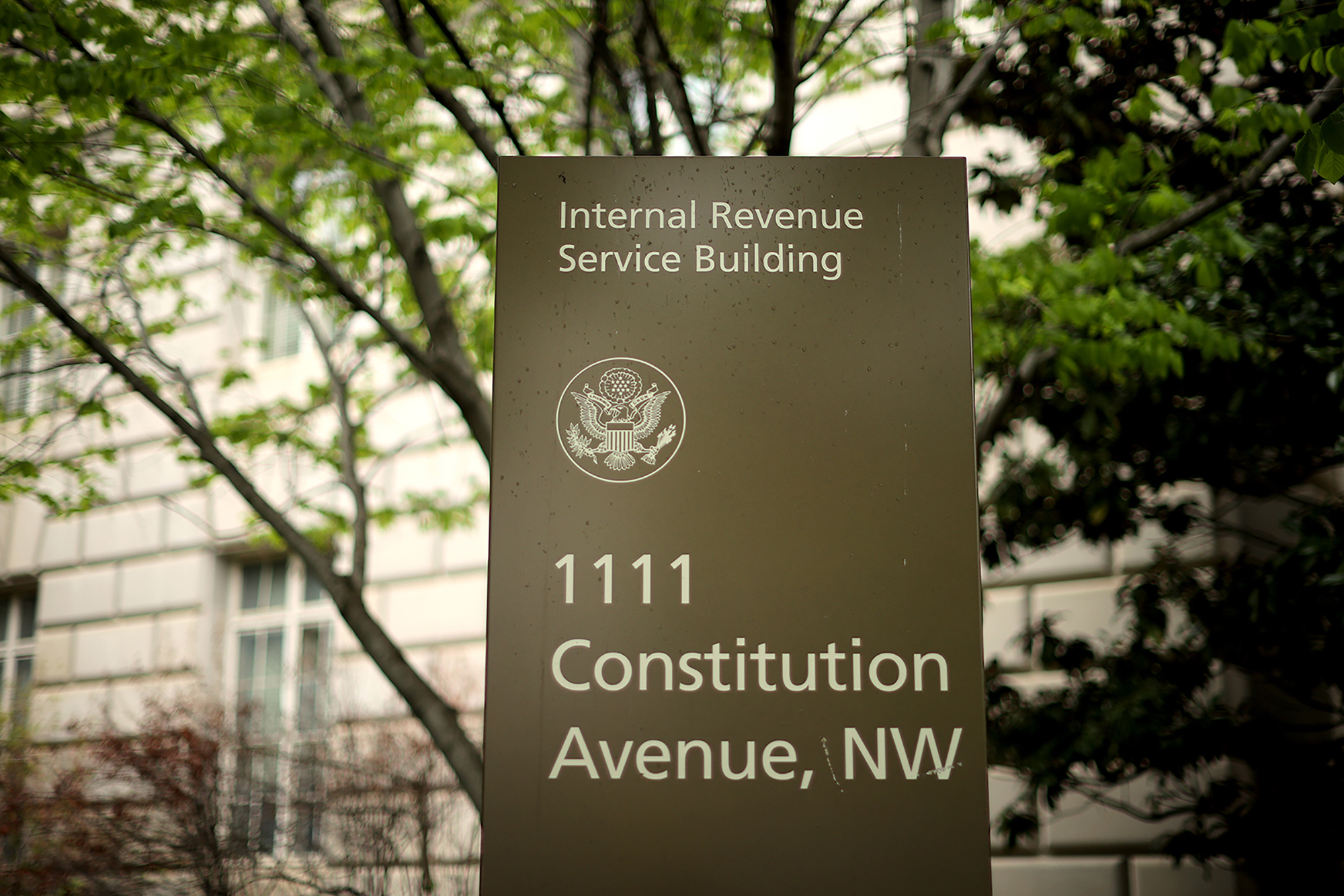
Photo credit: Chip Somodevilla/Getty Images/TNS

Thanks for reading CPA Practice Advisor!
Subscribe Already registered? Log In
Need more information? Read the FAQs
Tags: customer service, IRS, Taxes, TIGTA, wait times