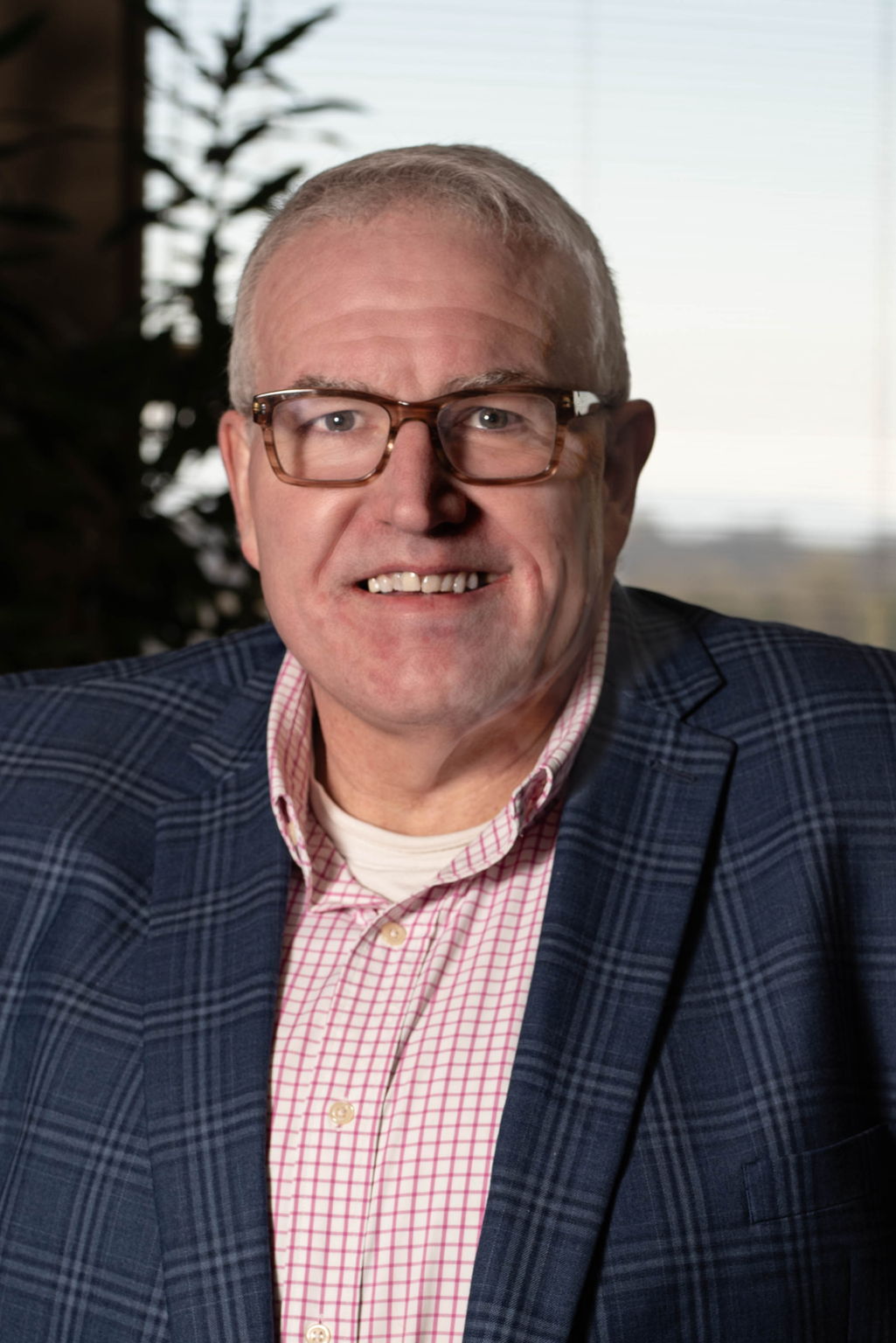
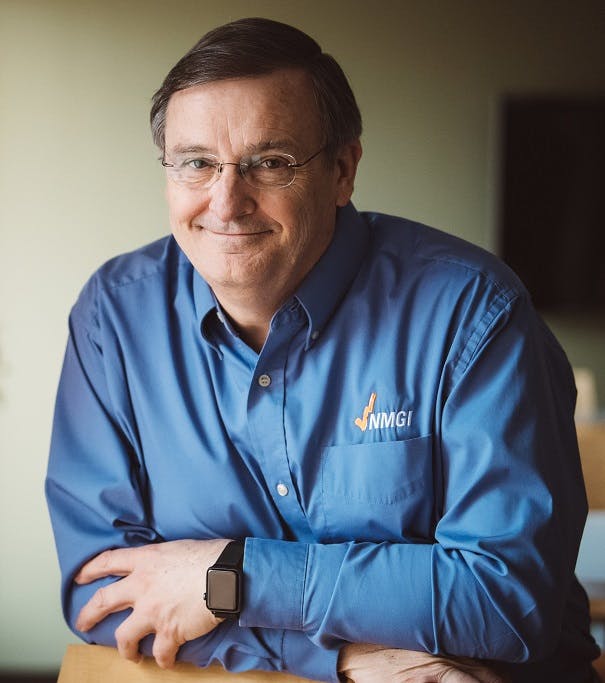




Accounting technologists Randy Johnston and Brian Tankersley, CPA, discuss the state of technology in the accounting space, including advancements in AI for firm management and client services. The Accounting Tech Lab is an ongoing series that explores the intersection of public accounting and technology.
View or listen to the State of Accounting Technology Part 2.
Or use the below podcast player to listen:
Transcript (Note: There may be typos due to automated transcription errors.)
SPEAKERS: Randy Johnston, Brian F. Tankersley, CPA.CITP, CGMA, Mary Delaney.
Brian F. Tankersley, CPA.CITP, CGMA 00:00
Welcome to the accounting Technology Lab brought to you by CPA practice advisor with your host, Randy Johnston and Brian Tankersley. Today’s episode features a wide ranging conversation Randy and I had with Mary Delaney on Friday, October the third, and split it into two episodes. So, you know, we talked about a lot of things in both episodes. This episode is, you know, we talked about AI integrations, open API, workflow automation tools, integrations with other products, unified portal, streamlined document management, private equities, role in in the accounting profession, advisory services, leadership traits and again, other other things that are really changing pretty radically in the accounting profession right now. It’s a must. You know, both parts are great. The first part is going to, is going to concentrate on just about everything, except for AP, except for AI. And then the second part is really where we’re going to, where we’re going to get pretty deep into AI. So again, this one will be this is episode one. Episode Two will follow, probably next week. So thanks for being here with us, and with that, here’s the podcast.
Randy Johnston 01:13
Welcome to the accounting Technology Lab. I’m Randy Johnston with co host Brian Tankersley, and we are super pleased to have a guest today, Mary Delaney, who has been around carbon from before, I didn’t ask her background on what she had done. I’d actually checked it out. But in any case, Mary, would you like to give our listeners a little bit of an introduction on you?
Mary Delaney 01:32
Please? Sure. First of all, thank you both for having me. I have been at carbon for the last three and a half years, three years as the CEO, and loved every minute of carbon and just this incredible industry. Prior to that, I taken over for founders, which is such a privilege four different times to lead their companies. And one was in a tech enabled services industry, and I pull from some of those knowledge points when I look at how to automate much of accounting, really, to elevate the profession and get them in front of their customers,
Randy Johnston 02:15
makes beautiful sense. Well, I know that Brian and I have been around carbon since inception, so we’ve followed the progress. But it seems to me, under your guidance, there have been some real innovation. You know, sometimes it comes from the top, sometimes it comes from all around. Sometimes it comes from clients. Talk to me a little bit about or talk to all of us a little bit about what’s happening with the carbon business today that you think is interesting for people to know that you just wouldn’t find
Mary Delaney 02:48
typically Sure. Well, thank you for the kind of words as well. You know carbon, when I got here, they’re very customer focused. They we everything that is built and designed is from having that intimate relationship with our customers, and so that’s been here from inception, and there’s a couple of core beliefs that we’re continuing to expand upon. And I think it’s been really beneficial for us with AI, and that is, we are we believe in choice, optionality. Our customers can choose what technology stack they need, and we integrate with them. So we are an API, first open ecosystem. And when we looked at AI emerging a few years back and where it was going, we felt like what we needed to do is make sure, with all the key leaders, we were integrated. We could orchestrate the data back and forth, and then we looked at deeper integrations. This year, we launched integrated workflows. Our first ones was Xero, which allows us to not only pass back and forth data, but advance work in in both systems, and that’s really meaningful for our customers. I think the third area is AI, and you saw an acquisition announcement recently, we acquired aider and Brendan’s team, and that kind of leans into our focus of to transform accounting through automating. What we can automate so we can elevate the profession, get them more into advisory, more into high value work, being in front of their clients and really changing the trajectory of those clients businesses.
Randy Johnston 04:49
Yeah, that makes great sense to me. I’m just thinking about the arc of the product platform and predating you. In this case, there wasn’t a. Tempt a period of time where carbon was actually trying to write the integrations, and eventually said, yeah, that’s going to be a bigger project than we want to tackle. So a lot more focus went to the API’s and letting the integrations occur where, you know, today, and this is maybe a slight detour on this. You’ve got the big providers that want to keep you in one suite, more or less locked in walled gardens, as I often refer to them as. And you’ve had only a couple of platforms that have done this integration work in the profession. Now you’ve got some that have done it in accounting, as we’ve talked in other accounting Technology Labs, for example, Zapier, but you know, in the big picture of things, these deep integrations, where work can be thrown over the wall to another product that you use seamlessly. And frankly, that was part of what I enjoyed with the demonstration of the zero integration. And frankly, the demonstration of the Stanford tax integration, you know, it’s pretty clear, but we have one long history here. Brian and I both have this long history of teaching accountants to work on their processes, you know. So we’ve been doing process work for 30 plus years at this point, and some of the new potentiality that I see in carbon for doing workflow right is is actually very promising.
Mary Delaney 06:28
Well, thank you for sharing that we were very excited about the Stanford tax integration as well, and you’ll see that integrated workflow, just to take a step back and talk about our tax work this year is we really we were born into cas 11 years ago, and we focused a lot on that, and especially as AI started to evolve, it was clear we needed to look at Each service line and map it out and really identify the ideal workflow and the variations and who the best partners are to integrate with and then automate as much as we can. Where can AI help elevate the profession, give them more efficiency? Stanford tax is one of those. The client experience is really impeccable. It’s people use mobile now i i get really frustrated. Went to the doctor last week and they had me fill out a written form, you know. And I’ve been there for 20 years. I’m thinking, Oh, no, but if I’ve had to do that for my taxes every year, or use a desktop. I want to use mobile. And I want you to ask me the two questions that you believe through AI might be different. Let me fill them in and move on. And that’s what Stanford tax does. Yeah.
Randy Johnston 07:57
And you know your comment about evolving out of client accounting services, absolutely right, and being able to cover multiple service lines, so being able to support client accounting services, effectively, tax, effectively, audit effectively, which in my mind, is a is a different animal in terms of what’s needed for support. But the other one that you called out in your introduction, which is also very near and dear to it. The heart is advisory, but as I look back, frankly, with the hosting services that we asked Intuit to produce with QuickBooks Desktop back in the 90s, as odd as that sounds, or the SaaS products that we helped evolve over time, QuickBooks Online, Xero, say, Gentec, NetSuite and so forth. You know, having stayed in the thick of all that, this interactive client accounting services has been one of Brian’s specialties for decades. I’ve just ridden on his coattails on most of that. But the the shift to advisory, in my mind, is very real, and accountants don’t have a very strong command of what it really means to produce and be an advisory service practice. So that’ll be kind of an interesting enablement that you do over time. And yeah, I do feel you’re playing on that client experience. Every time I have to fill out a piece of paperwork for anybody, it’s like, really, folks, you’ve got all this information already. What are you doing to me?
Brian F. Tankersley, CPA.CITP, CGMA 09:21
So I don’t know about you all, but I feel like I’ve got the portal of the Month Club when I deal with all my service providers, you know, what? What kinds of things, Mary, do you see coming that, that, you know, to try to consolidate more of those portals and to try to have those portals meet different needs. What kind of what kind of things do you see carbon doing to try to try to address those needs? Because, you know, most of the firms we talked to today, especially the big ones, 345, different portal engines for different practice
Mary Delaney 09:55
areas, client experience, I think, is really critical. And this is one area that. We were heavily focused on one we have, you know, for our our small to large clients, and then also for our PE clients, who might have 40 different firms that they’ve acquired, and they want to cross sell services, but they want the client to have that single pane of glass experience. And earlier this year, we launched our client portal, and we had that vision so the client could be working with tax, with one of the firms and advisory and another, and they could have an audit on a third and all of the what do I need to do as a client, and where is my work? What’s the status and who is asking me questions, all go into one portal. Even more so though, if some of that work is with our integrated partners, where they have to sign a form, and maybe they’re not using our E sign, or there’s a document that they need to upload, maybe they’re using a different DMS, all of that can still be in our portal for that one experience. And Brian, I’ve done all this analysis. I think the largest I saw was a firm in Texas with 11 different portals and a manual on the page to say, read this first to know what to use. So we’re really trying to streamline that.
Brian F. Tankersley, CPA.CITP, CGMA 11:36
Yeah, just in my life, please. But I have to deal with 11 portals. I mean, come on. But hey, you mentioned private equity, and one of the things that we’re seeing is that there is a significant shift, especially in the bigger firms, to get bigger. And you mentioned the roll ups with 4040, different firms and others like that. Talk to me about what the how private equity is seeing the profession differently, and how the asks that you get from the private equity managed firms are different from the from the individuals you know. Are the are the 40 firms still making making decisions as a group, or are they making it as is it a top down, bottom up environment? How’s this all working out?
Mary Delaney 12:19
First of all, we have several private equity firms choosing us as their tech stack, kind of the shoulders or the platform that sits on and and I would say they’re all not created equal. They’re all very different. And so I can’t generalize, but they’re very smart folks. They’re committed to the industry. There’s a lot of capital coming in. It’s allowing innovation to move at a rapid pace. And innovation is a good thing. And AI accounting will be a key beneficiary of AI and the innovation that is happening. You know, one thing that I like to think about is how many small businesses today that are unserved with accounting and bookkeepers or underserved will get attention and time and help in the future, and we all know the stat, eight out of 10 small businesses fail by year 10. What if accountants were in each of those every single one had help and support and advice. Every single one knew what they could take advantage of in grants and tax efficiencies, and every single one knew how much cash they really needed to fund the business ahead of time. How would that change that trajectory, and what would that do for our economy? That’s what I’m inspired about and working towards. And I think PE bringing cash in and allowing us to accelerate innovation will help that.
Randy Johnston 13:59
Well, you know, in fact, Mary, that’s part of the reason I think the advisory to me is so attractive, because if, in fact, every small business had a really proactive advisor as opposed to a reactive compliance provider, that would be such a different world. Now we kind of got near this topic, but I was curious about the leadership traits that you’re seeing, whether they’re PE backed ventures, which sound like or there’s lots of types there, or traditional firms, what are some of the leadership traits that you’re seeing that are helping firms thrive? Because there are some that are thriving and some that are, as we would say among ourselves, Sally, same as last year.
Mary Delaney 14:44
Yes, I think one the leaders that are attaching themselves to a community, a community of learners. People are open. People are always trying to be agile and find how can we improve further tomorrow? In the next day. And so one there, they spend the time to understand what’s going on in the market. I will say, in this industry, more than any other I’ve been a part of, accountants are generous. They share what’s working. They want to all ships to rise together. And so join communities, join three or four and make sure that you’re attaching yourself to those pioneers and innovators. That’s one, two is the leaders right now have you know AI on their phone, two or three or four apps, they’re building their own, gpts. They’re solving problems. They’ve started an advisory group in their firm of all different levels, and they’re encouraging and rewarding and training folks to really understand and harness the power of AI. Those are some of the areas they’re also looking and listening to their clients. They’re trying to figure out how to expand and grow that client base. They are pricing at their value, which is hard to do, but they’re doing that and really working on expanding services. Advisory we see right now is growing in the mid 20s. It’s one of the fastest growing areas, and a lot of the different firms are really looking to add that.
Randy Johnston 16:33
Yeah, makes great sense. Well, I think what I’d like to do is try to clean up some of client experience portal and workflow, and then turn our attention to AI, it’s, I think there’s a big bit of learning and discussion that we can have in that area, but in your basic client experience, workflow and so forth, you know, I know that you’re evolving also in Document Management, and we believe that this coming year will be a radical shift in the way document management has worked. So just make sure we haven’t missed any fine points now on the way, workflow, Portal, document management, all kind of flow together. Is there? There’s more that you can say there. I suspect
Mary Delaney 17:18
absolutely one on leadership and workflow. I think if you are a firm that is 1015, or 20, there should be a non billable person on your team who’s looking about, how do I improve operational efficiency and drive further value for clients, for employees and for the business. Every founder or firm owner I’ve spoken to says they wish they would have done it sooner. So that would be one encouragement. If you don’t have that yet, then you as the founder, need to do chair sides or time studies or flow studies, sitting and watching the work happen and mapping it into small units and saying, What can we eliminate? What can we automate? What can we delegate our customers do, workflow reviews that the best ones at least once a year, and they’re making changes, and we can help them with those changes. So I would say that too is on document management and workflow. They are they are converging, they should be one in in the same you don’t know where one starts and one ends. And it should just make sure that whether you’re in an all in one system, or you’re in a system of choice, that it’s fully integrated, that the client experience is in one place, one experience where they can’t really tell if they’re using a DMS or your platform.
Randy Johnston 19:08
That makes great sense to me. I’m just thinking about how many times actually, even in the last four weeks, I’ve answered the question on workflow refinements. Review it every six months, because I used to do these annual cycles, and it just wasn’t frequent enough. The other kind of exception processing. Now, if you’ve had a service failure, you have a post mortem right away. What went wrong? How can we prevent that from happening? And that’s another big step on that. So, so this whole inner client experience. Piece your guidance there of getting a person to really sit on top of that is quite wise. One thing that I’ll say for our listeners, I’m I know there’s a lot of consultants that sell six CGMA services. I’m not as big a fan for that, because I don’t think it applies to profession. And the way that it’s being practiced commonly. But I believe that most of our listeners are wise enough, like you just described, Mary, if they just listen and watch the workflows and say that didn’t make sense, what can we eliminate and so forth, you can be pretty practical and make this stuff work way better.
Brian F. Tankersley, CPA.CITP, CGMA 20:20 Thank you for sharing your time with us. We’ll be back next Saturday with a new episode of the technology lab from CPA practice advisor.
= END =
Recommended Articles

Thanks for reading CPA Practice Advisor!
Subscribe Already registered? Log In
Need more information? Read the FAQs