
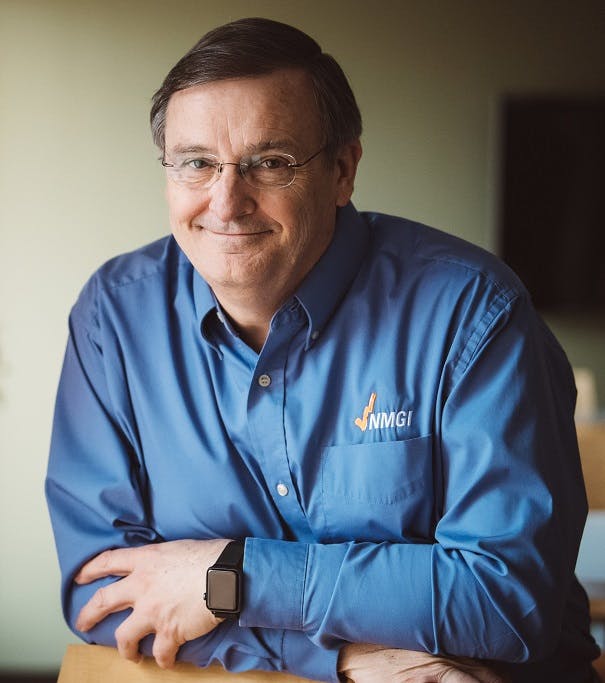




Randy Johnston and Brian F. Tankersley deliver an in-depth overview of CES 2026, sharing observations from their 15th year attending the show together. This year’s CES reflected a noticeable shift toward consumer-focused innovation, with fewer traditional enterprise vendors and a more subdued presence from long-standing technology anchors like Sony, Samsung, Intel, and AMD. The Accounting Tech Lab is an ongoing series that explores the intersection of public accounting and technology.
View the video below:
Or listen to the podcast using the below player:
Transcript (Note: There may be typos due to automated transcription errors.)
SPEAKERS
Randy Johnston, Brian F. Tankersley, CPA.CITP, CGMA, Speaker 1
Brian F. Tankersley, CPA.CITP, CGMA 00:00
Welcome to the accounting Technology Lab. Brought to you by CPA practice advisor with your host, Randy Johnston and Brian Tankersley,
Speaker 1 00:09
welcome to the accounting Technology Lab. I’m Randy Johnston with co host Brian Tankersley, we’re coming to you live from CES but we’re taking off our badges to do the reporting for you here, because Brian and I attended the CES conference for the 15th time together this year, and every year, we’ve picked up something new that we believe can be applied for you personally and into your businesses. As it turns out, so Brian, in terms of key things that you think the listeners would want to know about for this particular ces
Brian F. Tankersley, CPA.CITP, CGMA 00:43
Well, I think, you know, it was the tariffs did kind of hang over everything we did have, we had a number of major exhibitors every year, you know, Samsung, Nokia, Intel, AMD, none of them had much of a presence at the show. So it was kind of disappointing that they weren’t here. There were also, as usual, you had to go to breakout room, breakout spaces for Lenovo, HP and Dell. And, you know, we’ve got some reports from inside of those, and it’s our understanding there wasn’t that much new interesting there from a business perspective. You know, we did see, you know, there were some kind of things that came out, like CL seemed to have kind of a breakout year, you know, they’ve always been kind of a tier two tier, you know, more of a component manufacturer, a tier two hardware manufacturer for TVs and stereos and home equipment, you know, kind of like they wanted to be Samsung when they grew up. And they grew up
Speaker 1 01:37
this year, I think they did. In fact, the TCL booth may have been the most impressive booth. Now, yes, about our history on this the last two years, SK Hynix was the most impressive booth. They weren’t here at all either that I saw. And last year
Brian F. Tankersley, CPA.CITP, CGMA 01:52
they spent the gross national product of Burma on a booth that was all LEDs. And it was it. I mean, it was
Speaker 1 01:58
crazy, it was gorgeous, it was amazing. But you know, TCL, to your point, they have gone full scale, kind of like an LG or a Samsung, so mobile computers, TV, their tablets and many more things. As it turns out now, as as far as other vendors or other mega trends, what else would you say that you saw glasses?
Brian F. Tankersley, CPA.CITP, CGMA 02:22
Oh, my goodness, so many glasses. You know, it wasn’t as bad as the year when Google Glass or when the apple goggles came out, but it still is pretty there were just so many different sets of glasses and for so many different things. Okay, we did see some that we did see some that were not focused on gaming or other things, like the ones from the ones that were focused on helping macular degeneration and other things like that that we thought were interesting. There are a lot of exoskeletons this year, so a lot of people wanted to be Iron Man and have an exoskeleton that made them super tough. And so there those were out there for people with mobility challenges and warehouse workers.
Speaker 1 03:00
And I thought, what was interesting on the exoskeletons, some were upper body, some were lower body, some were full length, but most had a half body. They were doing, which was weird. And then the innovations in some of the wheelchair, electronic, mobile pieces, I’m thinking of the person who developed a wheelchair based on his handicapped grandfather and why he thought it was such a good thing. And it was a great design to be able to lift somebody out of a bed
Brian F. Tankersley, CPA.CITP, CGMA 03:32
and take them to the toilet and then hold them over the toilet till they get settled and then pick them back up again.
Speaker 1 03:37
Yeah. So there were things like that were fascinating now, and I will
Brian F. Tankersley, CPA.CITP, CGMA 03:41
say for the good old boys that you know that became handicapped after their after they enjoyed fast cars, there were some elect, think, their electrification, things that were almost like power units you could put on the front of a traditional wheelchair to make it go up and down.
Speaker 1 03:57
Yeah, you know, you’re absolutely right thinking about that particular unit so, but you know, if we had to pick two big trends, we were, was it was aI everywhere? Yes, some cases AI inappropriate, is the way I would say it. Like, why would we run AI on a microwave engine or a washing machine or a dry Yeah? I mean, Lions pieces.
Brian F. Tankersley, CPA.CITP, CGMA 04:20
I mean, yeah, let’s face it here, okay, if you put a stake in a microwave, you’ve already lost, and it doesn’t matter how much AI you put in there to try to make it the best possible microwave, AI steak, it’s still going to taste like a tire, you know? But there were also AI based pets. So there was a, there was, I think it was, will, I am, actually had a at the Snapdragon booth that has a new companion that is not suitable for children, called mofo, that’s supposed to come out later this year, that is like a little AI based pet. But there were cats and dogs and tamaguchis and, you know, then there were things that it was not just pets that were AI, were also AI things for your pets. So litter boxes and pets. Food and water and all kinds of other things. Yeah.
Speaker 1 05:02
So when you think about the general it is the Consumer Electronic Show, and I would say that the shift further to consumer goods was evident. Now we’ll talk to you in other episodes about some business centric things. And we’ll talk to you
Brian F. Tankersley, CPA.CITP, CGMA 05:18
Alexa, the Snapdragon, you know, the Snapdragon PCs and, yeah,
Speaker 1 05:23
and some infrastructure things. But the bottom line was, it was pretty clear that there were not as many business things present. And some of the traditional vendors who would be on the show Sony being a great it’s been a an anchor for years. Didn’t have a space.
Brian F. Tankersley, CPA.CITP, CGMA 05:41
Yeah, they had one, but it was only to the extent that they was showing off the car that they do with hunt, and that was it. And so it was kind of disappointing, because, you know, you’re a big Shutter Bug. You actually put yourself through college shooting pictures, and they, you know, you like to go play with the lenses and everything. Both Sony and Nikon were not present, which kind of blew me away. Now, like I was here. So he had some cameras to look at, but not nearly as many as usual. Yeah.
Speaker 1 06:07
So it was actually on that side, much less on the consumer side. So, you know, I guess when it turn because we’re trying to give you a general overview of the show again, if I had to name the two themes, it’s AI and robots. And there were robots for other, well, let’s call it everything, cleaning your pools, mowing your lawns,
Brian F. Tankersley, CPA.CITP, CGMA 06:30
and the the Roomba knockoffs that you would expect, and, you know, just all kinds of things like this. There were actually four wheel drive mowers that could handle steep inclines and 234, 5% grades. So it was pretty impressive.
Speaker 1 06:44
Well, the one unit, if you think about it, that incline was greater than 50 degrees, because it was a pretty
Brian F. Tankersley, CPA.CITP, CGMA 06:50
it was probably a 25 25% degree, yeah, because it’s half the angle, yeah. So it was probably a 25% degree, you know, angle. And it was pretty heavy
Speaker 1 06:59
duty, and he went right up. But there were also, I’ll call them, flying drums and all sorts of different discussions. I would guess we probably spotted a dozen more, and some of the designs actually made pretty good sense. One was motorbike like that had 48 lifting blades. Okay, that one felt pretty good. But there was another one that just had a couple of lifting blades with real question will design.
Brian F. Tankersley, CPA.CITP, CGMA 07:26
And there were some that looked like the tilt rotor the Osprey military aircraft, except this was much smaller. Okay, so this thing with a Fiat 500 would be massive compared to this thing. I mean, you you’d have to be both in great shape and extremely petite to make those things work.
Speaker 1 07:43
Yeah. So you know, in terms of general, the innovations probably weren’t as rapid as you mentioned earlier. Perhaps it was tariff constrained. Perhaps it was supply chain constraint. Yeah, we know the Met a glasses, for example, aren’t going to hit global distribution because of supply chain constraints. Yeah.
Brian F. Tankersley, CPA.CITP, CGMA 08:06
But remember the all the startups, though? You know, traditionally, we get a lot of great ideas. We get some of our best things. We see from startups like last year, we found the dry hydrogen storage and some of those things. This year, no such luck. I mean, this year we had, this year, the startup seemed to be much more you know, the one of the things you do with a startup is you have a minimum viable product to get started with your revenue generation. And there were a lot of minimal products, but not many were viable. And, you know, the good news is the people in the booths were less aggressive at trying to pull you in to talk to them, you know, last year I felt like people were going home. Please come talk to me, you know. And this year, it felt like, you know, they were really was kind of had their traditional space in there. So that was good, but I will say that again, many fewer, there are fewer, fewer startups and fewer viables, even fewer viable startups.
Speaker 1 09:00
Yeah, I think the way, when we were talking about it, we said, look, there’s a lot of solutions looking for a problem, and a lot of the solutions were more what I’d consider half baked. So the minimum viable product they built were way less than minimally viable. The other thing that was surprising to me, was typically the innovation awards here are in 36 categories, as I recall, and there’s usually hundreds of products that are shown that are winners. And remember, there are 1000s of submission
Brian F. Tankersley, CPA.CITP, CGMA 09:33
it’s not quite to the level of a participation trophy where everybody gets a trophy, but they’re usually, there are enough that there are plenty to go around, usually. And this year, I
Speaker 1 09:48
was underwhelmed. Yeah, that’s exactly the reason I brought it up. Normally, when I walk through the innovation area, it’s like, that’s a good idea, that’s a good idea, that’s a good idea. And this time, it was like. Right? This one right here is a pretty good idea, yeah.
Brian F. Tankersley, CPA.CITP, CGMA 10:02
And there were a lot more mash, and not as many, you know, not as many. Wow, that’s cool, yeah.
Speaker 1 10:10
And the one that I will call out, though, that I thought was interesting, which was a health monitoring system where you could do a complete patient assessment, is that the whiffing thing? No, that one’s a different item. This one is a an interview type thing. It does a mental assessment and it does a physical assessment. It was designed to be sold in Korea, and it satisfies the three primary measurements in the Korean health system. So they did an ECG, and they did a mental assessment, and so forth. And I watched that thing, I said, this is a pretty good idea right here, right? Yeah. But, you know, to the point we looked at lots of other things in the innovation section, it’s like, yeah, no, this is not real as I thought.
Brian F. Tankersley, CPA.CITP, CGMA 10:56
Yeah, there were a lot of retreads in there, a lot of, you know, the there was, there was, there was a lot more iteration and a lot less innovation. And so to that extent, it was interesting. It didn’t feel like, I guess, just generally, it didn’t feel like everybody that people were making as many big bets as they have in the past.
Speaker 1 11:13
Yeah, but one that made a big bet, as I would consider it, is good here, because I had to pull you back and show you look at this tires as a service.
Brian F. Tankersley, CPA.CITP, CGMA 11:24
Well, I mean, you know, you can get everything as a service, and if tires as a service is our next thing, then I guess we’re going to have tires as a service.
Speaker 1 11:33
Yes, we are. So now, were there other main observations? Because, again, we’re going to do a session on business tools, and I don’t want to go into those in this session with you. I’m trying to make sure our listeners get a good overall view, because
Brian F. Tankersley, CPA.CITP, CGMA 11:47
we’re going to take for home and for gadgets. There was a device that you use with your child that that actually helps equalize the pressure in the child’s ears. So, you know, I can’t be there. My son has Asperger’s and also had a lot of trouble with ear infections and sinus infections, that kind of stuff as a child. And so whenever we flew, it was always, we always wondered, you know, scoop Baker, gonna be in pain. And, you know, nobody wants style, but this tool designed to let the child increase or decrease the pressure in their mouth and goes through the Eustachian tube and equalizes out the pressure in the middle ear so that you don’t get that imbalance that makes it painful. Yeah?
Speaker 1 12:26
And it looked kind of like a CITP cup for like a better name, because you basically put it in your mouth and in your nostrils, and then there was a little participation game to encourage
Brian F. Tankersley, CPA.CITP, CGMA 12:36
the child, yeah, almost reminiscent of a biofeedback where you’re getting a measure, and it’s measuring what you’re doing, kind of like those things you have to puff on after you have surgery. Yeah.
Speaker 1 12:46
So, you know, those types of things were interesting. Actually, one of the AI assisted things that we’ve talked about for probably a decade or more now is the robotic cookers. And a lot of the cook units this year were truly robotic. Many of them were smaller than an instant pot in size. So now it’s become a desktop type of cooking appliance. And you know, there again, I probably spotted six or eight of those, and four of them look like they were viable, as opposed to the units we saw time after time, which was, you know, program in the AI will read your cookie.
Brian F. Tankersley, CPA.CITP, CGMA 13:25
But I will say, though, that these things looked like they would create food that was more akin to TV dinners or some simple home prepared food. And, you know, so our friend, JP, the general manager at an all feed, the Bobby Flay restaurant at over Caesar’s, yeah. JP, doesn’t have to worry about get being put out of a job by these things. I don’t think.
Speaker 1 13:47
No. And some of the cooking robotics that we’ve looked at in the past, they’re the real deal. They could, they could substitute out for a Chinese chef or a Mexican chef and do a pretty good job.
Brian F. Tankersley, CPA.CITP, CGMA 13:58
But those were things that were made with commercial grade stainless steel kitchen equipment, and they were the size of making batches big enough for commercial prep. These things were much smaller. These were designed to be like the next our air fryers is my take on, yeah, yeah.
Speaker 1 14:18
So any other I’ll say consumer goods, because again, we’re going to go to a business session. We’ll watch you on that one, and an infrastructure session. TVs.
Brian F. Tankersley, CPA.CITP, CGMA 14:27
Okay, so for TVs, art TVs are back. Amazon has one. TCL has a couple. LG had a pretty impressive one. We assume Samsung is still making the frame. So you know when you’re going into this if you’re setting maybe your home office. Maybe what you want to do is set up a big screen you can use for your display in there, so you can watch TV where you’re working, or you can have a video meeting or something like that. But we also had in there, you can also show art on those, and the art is amazing. And we were looking at the Amazon. One earlier today, and that Amazon screen, you could see the knife marks like you would have with the Impressionist oil painters and everything. It was really impressive.
Speaker 1 15:09
Yeah, that was stunningly realistic. And I almost wanted to go up and touch it. But, you know, there were so many people around it, it was hard to, you know, get to that level. And I’m sure they wouldn’t been too putting their hands on the
Brian F. Tankersley, CPA.CITP, CGMA 15:20
shot, the last thing you want to do is get bounced out of the out of the out of CES for touching something, understand it. But there were also, there was also a huge TV at TCL. And one of the problems we have with these new massive TVs is that many times people will get too close to them, and their media is not the optimal side for viewing. So they get they end up having to move all over the place, and it’s painful, and they end up with them with their neck hurting afterwards. And so the TCL actually had a thing that you could that you use where you could move back and forth. It has a type of TV with a sensor in it that senses your distance, and then it goes in and adjusts the size of the content to be appropriate. So, like, if you’re sitting really close to a to the screen, it would make it smaller on the screen, but still be at high resolution.
Speaker 1 16:07
Yeah, that was pretty impressive. And you know, when I look at all of the competitors, there was a sq led from the same company, TCL, that was amazingly clear, basically thin and very inexpensive. So I think the days of really high quality TVs, we’re going to be around it with this new generation technology. Now, one thing I expected to see this year, and didn’t anywhere that I could find, was the six blue color that we talked about in the prior years, because, you know, we’re in the process of going from 4k to 8k to 16k
Brian F. Tankersley, CPA.CITP, CGMA 16:47
and we saw the HDMI cables that would handle 16k that do 96 gigabits of data.
Speaker 1 16:54
Yeah. So we know that’s coming, but when it came to the TV panels, I expected a lot more of this next generation. You know, 16 color not really see.
Brian F. Tankersley, CPA.CITP, CGMA 17:06
But one of the things we’ve also seen over the last 15 years of walking us together, is that when we do go and out, there have been we’ve seen a number of industrial espionage attempts in the past. I remember one time we were looking at the Qualcomm booth in the automotive stuff in the North Hall, and there was a guy over there that literally had one of those microphone domes, like they use at the NFL games to catch what the coaches are saying. Literally, there was a guy with one of those pointing at an exec for Qualcomm. And that’s why some that’s why they seem to be showing less than they have in the past, I think because they weren’t showing enough to get you some sizzle, but they don’t want to show you
Speaker 1 17:46
the whole state. Yeah. And my other theory on that, which we talked about yesterday, I believe, was with AI today, if you can get pictures, yeah? And AI could create, you know, certain types of concept units.
Brian F. Tankersley, CPA.CITP, CGMA 17:59
Well, in particular, if you got three or four pictures at different angles of the same, you could certainly turn that into a 3d model in the modern software.
Speaker 1 18:07
That’s correct. And you know, if we look at five years ago or 10 years ago, we watched people go out in flocks, you know, from a single company. There might be 10 or 12 people all with cameras, all taking pictures, and they just spread out on the floor and take all sorts of pictures. I figured that was intellectual property theft, not really documentation. What was going on. But today, I think with you know, appropriate, very few pictures, you could truly get some intellectual property left going. I will
Brian F. Tankersley, CPA.CITP, CGMA 18:36
say this, I was surprised at some of the moves that were made. We’ll talk more about this in the stuff for business, but there were more moves to bring AI to the edge and even in house, because one of the learnings I’ve had over the last month is that attorneys can’t use commercial AI services in the cloud, I’m told, because it is a breach of attorney client privilege. And so what the law firms are having to do, and what we think the accountants will likely have to do to protect their privilege in where it exists, is going to be to bring the AI stuff in. And so we saw you green masses that had that were instead of having, you know, a traditional like A Celeron processor with maybe two or four gigs of RAM. These had modern I sevens with 16 cores and 64 or even 128 gigs of RAM. So these were beefy. These are really beefy units, and they had web browsers in them that you could connect up to that would do all kinds of things, to index your data, to recognize photos, to to allow you to ask questions about things and then even create your own language models.
Speaker 1 19:45
Yeah, well, any other key things that you think our listeners need to know about that are just big picture things to see from CEOs, we recognize you might have seen some of the reporting while the show was on, and you know, you might have. Snippets of various things. But we wanted to give you, first, the big picture overview, and in separate episodes, we’ll give you our take on the best business tools and some of the best new infrastructure tools.
Brian F. Tankersley, CPA.CITP, CGMA 20:12
You know, there are some interesting devices for taking notes that we’ll talk about later. There were a lot of, you know, just, there’s just more gadgets than you could imagine, and so many of them were not germane to things that you and I would pursue. I will say that the the branded and customizable Amazon echoes were kind of cool that were in the shape of the helmets for the NFL teams and the basketball and the basketballs and for the NBA, yeah. And there were some things like, there were, again, evolution, not revolution, you know, the new commercial grade security cameras from ring were interesting, you know, but you know? And there were some cool things from j5 and some other folks like that were like things for things you would put a you’d put, like, a GP, a discrete GPU in so you could do AI with it, or things you would use to you know as HDMI extenders, so you didn’t have to have a cable you pass around whenever people are presenting in a meeting.
Randy Johnston 21:09
Yeah, makes great sense. Well, we appreciate you listening in and getting our insights as we’re reporting to you live from CES, which is still in progress, and we hope to learn more, and we hope to have you attend another podcast with us very soon. Good day. Thank you.
Brian F. Tankersley, CPA.CITP, CGMA 21:26
Thank you for sharing your time with us. We’ll be back next Saturday with a new episode of the technology lab from CPA practice advisor. Have a great week.
= END =

Thanks for reading CPA Practice Advisor!
Subscribe Already registered? Log In
Need more information? Read the FAQs