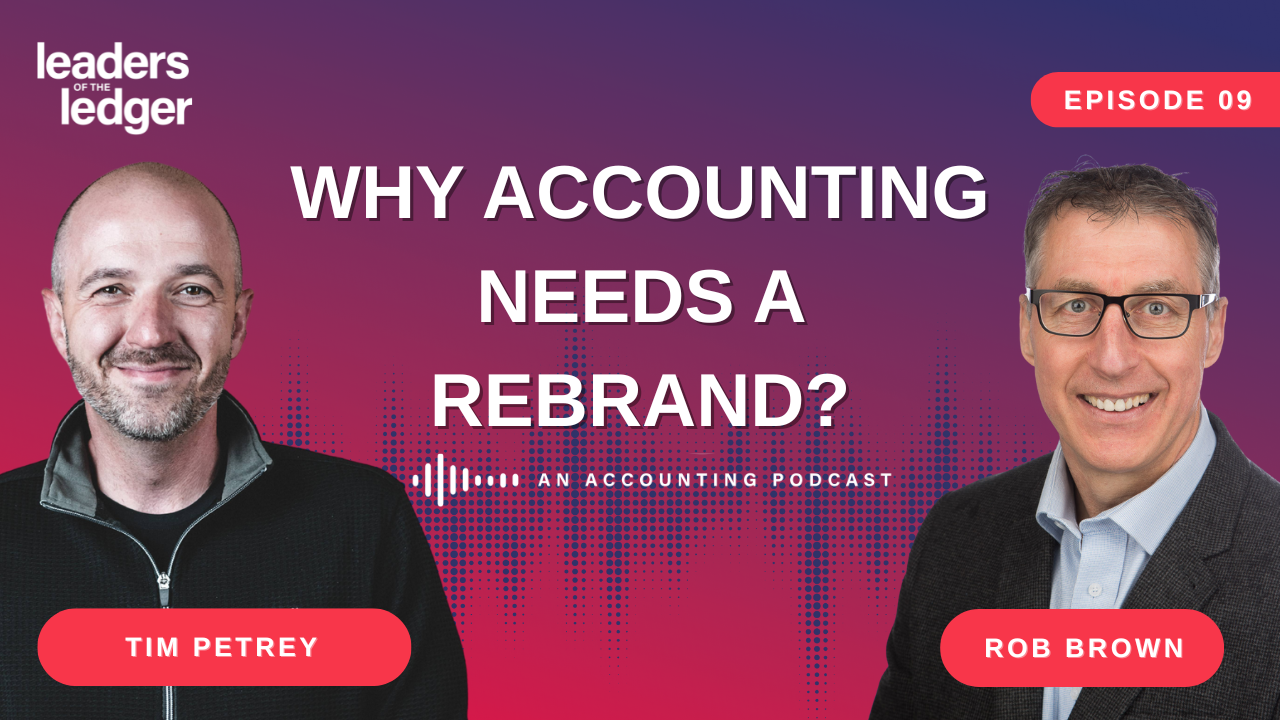



In this episode of Leaders of the Ledger, host Rob Brown sits down with Tim Petrey, CEO of HD Davis CPAs and one of the founding partners at Ascend, a private equity–backed platform transforming regional accounting firms across the U.S.
Tim’s journey from answering phones at a small firm to leading an $8 million practice is nothing short of inspiring. He opens up about mentorship, overcoming complacency in the industry, and how accountants can find purpose, fulfillment, and impact in their careers.
What You’ll Hear:
- How Tim went from receptionist to managing partner at 25
- The power of mentorship and why it changed everything for him
- Why accounting needs a brand makeover
- How AI, technology, and generational shifts are reshaping the CPA world
- What “influence” really means in the accounting space
- Tim’s advice for young accountants and firm leaders: “Embrace the change and keep an open mind.”
Leaders of the Ledger spotlights innovators, firm leaders, and rising stars shaping accounting’s future with practical insights and proven strategies. The podcast is produced and owned by CPA Practice Advisor. Learn more about episodes and recaps at https://www.cpapracticeadvisor.com/podcasts/.
Or use the below podcast play to listen:
Transcript (Note: There may be typos due to automated transcription errors.)
SPEAKERS
Tim Petrey (Speaker 1) and Rob Brown (Speaker 2)
Speaker 2 (00:00.046)
to about an $8 million practice doing business in 43 states. And about 18 months ago, we were one of the founding partners to join a platform called Ascend, which is a private equity backed platform for regional sized accounting firms across the United States.
I’m Rob Brown here, host of the Leaders of the Ledger podcast. behalf of CPA Practice Advisor, we are shining a light on the influences in the CPA world. Take us back to Tim Petrey when you were 15, 16. Did the CPA railway line light itself up for you?
It was one of those moments where I was really lucky to find a mentor. was lucky to find someone that kind of guided me and showed me what life could look like, showed me what impact I could be making in this career. And that’s really when I fell in love.
When I call you an influencer, how does that sit with you on the influences in the CPA world? And just get a little bit of their story. makes them different? What makes them influential? We’ve got Tim Petrey with us today from Ohio. Tim, great to have you with
Thanks for having me, Rob.
Speaker 1 (00:58.808)
Hi, Rob Brown here, host of the Leaders of the Ledger podcast. behalf of CPA Practice Advisor, we are shining a light on the influencers in the CPA world and just getting a little bit of their story. What makes them different? What makes them influential? We’ve got Tim Petrey with us today from Ohio. Tim, great to you with us. Tim, for people that haven’t come across you and you are being more influential, tell us a bit about your journey to where you are.
Thanks for having me, Rob.
Speaker 2 (01:20.152)
Yeah, so I’ve
I had an interesting journey to get to where I am today. Started at our firm as our receptionist answering the phones for a very small practice. You know, took over as a managing part of our practice when I was about 25 years old and have since led our firm. it was terrifying to say the least. And then have since grown our firm to about an $8 million practice doing business in 43 states. And about 18 months ago, we were one of the founding partners to join a platform called Ascend, which is a private
equity backed platform for regional sized accounting firms across the United States and that business has grown in unimaginable ways in a very short period of time.
Just talking to Maureen Dilmore recently who was at Ascend and they have a really good team and Stephen Hoffman runs one of the firms. Yeah, fantastic outfit. Take us back to Tim Petrey when you were 15, 16. Did the CPA railway line light itself up for you?
No, not at all. couldn’t have been further from that. When I was 15 years old, I was washing semi trucks. Well, you know, I was pretty independent at an early age. I needed to take care of myself at an early age and, was working and was quite frankly, never in my wildest dreams would I have imagined this turned into what it turned into.
Speaker 2 (02:33.39)
today, you know, at that time, I just wanted to survive. wanted a job. wanted something that was safe. I wanted to be able to provide for myself and an eventual family. And, you know, when I went to school for accounting, I went for general business school eventually. And, um, you know, I took an accounting class, like most people’s accounting stories and I like, I didn’t hate it. I was surprisingly decent at it or it made sense to me. And then like anything, I just went around and I talked to other people that were in the space that were in the industry. And, you know, I had a lot of connection to small business.
over the course of my upbringing, though it was just something that eventually just made sense to me and aligned. But did, if you would have asked me in college when I was studying accounting, what my expectation was, it certainly wouldn’t have been the quality of life that I currently have today. It would have been, I have a job and I’m safe and I’m providing for my family nowhere near the level of impact and the potential that it has to.
We’ll come into that because it is important that we shine a light on the brand of accounting as a career choice. did you ease into accounting as a career like a warm bath or was there a seminal moment where you felt, wow, and the light came on and this is the career for me.
Yeah, it was a bumpy start to say the least. You know, I didn’t get a job right out of school, reviewed with a bunch of firms, struggled to find that, you know, a place to call home. And it was like, it was a difficult time in the United States. See, it was the peak of the financial crisis. It was 2008, 2009 when, and everybody’s really struggling through that. I just, I’m 38. Okay.
How old are you now Tim, do you mind me asking?
Speaker 2 (04:04.834)
You know, so, you know, at the time it was like, I’m not really sure what I want to do. the expectation that we expect people in their early twenties to have any real concept of what it is that they want to do in the world before having that practical experience is tough. Right.
But 2008-9, that was a tough time throughout the world, wasn’t it?
And it was one of those moments where I was really lucky to find a mentor. I was lucky to find someone that kind of guided me and showed me what life could look like, showed me what impact I could be making in this career. And that’s really when I fell in love. I saw, I worked closely with my mentor, his name is Harold Davis over that period of time.
He just showed me how much impact he was making in his clients lives. He was making impact in our community. was making the impact with our team members. And I fell in love with that more than I truly fell in love with accounting. I fell in love with the impact that accounting can bring on so many. and that was the light. That was the moment that clicked and said, I’m all in, I’m diving in head first. I have blind trust that this is going to work out. And I was in love with it at that point in time and haven’t fell in love, fell out of love with it since.
be a credit, you can see the passion coming out of your eyes and your voice in that this is somewhere where you’re really feeling you are making a difference. And a lot of influencers I speak to, they talk about impact and legacy and the accounting skillset that life gives you that. You mentioned quality of life earlier, gives the impression that you’re doing okay. Just open that up a little bit for us.
Speaker 2 (05:26.54)
Yeah, I think that, you know, anybody in my life that I had been around growing up, work and life were a different balance. You were forced to go to work. You had to go to work. You had to pay your bills. You know, you were chained to that grind of nine to five. And there were very few people in my life growing up had a direct correlation of purpose with their work. And that was reflective of their quality of life.
So, know, financially I’m doing just fine at this stage in my life, but more importantly, I feel like I genuinely have a purpose when I go to work every day. And I know that that’s something that so very few people can say and as such a small percentage of our population can truly be in that position to say that on a regular basis.
When I call you an influencer, how does that sit with you?
feels very weird, Rob. I’m gonna tell you right now, you’ve said it a few times and it makes me uncomfortable every time. I don’t by any stretch of imagination view myself as an influencer. I think that there’s a lot of great people in our, in our industry and our community that, you know, I’m just kind of following their lead and doing the things that are in my opinion.
common sense and no brainers and trying to spread the good word about what it is that we’re doing. You know, I felt that I was influenced and led and mentored by a lot of great people early on in my career. It’s a big deal for me to find ways to pay that forward. And if that means, you know, showing up on some podcasts and showing up to conferences and speaking and meeting and working closely with my team members, I’m going to do whatever it is I have to do to pay forward that opportunity and that guidance and that leadership that was given to me.
Speaker 1 (07:01.26)
speaks about your loss of person that you’re willing to pay it forward. feel that accounting has been good to you and it’s served you well. So you want to serve back. But to the point you say you keep showing up and that’s where influence happens because head down being technically good at what you do doesn’t create influence. just, it serves a client. It serves a need, but there are thousands of accountants that are like that. So
Just talk to us about this pivot you’ve made from heading the firm, heading the business to wanting to be perhaps an ambassador for the brand, if I could put it that way, or shining a light on accounting as a professional.
Yeah, I mean, I think that it deserves it and it deserves it because it’s one of those underappreciated foundational pillars of our society. You know, I grew up with family business. My aunt and uncle that raised me owned a motorcycle business here in Youngstown, Ohio for 45 years. He came out of the military with one of his friends and started this business. And, and I watched the level of effort that he put into that business. I watched, you know, the seven days a week I watched.
You know, all of the pressures of the world on his shoulders over that period of time and just how lonely being a business owner is and how difficult it is to carry that burden on your shoulders every single day. You have your employees that are relying on you. You’re sponsoring the baseball, the baseball teams and the sports teams and you’re involved in your community and the resources that are available to those businesses are just not that great and historically have not been that great. I think that that’s changing.
And I think that there are people like myself and there are people that are very active in a small to medium sized business realm that can make a big impact on people’s lives and businesses and in doing it via the vehicle that is accounting. know, when someone described accounting to me when I was in school, when I was in high school and college, I pictured green visors and sitting in a room, you know, not talking to people and not really understanding the true impact. Like, you know, the
Speaker 2 (08:58.392)
careers that get a lot of that are the medical professionals, rightfully so, they’re saving lives. And some of those other industries that just get a little bit more attention. But the accounting industry is one that does undoubtedly make an impact and make a difference and make a purpose in the world. So I think that we’ve had a brand issue, we’ve had an identity issue for many years, and I think that it’s important for those of us that…
find passion in what we do to share why we find passion in what we do and share those opportunities for people so that they can find that opportunity to see purpose and passion in their career one day. So selling the story of accounting is important.
Yeah, who’s jump do you feel is to be the brand guardians of a killer?
It’s all of our jobs. mean, I think that any of us that have put food on our table as a result of working in this industry, I think that any of us that are living a good quality of life as a result of this industry, paying that back and telling the story is important because our industry is in trouble and it’s been in trouble for…
a long period of time, there’s been a lot of, you know, complacency surrounding the progression of our industry. There’s been a lot of complacency surrounding the business model of our industry with the partnership model rapidly dying off at this stage in our industry’s lives. And, and it’s just been kind of a constant state of good enough. And I think there are those of us that have the energy to say that good enough is not good enough anymore and try to make some impactful change so that we can protect.
Speaker 2 (10:25.804)
what is a very important foundational pillar of society industry.
It’s important, yes, but when you talk about complacency, you speak to relevance, perhaps in some way the relevance of the accountant, the advisor has been eroded. Have they been complacent behind the expertise they have? Because looking back historically is not valuable anymore. Business owners want that forward thinking proactive advisor, so maybe they’ve shot themselves in the foot. Would that be fair?
Very fair. I mean, was just, you know, everybody was doing well enough in the industry and they were, they were making a decent living. They were paying their bills. They
didn’t really have that impetus to change. And as a result, things got stale and things got to be kind of unwell when we look at the generational shifts that started to happen. And it was kind of too late. And now you look at all the different things that are happening. It’s, have this generational impact of the Exodus of the baby boomers in our industry, coupled with rapid advancement in technology via AI, coupled with the more
know, global economy and the rapid speed of information that moves around and how that impacts these businesses. And it’s required us to go from basically standing still to sprinting in our industry, basically overnight, seemingly. So it’s challenging, but with that challenge comes a tremendous amount of opportunity. And that’s the part that’s exciting and fun.
Speaker 1 (11:46.146)
You sound like you’re embracing the challenge, the change, but how has your role changed over the years?
Every day my job is different, you know, and, and every day I’m realizing I’m doing something that I’ve never done before, which is very difficult to embrace that. And it’s taken some time for me to get used to that. But I say that because, our firm has grown tremendously in a relatively short period of time, not just via financial metrics and revenue and headcount and those things,
Grown in terms of the way that we operate, grown in terms of how efficient we are, grown in terms of the leveraging of technology and AI. And with that, every day comes with a different set of things that you need to be attentive to. And it’s not just problems. It’s not just the challenges. It’s, you know, embracing the opportunities that come along with that too. And just, you know, being prepared and open-minded for that. I have found the best way to deal with that and the best way to be the best version of myself at my job is by relying upon the community that
Um, we have, I was just explaining this to someone last week. I was at a really great conference in California with our friends at Carban. And I was explaining to someone that I sat down with, it was a friend on LinkedIn. And we had formed a friendship over some period of time. And I was just amazed at how much that has increased the quality of my life because of how it’s made me more comfortable doing my job and dealing with those uncertainties because.
This community is a really cool, powerful community where, you know, we’re sharing with one another best practices. We’re sharing with one another our failures, our successes. You know, there’s a small group of firm owners that I talk to very regularly. I have formed deep, meaningful friendships with these people across the country. And that’s given me a heck of a lot more confidence in doing my job. You know, I deal with my own version of the imposter syndrome every single day, but having that community and having those other people around me,
Speaker 2 (13:36.592)
to help navigate the challenging and complex world we live in has made it much easier.
I’m not an accountant, I’m a former high school math teacher and I sometimes get asked is teaching harder now than it used to be? And I would say it has and I won’t go into it, but being an accountant, is that harder now than it used to be? And I want to load the question a little bit while you consider because accountants back in the day, you just needed a qualification and you’re up and running. But these days accountants, need to be able to sell, they need to be masters of technology and AI.
They need to be counselors and therapists and friends and shoulders to cry on. They need to be great communicators and have empathy with people. It’s asking a lot of a rule that used to be quite defined.
couldn’t agree more. There’s goods and bads to that, right? The good of that for someone like me is that the beauty of accounting and why it’s made me so excited for so long is that it’s always changing. So it forced me to always change. It forced me to always adapt. So there was no sense of ever getting stale or bored in this industry. And this has taken it to an entirely different level where
You know, I’ve had to learn more about leadership and emotional intelligence and communication and organizing and planning and strategy and things that were just not on my radar when I thought about accounting. No, I mean, we’re not talking about spreadsheets and tax returns.
Speaker 1 (14:49.676)
On accounting stuff, right?
Speaker 2 (14:54.198)
audited filings, statements, we’re talking about, you know, how do you effectively, you know, lead? How do you effectively listen actively to your clients and to your employees to be better at your job every single day? And then how do you coach other people to do the same thing? Yeah, it is undoubtedly harder than what it was, but that’s where the purpose and the fulfillment comes into it. And I think that’s the shift that is exciting is when we are being asked to go from
Hey Tim, I need you to just bang out this spreadsheet for me on this really complex tax structure and I need you to complete this tax return and I need you to be very compliance focused. That’s a different level of fulfillment and purpose than I need you to help improve the quality of your client’s life. Cause that’s ultimately what it is that we’re doing. And while that comes with a myriad of other challenges and responsibilities, that’s what makes it and that’s what makes it great. And that’s what gives us purpose in what we do every day.
more questions Tim, this is wonderful. What would you say to people that look at you and say, it’s okay for Tim, he owns his own firm. He’s a decision maker. He holds all the budget. He’s got authority. He’s got leadership there. I’m just employed. I’m in the ranks. Everything happens to me. I don’t really seem to affect anything. I haven’t got the autonomy and flexibility and power that somebody like Tim has. So it’s more fun for him. What would you say to them?
Well, I had a conversation with someone the other day and I’m a father of two. I have an eight year old and a six year old. And a friend of mine is wildly successful human being. He is a billionaire and he has children that are active in different industries. And I went to him and I asked him the question. said, you got to be really proud of your daughters. They found an industry that they love. They’re active in it. They’re leading in it. They’re just, they’re in love with what they’re doing and they’ve found purpose in what it is that they do. And I said, so, you know,
What advice would you give me as a father to guide my children to find that one day? And he looked at me and he said, you do accounting, right? I said, yeah. And then he said, I see how passionate and how much you love accounting. And he said, it’s not about the industry. It’s not about how you guide them. It’s not about where you tell them to go and the things that you do. It’s about the perspective that you impart on them so that
Speaker 2 (17:07.65)
They view their jobs, they view what they’re doing as impactful and purposeful. And if you can impart the appropriate perspective on your children, they’re going to be in love with whatever it is that they’re doing. And part of that, know, imparting of perspective is that you can make an impact and you can make a change on your own. You know, I started as our receptionist.
You know, I was that employee that literally I was the lowest person on the totem pole at my organization and ultimately made it to become our CEO of our company. Right now in our industry, if you look up the ladder, there is so much room for you to climb really, really fast. And if you embrace that challenge, then you will have fun too. And because you will see the clarity of that.
purpose, you’ll see the clarity of that opportunity. Go to the conferences, go to the LinkedIn forum, participate in the industry, and you’ll see it much more clearly that that opportunity is right in front of you. If you’re someone that’s in your 20s, 30s, 40s, 50s in our industry, there is so much opportunity in front of you. And if your perspective is you’re just an employee, number one, maybe you’re at the wrong organization. And number two, maybe you need a reset. Maybe it’s time for you to look at this and understand that
You are so much more than that and you have so much more potential and opportunity in front of you. And now’s the time to dig in and take advantage of it.
That’s excellent. Tim, usually end by asking my interviewees a call to arms for the accounting profession, but you’ve given it beautifully there in terms of what people need to do. And I’m just reminded of the Woody Allen quote who said, uh, 90 % of success is showing up and you do show up and you’re encouraging people to show up. So let me finish by asking you this, if you could have one wish for the accounting profession industry, what would you call it? What would that
Speaker 2 (18:54.894)
Embrace the change and keep an open mind. There’s a lot of great things that are happening right now. If you approach them with a closed mind, that’s what you’re going to get. So keep an open mind, listen, have conversations, meet people, connect. You’d be really surprised as to how great of a community and industry this is when you start to do that.
Tim Petrey, it’s been a delight talking to you today. Thank you so much for showing up on the leaders of the later podcast on behalf of CPA Practice Advisor. Keep tuning in for these episodes where we pick out influencers that are out there really passionate about this game of accounting. So thank you, Tim. We’ve really appreciate your thoughts and your passion today. Thank you.

Thanks for reading CPA Practice Advisor!
Subscribe Already registered? Log In
Need more information? Read the FAQs